Syria: Jewish History
Jews lived in Syria for more than 2,000 years, in Aleppo, Damascus, and Qamishli. For centuries, Aleppo's Great Synagogue guarded the Aleppo Codex, the oldest nearly complete Hebrew Bible. After the 1947 Aleppo pogrom, Jews were trapped for decades by travel bans, until most left in 1992. Today only a handful remain, while large Syrian Jewish communities thrive in Brooklyn and Israel.

Jewish History
Explore the History of the Jews of Syria
The Jews of Aleppo and Damascus belonged to some of the oldest Jewish communities in the world. They were famous for their scholars, their merchants, their music, and above all for guarding the Aleppo Codex. Their modern history is one of persecution and decades of being forbidden to leave, but also of remarkable communities rebuilt in Brooklyn, Mexico City, and Israel.
2,000+ years of Jewish life in Aleppo, Damascus, and Qamishli | 1947 the Aleppo pogrom | 1992 most remaining Jews are finally allowed to leave |
Ancient roots
Aleppo and Damascus
Jewish tradition links Aleppo to the time of King David, and a legend holds that the city's Arabic name, Halab, recalls Abraham milking his flocks there. Jews certainly lived in Syria in Roman times. The Great Synagogue of Aleppo has an inscription dated to 834 CE, and parts of the building may be centuries older.
The local Arabic speaking Jews were called Musta'arabim. Under Muslim rule, after the conquest of Damascus in the 630s, they lived as dhimmis, protected but unequal.
Scholars and the Codex
Medieval Aleppo
Aleppo was a center of Jewish learning. Maimonides addressed his Guide for the Perplexed to his student Joseph ben Judah, who settled in Aleppo. Around 1375, a descendant of Maimonides brought the Aleppo Codex, a Hebrew Bible written in Tiberias around 930 CE, to the city. The community guarded it in the Great Synagogue for nearly six centuries.
Ottoman Syria
Refugees and merchants
After the expulsion from Spain in 1492, Sephardic Jews settled in Aleppo and Damascus. Over time, the Sephardic and Musta'arabim communities merged. Under Ottoman rule, from 1516, Aleppo was a great trading city, and Jewish merchants traded across the region.
In 1840, Jews in Damascus were falsely accused of ritual murder in a blood libel known as the Damascus Affair, which caused an international outcry. After the Suez Canal opened in 1869, trade shifted away from Syria, and many Jews left for Egypt, Britain, the Americas, and Palestine.
1947 and after
Pogrom and imprisonment
About 30,000 Jews lived in Syria in the 1940s. After the United Nations voted to partition Palestine in November 1947, rioters in Aleppo burned synagogues, schools, homes, and shops. The Great Synagogue was set on fire, and parts of the Aleppo Codex were lost; the rest was later smuggled to Israel.
For more than forty years, Syria's remaining Jews were forbidden to leave, their property and movements controlled, and their identity cards stamped with their religion. Some escaped secretly; some who tried were caught and imprisoned.
1992 to today
Freedom to leave
In 1992, after years of international pressure, the government of Hafez al Assad allowed Syrian Jews to travel. Within a few years nearly all of them left, most for Brooklyn. During the Syrian civil war, the ancient synagogue of Jobar in Damascus was destroyed. Today only a handful of Jews remain in Syria.
Living heritage
Syrian Jewish culture today
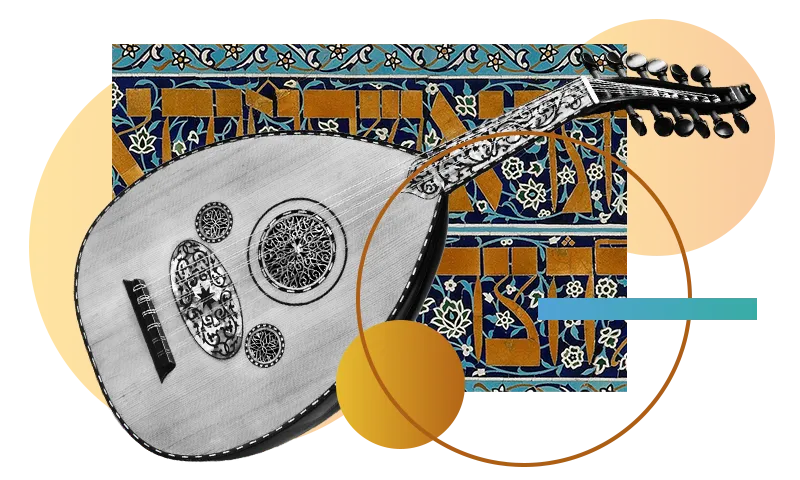
Syrian Jews are known for pizmonim, Hebrew songs set to Arabic melodies and the maqam system; for the Baqashot, songs of praise sung before dawn on winter Shabbat mornings; and for a cuisine of kibbeh, mehshi (stuffed vegetables), and tamarind sauce. Today large Syrian Jewish communities in Brooklyn, Deal, Mexico City, Panama, and Israel carry these traditions forward.
Explore further
Keep exploring
Key dates in the history of the Jews of Syria, at a glance. |
The laws that shaped the rights and lives of Jews in Syria. |
Watch Syrian Jews tell their own stories. |
Languages, music, food, and traditions. |
Dishes for Shabbat, holidays, and every day, and the stories behind them. |
Histories, memoirs, novels, and children's books in JIMENA's library. |
For the classroom
Questions to discuss
- Why was the Aleppo Codex so important, and why did Syrian Jews protect it for centuries?
- What was life like for Syrian Jews during the decades when they were not allowed to leave?
- How do Syrian Jewish communities in Brooklyn and Israel keep their music and traditions alive?
Sources: Syrian Jews; Central Synagogue of Aleppo; Aleppo Codex.
Policies

Timeline of Jewish Presence