JIMENA is the leading organization in the United States dedicated to pursuing acknowledgment, redress, and full inclusion for the nearly one million Jewish refugees from the Middle East and North Africa and their Mizrahi and Sephardic descendants, in American public life and in the mainstream Jewish community. We work at the intersection of advocacy and education, by design: a history that is not known cannot be recognized, and a community that is not recognized cannot be fully included.
The challenge
A history at the margins
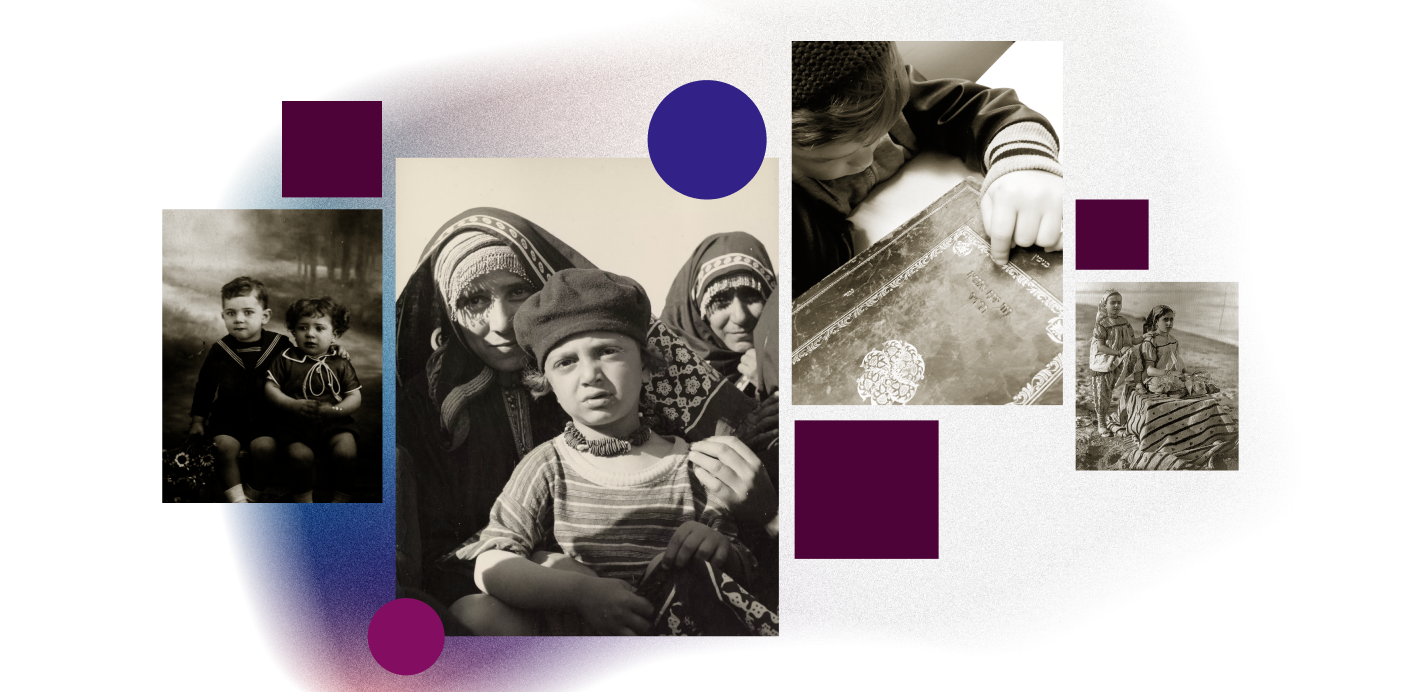
For more than 2,500 years, Jewish communities thrived across the Middle East and North Africa. In the twentieth century, nearly one million Jews were forced from their homes, losing property, citizenship, and centuries old communities. Yet their story remains largely absent from classrooms, Holocaust and Jewish education, and public conversations about the Middle East. Their descendants, a large and growing part of the Jewish people, are too often unseen in the institutions meant to serve them.
Our vision
What we are working toward
- Every former Jewish refugee from the Middle East and North Africa feels seen, respected, and included.
- Their descendants feel empowered to safeguard, share, and renew their Middle Eastern, North African, and Mediterranean Jewish legacies.
- Every Jewish American, Sephardic or not, sees this history as part of their own collective Jewish story.
- The rights and history of Jewish refugees from the region are recognized in public life, education, and policy.
How change happens
From empowerment to education to advocacy
Our work follows a deliberate arc. Each stage builds on the one before it, and each strengthens the next.
Step 1
Empower
It starts with people. When individuals and families feel proud to share their stories, a hidden history becomes visible.
What we do
- Recording and sharing oral histories of Jews from the Middle East and North Africa
- Building community through Shabbat dinners, holiday celebrations, and cultural programs
- Developing leaders through the Sephardic Leaders Fellowship
What changes
- Families preserve and pass on their heritage
- Sephardic and Mizrahi Jews step into leadership in their communities and institutions
Step 2
Educate
Stories become knowledge. We equip educators, students, and leaders to understand and teach this history.
What we do
- Free lesson plans and Cultural Heritage explainers for classrooms
- Trainings and workshops for schools, universities, museums, and agencies
- Speakers on campuses and in communities, and Mizrahi Heritage Month each November
- Research, including the national study of Sephardic and Mizrahi Jews in the United States
What changes
- Students learn a more complete Jewish and Middle Eastern history
- Institutions understand and serve Sephardic and Mizrahi Jews more fully
Step 3
Advocate
Knowledge becomes action. The network we build pushes for the recognition and rights owed to Jewish refugees and their families.
What we do
- Testimony before governments and international bodies
- Working for accurate representation in public school curricula through AIMEE
- Advocacy campaigns and public statements on issues affecting our communities
What changes
- Jewish refugees from the region are recognized in policy and public memory
- More space opens for Mizrahi and Sephardic voices, which empowers the next generation to share their stories and begins the cycle again
Progress
What this work has made possible
Since 2002 founded after former refugees from Libya and Egypt shared their stories at San Francisco State University | 80+ universities where JIMENA speakers have shared their testimony |
200+ Jewish professionals and leaders trained through the Sephardic Leaders Fellowship | 2025 the first national study of Sephardic and Mizrahi Jews in the United States |
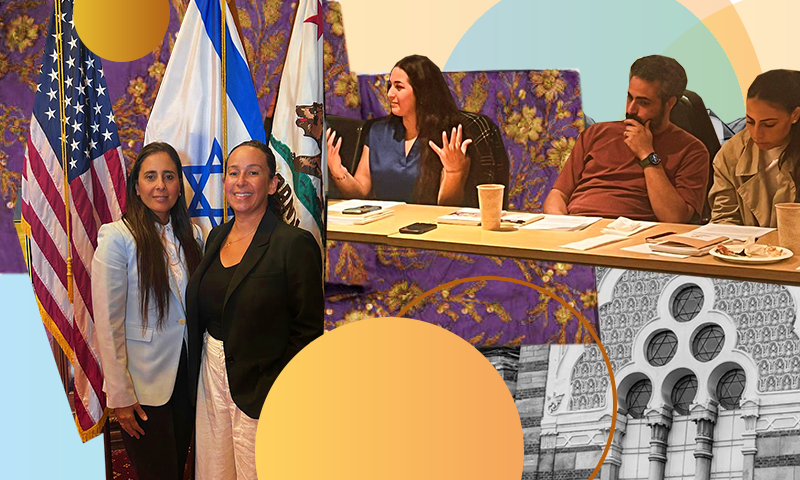
JIMENA speakers have testified before the UN Human Rights Council, the U.S. Congress, the U.S. Department of State, the Canadian Parliament, the British House of Lords, and the Israeli Knesset.
Explore More
Who We Are