Sephardic and Mizrahi groups accuse New York Magazine of erasing Middle Eastern Jews, Simone Saidmehr
This article in The Forward highlights JIMENA’s leadership in uniting 14 Sephardic and Mizrahi Jewish organizations to challenge New York Magazine’s exclusionary portrayal of Middle Eastern identity and advocate for the recognition and inclusion of Jewish communities indigenous to the region.
By Simone Saidmehr
2026.08.25
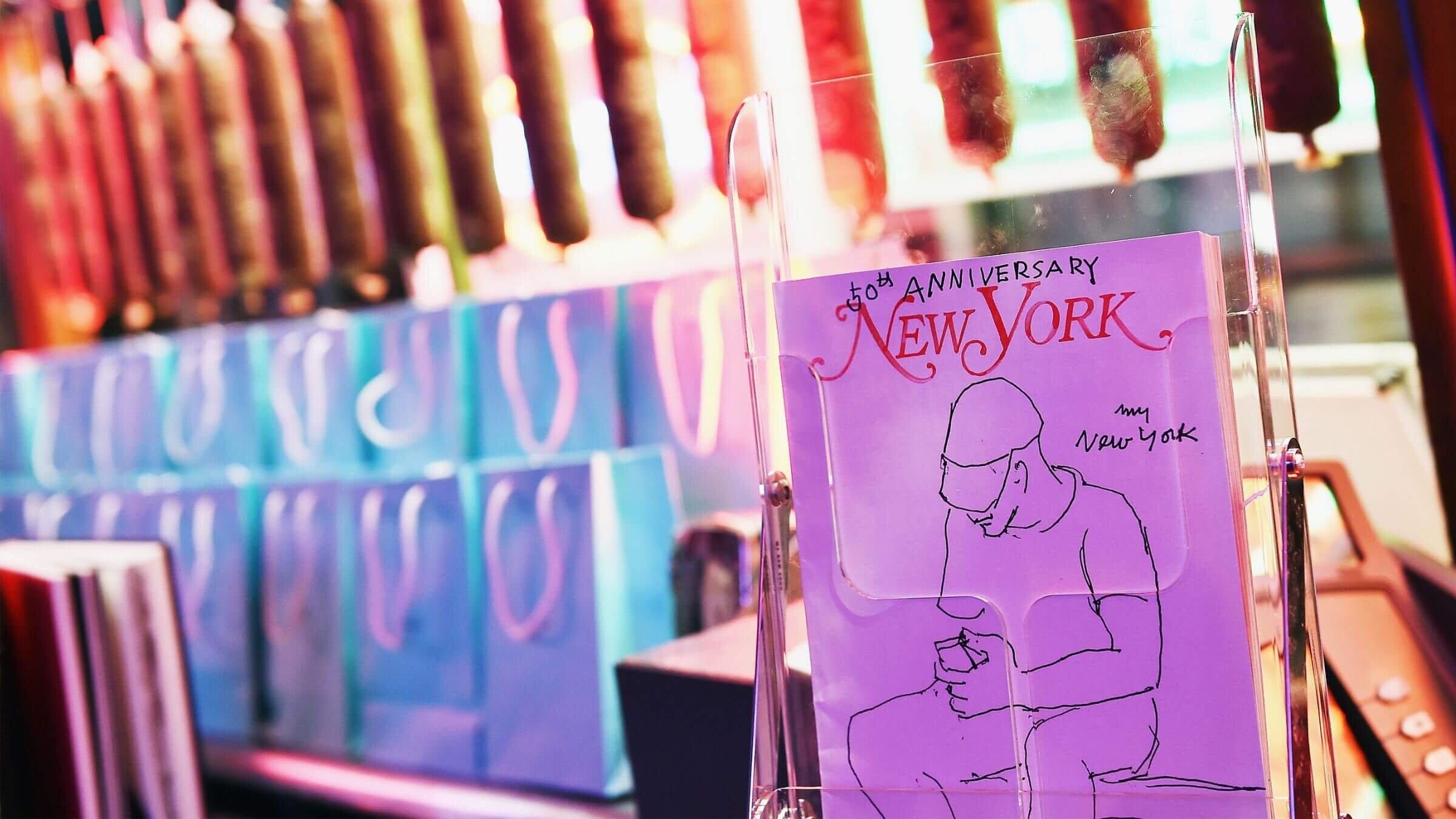
As editors of New York Magazine dug in their heels this week, defending the magazine’s viral “Habibi City” package published earlier this month, 14 Sephardic and Mizrahi Jewish organizations delivered an open letter on Monday night, accusing the magazine of erasing Middle Eastern Jews from its coverage.
On Tuesday, Editor-in-chief David Haskell invited them to meet in September, saying he wants the magazine’s coverage to reflect the multitude of perspectives in the region.
In addition to asking for a meeting, co-signers of the letter, convened by JIMENA (Jews Indigenous to the Middle East and North Africa), asked the magazine to acknowledge what they call the package’s exclusionary framing and provide more representative coverage of Sephardic and Mizrahi Jews going forward.
The dispute centers on the magazine’s August issue about the city’s burgeoning Southwest Asian and North African cultural scene known as SWANA. The package explores restaurants, cafes, cultural collectives and dance parties, tracing much of their growth to the war in Gaza that followed the Hamas-led attacks on Israel on Oct. 7, 2023.
“Out of that resistance,” the magazine writes, “a cultural ecosystem started to bloom.”
This week, the magazine published a statement standing by its use of the term genocide to describe Israel’s actions in Gaza, adding that “accusations of antisemitic intent were in fact obfuscating an overwhelming scholarly consensus, and that its use would be allowed in our pages.”
The open letter did not address the use of that term. Instead, it addressed the article’s framing.
The package describes membership in SWANA community in political terms.
“To be in SWANA community,” one article says, means “embracing a set of shared beliefs: that Palestinians deserve human rights. That what happened in Gaza in the aftermath of October 7 constitutes a genocide. That social justice and social welfare override capitalist concerns.”
The same article describes the place of Israelis within SWANA culture as “complicated,” in part because of the term’s “political framework.”
It also says SWANA New Yorkers “face xenophobia, Islamophobia and Zionism” in the city — language that drew particular ire from the coalition and online critics.
According to the letter, New York Magazine’s framing turns SWANA from a geographic and cultural identity into an ideological one, excluding many of New York’s Jews from the Middle East and North Africa unless they reject Israel — the country where many of their families found refuge after fleeing persecution and discrimination elsewhere in the region.
“A Mizrahi Jew whose grandparents were born in the region, expelled from their country of origin, and who carries the region in her language, liturgy, and kitchen belongs only upon disavowal of the movement through which her family survived,” the letter reads.
As the letter puts it, for a great majority of Sephardic and Mizrahi Jews to be represented “as we actually are” means representing them as Zionists.
The letter also faults the package for invoking Oct. 7 repeatedly without acknowledging the atrocities committed that day and erasing the region’s non-Muslim populations.
“When we read ‘Habibi City,’ we immediately saw that this wasn’t something one organization should answer alone,” Sarah Levin, JIMENA’s executive director told the Forward. “The feature made claims about who belongs in contemporary Middle Eastern and North African and ‘SWANA’ communities in NYC, so the response needed to come from the breadth of the communities being written out.”
After she read the package, she began contacting other Sephardic and Mizrahi organizations about writing an open letter. Within four days, all 14 organizations had signed on.
“Iranian, Iraqi, Syrian, North African and Sephardic communal organizations almost never act in concert, and they’ve united around one argument,” Levin said.
Signatories include the American Sephardi Federation, the Iranian American Jewish Federation of New York and the Jewish Community Relations Council of New York.
Levin said the groups had little difficulty reaching consensus. “When the argument is, ‘We exist, and we will not be defined out of our own region,’ there isn’t much for our communities to debate.”
What concerned Levin most, she said, was the size of New York Magazine‘s audience and cultural reach. The Pulitzer Prize-winning bi-weekly magazine boasts reaching 1.8 million readers each week.
“When a magazine that shapes American culture tells millions of readers that belonging to the Middle East requires renouncing Zionism, that is not a small thing,” Levin said. “That is why we responded the way we did.”
Tags