Protecting Jewish Cultural Property
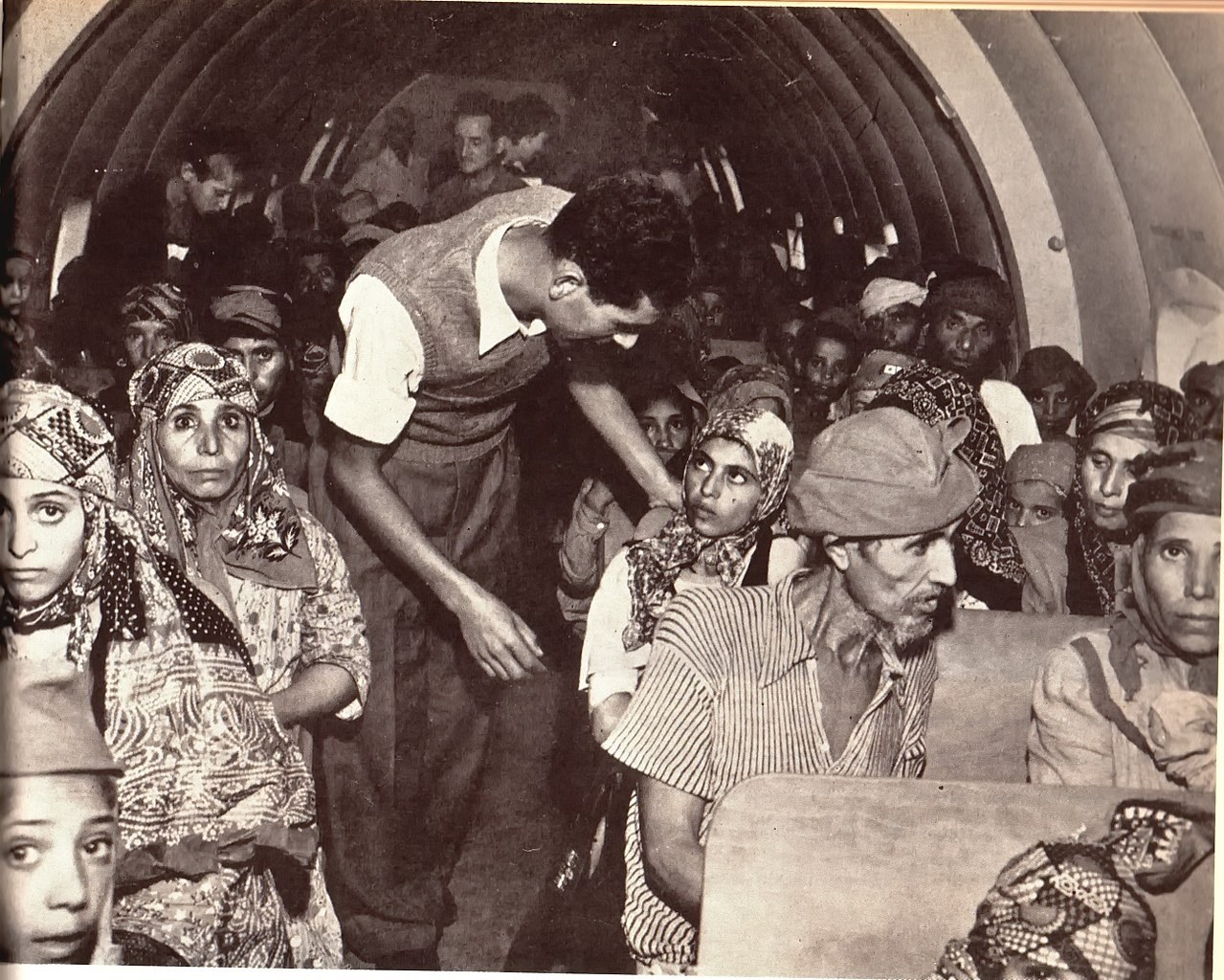
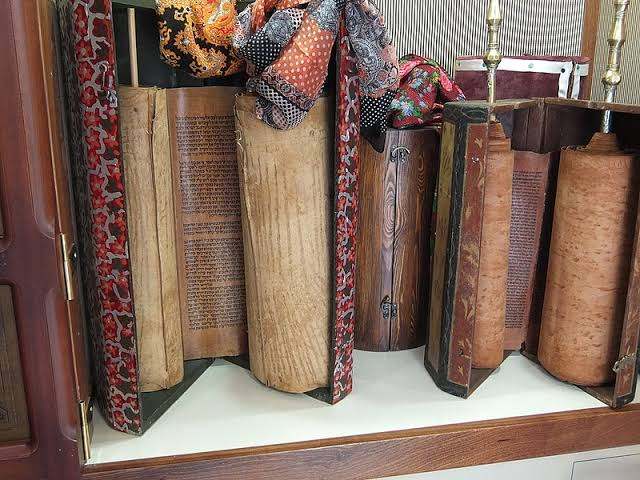
JIMENA advocates for the rights of Jews from the Middle East and North Africa to the cultural property taken from their families and communities. From Torah scrolls and religious manuscripts to school records, communal archives, and ceremonial objects, these materials preserve the histories of Jewish communities that lived in the region for centuries—and, in many cases, millennia.
When Jews were expelled or forced to flee persecution, much of their private and communal property was confiscated or left behind under duress. Today, disputes over ownership, international cultural property agreements, and barriers to access can further separate displaced communities from their heritage. JIMENA works to ensure that preservation policies recognize the people who created, owned, and used these materials, and respect their rights and those of their descendants.
Heritage Taken from Its Communities
The loss of Jewish cultural property extends beyond the monetary value of individual objects. A religious manuscript carries generations of learning. A synagogue’s records document communal life. A school register preserves the names of children whose families may later have scattered across the world.
For displaced Jews and their descendants, these materials connect family memory with the historical record. JIMENA’s position is that persecution and forced displacement do not extinguish a community’s rights to its heritage. A government’s possession of confiscated Jewish property should not override the claims of the individuals and communities from whom it was taken.
Cultural Property Agreements and Jewish Rights
The United States enters into cultural property agreements with foreign governments to help combat looting and illicit trafficking. Often called Memoranda of Understanding, or MOUs, these agreements establish restrictions on importing designated categories of archaeological and ethnological materials into the United States.
JIMENA raises concerns when these restrictions encompass Jewish religious and communal materials without adequately accounting for their confiscation or the displacement of their owners. Treating such objects solely as the cultural heritage of their country of origin can reinforce government claims while overlooking the rights of Jewish communities now living elsewhere.
We advocate for explicit protections for Jewish and other minority cultural property, meaningful consultation with affected communities, and policies that distinguish the prevention of illicit trafficking from the recovery of heritage taken through persecution. Our advocacy also calls for accountability in the protection of remaining synagogues, cemeteries, archives, and other Jewish heritage sites.
Learn more about cultural property agreements and JIMENA’s advocacy
The Iraqi Jewish Archive
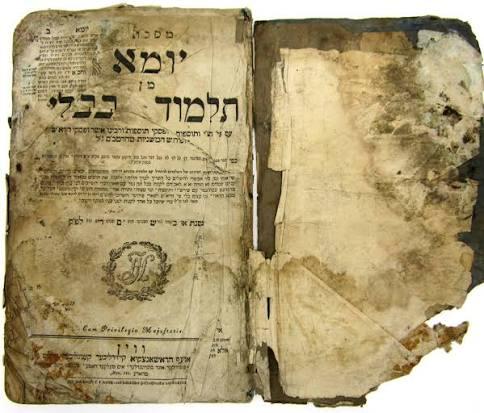
The Iraqi Jewish Archive illustrates what is at stake. In May 2003, American soldiers discovered thousands of Jewish books and documents in the flooded basement of Saddam Hussein’s intelligence headquarters in Baghdad. The materials were brought to the United States for conservation, and the National Archives undertook their preservation and digitization.
The collection includes religious texts, school records, correspondence, and other evidence of Iraq’s once-thriving Jewish community. Materials had been seized from Jewish institutions, yet the agreement governing their removal provided for their eventual return to Iraq.
JIMENA has challenged returning this heritage to the Iraqi government without recognizing the rights of the Jewish community from which it was taken. Our advocacy centers the voices of Iraqi Jews and their descendants in decisions about the collection’s future, ownership, and accessibility.
Reconnecting Families with Their History
Alongside our advocacy, JIMENA serves as the fiscal sponsor of Voices from the Archive, a project created by David Breslauer to make the digitized Iraqi Jewish Archive more accessible.
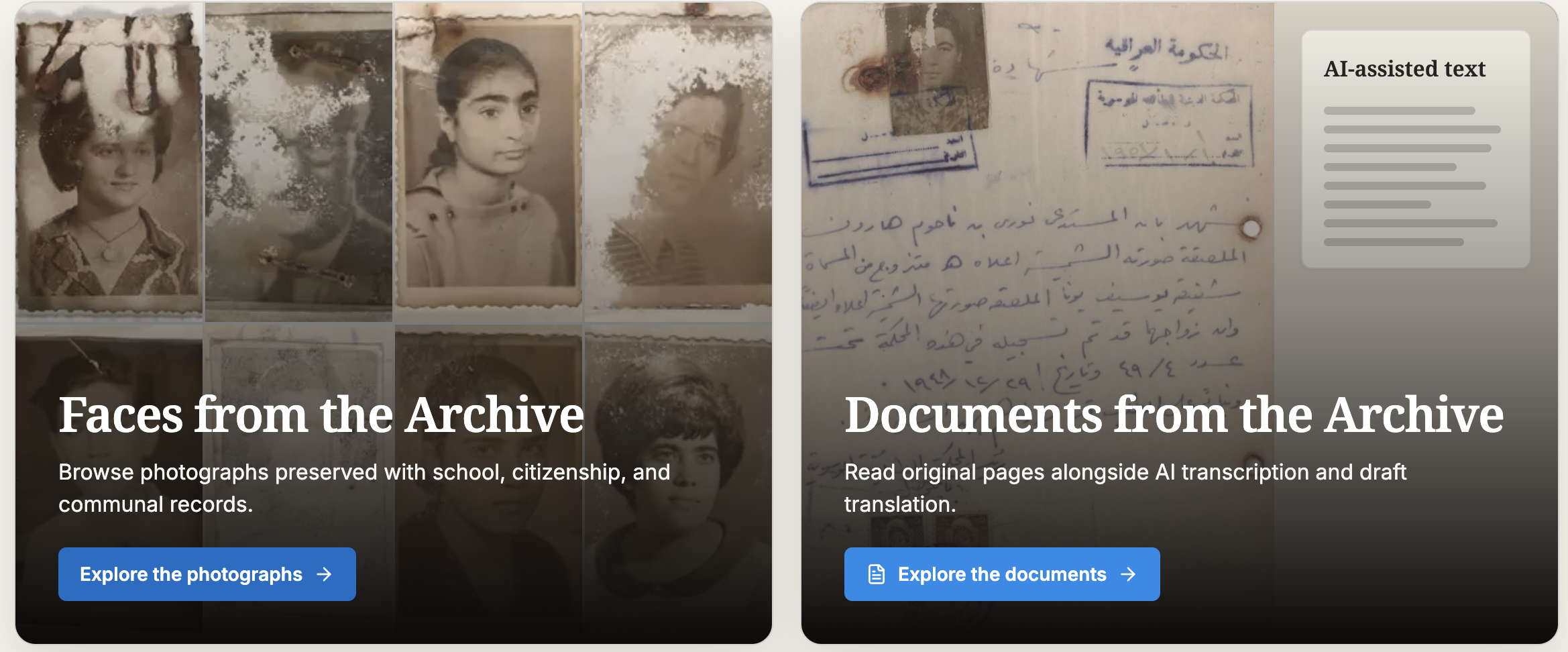
The platform uses AI-generated transcriptions and translations to help visitors search and explore documents across languages. Families can look for names, schools, and places connected to their histories, while researchers and educators can investigate the religious, cultural, and everyday life of Iraqi Jews. Transcriptions and translations remain connected to the original archival images so visitors can examine the underlying sources.
Explore Our Work
Voices from the Archive: Explore Iraqi Jewish History
Pattern of Abuse: The Iraqi Jewish Archive and Cultural Property Agreements
JIMENA’s Cultural Property Statements