Rights and Redress for Jewish Refugees
Bringing Jewish Refugee Voices to the United Nations
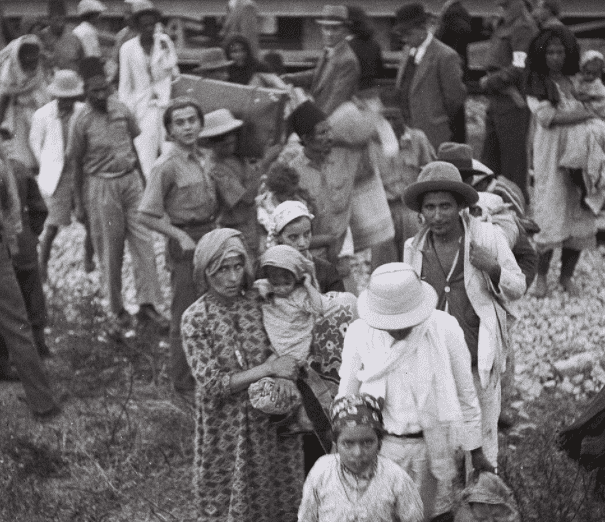
No account of the Middle East is complete without the nearly one million Jews who were driven from it. We make sure the United Nations hears their story.
JIMENA works to ensure that the histories, rights, and voices of Jews from the Middle East and North Africa are represented at the United Nations. Through refugee testimony, formal submissions, diplomatic engagement, and coalition building, we advocate for recognition of displaced Jewish communities and challenge the exclusion of Sephardic and Mizrahi experiences from international discussions of human rights, refugees, and peace.
Testimony
Bringing Jewish refugee voices to the UN
Personal testimony is central to JIMENA’s advocacy. Our co-founder, Gina Waldman, a Jewish refugee expelled from Libya in 1967, was the first former Jewish refugee from an Arab country to testify before the UN Human Rights Council, bringing firsthand accounts of persecution and displacement to the international community. Her testimony helps ensure that discussions of the Middle East include the experiences of the region’s Jewish communities.
In 2019, JIMENA worked with Israel’s Mission to the United Nations on a commemoration of Jewish refugees from the Middle East and North Africa at UN headquarters in New York. The gathering brought together ambassadors, UN officials, and community members to acknowledge this history and call for recognition of Jewish refugees’ rights.
The UN Commission of Inquiry
Challenging the omission of Jewish history
In May 2021, the UN Human Rights Council created an open-ended Commission of Inquiry to investigate “all underlying root causes” of the Israeli-Palestinian conflict, and invited individuals and organizations to submit evidence. JIMENA answered. Working with HARIF, the UK Association of Jews from the Middle East and North Africa, we launched a drive to collect testimonies from Jewish refugees and their families.
The circumstances that brought hundreds of thousands of Jews to Israel, and that forced them from their former homes, are part of those root causes. Our submission set out why.
|
May 2021 |
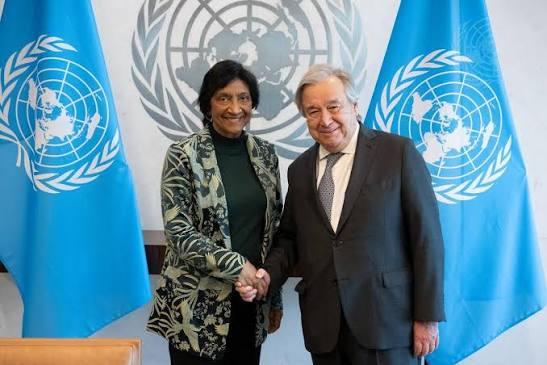
The UN Human Rights Council establishes the Commission of Inquiry, chaired by Navi Pillay. |
February 2022 |
JIMENA submits about 300 pages of testimony from Jewish refugees of the Middle East and North Africa, documenting persecution, dispossession, loss of citizenship, and forced displacement. |
June 7, 2022 |
The Commission releases its first report. The testimonies of Jewish refugees are not addressed. |
June 13, 2022 |
JIMENA publicly challenges the omission and republishes its cover letter to Chair Pillay. Read our response. |
What our submission told the Commission
1. Jews became hostages to the conflict
Jews thousands of miles from the conflict were subjected to collective punishment. Discriminatory laws stripped them of citizenship, excluded them from jobs, froze their bank accounts, and sequestered their property without compensation, often in the name of “anti-Zionism.”
2. That history is a root cause
Roughly 650,000 Mizrahi and Sephardic Jews found refuge in Israel. Their descendants are about half of Israel’s Jewish population, and many believe, with ample historical evidence, that Israel is indispensable to their safety. No account of the conflict’s root causes can succeed without reckoning with this history.
3. Leaving it out distorts the picture
Portraying Israeli Jewish society as solely European erases half its people and weakens any path to peace. When Mizrahi Jews hear their presence in the region called “colonial,” they hear an echo of the narratives used to justify their expulsion. See the laws that criminalized Zionism.
Our hope is that the Commission will not replicate mistakes of the past by relegating the experiences of Middle Eastern Jews to footnotes and asides, but will fully incorporate them as one facet among many others that can assist in developing a just and sustainable future for Jews, Palestinians, and all those who are owed justice, security, and safety in the Middle East.
JIMENA’s letter to Commission Chair Navi Pillay
When the Commission’s first report ignored these testimonies, JIMENA said so publicly. Our advocacy affirms that understanding Middle Eastern Jewish history is essential to advancing justice, reconciliation, and a sustainable peace for everyone in the region. In July 2025, all three of the Commission’s original members announced their resignations; JIMENA continues to press UN bodies to include Jewish refugee experiences in their work.
Read our submission and response →
Documentation
Documenting rights and supporting redress
JIMENA’s international advocacy is supported by its participation in the International Rights and Redress Campaign. Through this effort, we collect accounts of human rights violations and document individual and communal property lost by Jews displaced from Arab countries and Iran. This documentation preserves evidence and supports efforts to secure recognition and redress for uprooted Jewish communities.
Indigenous recognition
Advancing Indigenous recognition and inclusion
In 2025, JIMENA began an effort to ensure that Jews and other Indigenous and marginalized minority communities from the Middle East and North Africa are included in the United Nations’ Indigenous rights mechanisms.
Through coalition building and proposed UN convenings, this effort seeks to bring Jewish, Druze, Coptic, Assyrian, Yazidi, Amazigh, and other community perspectives into international discussions of Indigenous rights. Priorities include engagement with the UN Permanent Forum on Indigenous Issues, the Expert Mechanism on the Rights of Indigenous Peoples, and the Special Rapporteur on the Rights of Indigenous Peoples.
The initiative emphasizes women’s leadership, firsthand testimony, cultural preservation, and practical pathways to participation. It advances recognition of Jewish Indigenous ties to Israel alongside the rights and experiences of other longstanding peoples of the region.
Our work at the United Nations
The legal record
The Laws That Criminalized Zionism →
Country by country, the nationality codes, decrees, and seizures that stripped Jews of their rights across the Middle East and North Africa.