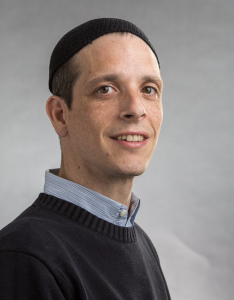
Ty Alhadeff
Director of Education
Ty Alhadeff is the Director of Education at JIMENA (Jews Indigenous to the Middle East and North Africa), where he leads national initiatives in education, scholarship, cultural preservation, and communal leadership. His work encompasses curriculum development, publications, professional training, and partnerships that bring Sephardi and Mizrahi perspectives into classrooms, educational institutions, and Jewish communal life.
At JIMENA, Alhadeff created and developed the Sephardi & Mizrahi Education Toolkit, a comprehensive digital resource featuring curated curricula, books, films, primary sources, and educational recommendations covering Jewish history, Tanakh and biblical commentaries, rabbinic biographies, Jewish law and religious traditions, literature, languages, the arts, Israel, and Jewish communities across the Middle East and North Africa. Designed for educators and Jewish institutions, the Toolkit provides practical guidance for integrating Sephardi and Mizrahi perspectives into classroom instruction, curriculum development, and communal programming.
Alhadeff also oversees Distinctions: A Sephardi and Mizrahi Journal, a publication featuring scholarship, literature, art, and contemporary Jewish perspectives through five thematic issues: Antisemitism, Unity for Israel, Diaspora, Resilience Through Transmission, and Education. He directs Voices of Distinctions, an educational series featuring the journal's contributors, including scholars, authors, artists, and educators, who discuss Sephardi and Mizrahi history, identity, cultural continuity, historical memory, and contemporary Jewish life.
Alhadeff also founded JIMENA's Sephardic Leadership Institute, which supports the professional development of Jewish educators and communal leaders through its Sephardic Leaders Fellowship, educational workshops, and national and international partnerships. Through these initiatives, he connects scholars, educators, and community leaders, helping institutions strengthen Sephardi and Mizrahi representation and develop more inclusive educational practices. His work also draws on findings and recommendations from the national demographic study of Sephardic and Mizrahi Jews in the United States, translating research into practical educational resources, institutional strategies, and community engagement.
He leads educational programs, presentations, and workshops for organizations including the Anti-Defamation League (ADL), PJ Library, the Lookstein Center for Jewish Education, the American Jewish Joint Distribution Committee (JDC), and UJA-Federation of New York. His presentations include training future rabbis and cantors through the Weitzman-JDC Fellowship, discussing Jewish diversity in partnership with ADL, and exploring Sephardi and Mizrahi archival preservation at the Association of Jewish Libraries conference. He has presented at NewCAJE on inclusive Jewish education and on the history of Jewish communities in the Middle East and North Africa during the Holocaust era, and has participated in professional gatherings organized by Prizmah, the Jewish Federations of North America (JFNA), and M²: The Institute for Experiential Jewish Education. He has also contributed historical research and educational content to the World Jewish Congress.
Through AIMEE (Advocates for Inclusive Middle Eastern Education), Alhadeff advances national educational partnerships and initiatives representing eight Indigenous and minority communities of the Middle East and North Africa: Amazigh (Berber), Assyrian, Coptic, Druze, Jewish, Kurdish, Yezidi, and Zoroastrian. Working with an interfaith and interethnic coalition, he promotes accurate representation of these communities' histories, cultures, religious traditions, and contemporary experiences in K through 12 education. His work includes developing educational resources, building partnerships, and conducting outreach through major national education conferences, including NCSS, NAME, NCTE, and SXSW EDU.
Previously, Alhadeff served as Sephardic Studies Research Coordinator at the University of Washington's Stroum Center for Jewish Studies, where he played a central role in establishing and expanding the Sephardic Studies Digital Collection, an extensive archive dedicated to preserving Sephardic Jewish history, languages, literature, and cultural heritage. He oversaw the acquisition, research, cataloging, preservation, and digitization of rare books, manuscripts, photographs, family records, religious texts, and Ladino (Judeo Spanish) materials dating from the 17th century to the present. Working closely with faculty, librarians, archivists, students, researchers, and community members, he supervised research assistants and volunteers, coordinated archival and oral history projects, and helped develop the university's growing collection of Sephardic historical resources.
Beyond archival preservation, Alhadeff conducted original historical research, translated and interpreted Hebrew, Ladino, and Aramaic sources, and published articles exploring Sephardic history, migration, literature, religious traditions, music, and cultural life, with particular attention to Ottoman Jewish communities and the Sephardic diaspora in the Pacific Northwest. He also organized scholarly lectures, conferences, public exhibitions, cultural celebrations, and educational programs, fostering collaboration between the university, international scholars, and Sephardic communities. His work helped make historical collections and scholarly research accessible to educators, students, researchers, and the broader public.
Among his digital projects are Exploring Sephardic Life Cycle Customs, an educational resource documenting Sephardic religious practices and traditions surrounding birth, childhood, marriage, death, and mourning, and Seattle Sephardic Legacies, which highlights the migration, history, language, religious institutions, and cultural contributions of Seattle's Sephardic communities. Through his research, publications, archival initiatives, and public programming, Alhadeff helped strengthen the University of Washington's Sephardic Studies Program as a center for scholarship, cultural preservation, and community engagement.
Alongside his work in Jewish education, Alhadeff spent more than a decade working with teenagers and young adults in Seattle's youth social service sector, including those experiencing homelessness, family instability, foster care involvement, and mental health and behavioral challenges. He also taught World History and Judaic Studies to high school students and worked in Jewish day schools, synagogue education, and youth leadership programs, supporting academic achievement, Jewish identity, and community engagement.
He has authored more than 30 articles, essays, and scholarly contributions on Sephardic history, literature, education, and religious traditions, drawing on Hebrew, Ladino (Judeo Spanish), and Aramaic sources, with some of his work translated into Spanish, Arabic, and Turkish. His research spans Sephardic migration and diaspora communities, Ladino language and literature, religious customs and life cycle traditions, music, foodways, and archival preservation, with particular attention to Ottoman Jewry and the Sephardic communities of Seattle. His work serves as a resource for researchers, educators, journalists, and Jewish communities worldwide.
His scholarly contributions include “The Seeds for a New Judaeo-Spanish Culture on the Shores of Puget Sound?” in Sephardic Trajectories: Archives, Objects, and the Ottoman Jewish Past in the United States (Koç University Press), and “Lessons from the Sephardic and Mizrahi Traditions,” published in Conversations. His writing has appeared in The Jerusalem Post, The Times of Israel, My Jewish Learning, AJS Perspectives, and University of Washington publications. His educational work has received coverage in Tablet Magazine, eJewishPhilanthropy, J. The Jewish News of Northern California, and other publications.
A longtime member of Seattle's Sephardic community, Alhadeff also serves on the board of Congregation Ezra Bessaroth, contributing to the preservation of Sephardic religious and cultural traditions and community life.
Digital exhibits and projects
Selected projects
- Sephardi & Mizrahi Education Toolkit: JIMENA. A digital collection of educational resources and curated recommendations supporting the inclusion of Sephardi and Mizrahi perspectives in Jewish education.
- Distinctions: A Sephardi and Mizrahi Journal: JIMENA. An online publication featuring scholarship, literature, art, and contemporary perspectives on Sephardi and Mizrahi life.
- Sephardic Studies Digital Collection: University of Washington Libraries. An archival collection preserving historical documents, books, photographs, and other materials related to Sephardic Jewish history and culture.
- Exploring Sephardic Life Cycle Customs: University of Washington. An educational exhibit documenting Sephardic traditions surrounding childbirth, naming ceremonies, circumcision, bar mitzvah, weddings, marriage contracts, funerals, and memorial practices.
- Seattle Sephardic Legacies: University of Washington, Stroum Center for Jewish Studies. A digital project highlighting Seattle's Sephardic history and cultural heritage.
Writings and publications
Selected writings
Scholarly publications and book chapters
- Sephardic Trajectories: Archives, Objects, and the Ottoman Jewish Past in the United States, Koç University Press. Chapter: “The Seeds for a New Judaeo-Spanish Culture on the Shores of Puget Sound?”
- Old Media, New Media: Librarians and Archivists Reflect, AJS Perspectives
- Lessons from the Sephardic and Mizrahi Traditions, Conversations, Institute for Jewish Ideas and Ideals
Historical research, literature, and Sephardic cultural traditions (University of Washington, Stroum Center for Jewish Studies)
- The Benezra Collection: A Seattle Sephardic Legacy
- The Tale of Sephardic Seattle's Refugee Rabbi
- Seattle's Sephardic Veterans of the World Wars
- The Ethics of Our Fathers in the Sephardic Tradition
- Wisdom for Politicians from a Ladino Poet: Avoiding a Nuclear Inferno
- New Light Shed on Sephardic Sources for Hanukkah Heroes
- The High Holidays in Ladino: A Rhodesli Custom from Romania to Johannesburg, Seattle, and Beyond
- Tisha Be‑Av in Sephardic Seattle: A Ladino Journey from the Old World to the New
- Binding of Isaac in Ladino: A Sephardic New Year Poem
- “Who Knows One?” in Ladino: The Power of Oral Tradition at the Sephardic Passover Seder
- The Faces and Voices of Sephardic Music in Seattle
- Sephardic New Year Cards and a Seattle Printing Press
- Learning Ladino with David Bunis
- By the Numbers: Building the Sephardic Studies Digital Library
- Borekas and the Flavor of Rhodes: Paradise Lost, Recipe Saved
- Manna from Heaven: Bumuelos, a Sephardic Hanukkah Treat
- A Sephardic Thanksgiving: “Uniting the Whole Community”
- Scenes of Shavuot from Salonica to Seattle
- Sephardic Purim Customs from the Old World to the Pacific Northwest
- Dancing and Jumping or Laughing and Singing? Sephardic Purim Songs and Customs
- What Are Sephardic Rosh Hashana Customs?
- A Walk Down Sephardic Memory Lane: Reflections on Ladino Day
- Celebrate Ladino Day 2015 at the UW
Jewish education, contemporary issues, and opinion
- Jewish Schools Must Embrace Sephardi and Mizrahi Culture, The Jerusalem Post
- This Mizrahi Heritage Month, We Must Be United for Israel, The Jerusalem Post
- Day Schools Can Change: Incorporating Sephardic Culture and Traditions, The Times of Israel
- Between Crusade and Jihad: Why We Need Sephardi Education More than Ever, Distinctions
- Editor's Note: Resilience Through Transmission, Distinctions
- Editor's Note: Diaspora, Distinctions
Articles for general audiences (My Jewish Learning)
- The 11 Best Ladino Expressions and Phrases to Know (with Devin Naar)
- Salonican Shavuot Traditions
- “Who Knows One?” in Ladino: Songs at the Sephardic Passover Seder
- Sephardic Songs Add Merriment to Purim
Recognition
Scholarly references
- Review of Sephardic Trajectories, by Semih Gökatalay, Sephardic Horizons
- Review of Sephardic Trajectories, Review of Middle East Studies, Cambridge University Press
- The Queen of Herbs: A Plant’s-Eye View of the Sephardic Diaspora, by Sarah Abrevaya Stein, Jewish Quarterly Review
- The Sephardi Century: A Relational History of a Los Angeles Community, 1893–1992, by Max Daniel, UCLA doctoral dissertation
- The Last Generation of Native Ladino Speakers? Judeo-Spanish and the Sephardic Community in Seattle, by Mary K. FitzMorris, University of Washington
- Sephardic and Mizrahi Jews in the United States, national demographic study (Practitioner Advisor)
- Jewish Salonica: Between the Ottoman Empire and Modern Greece, by Devin E. Naar, Stanford University Press
- About the Sephardic Studies Collection, University of Washington
In the press
Selected press and media coverage
- JIMENA Launches New Tool Kit for Day Schools to Better Teach, Include Sephardi and Mizrahi Jewry, eJewishPhilanthropy
- Ramping Up Sephardic Education, Tablet Magazine
- JIMENA: Expanding Its Role as an Educational Leader, Jim Joseph Foundation
- JIMENA Conference Urges Teachers to Include Sephardic Heritage in the Classroom, eJewishPhilanthropy
- JIMENA Launches New Journal to Focus on Sephardi, Mizrahi Identity, eJewishPhilanthropy
- New Online Journal Elevates Contemporary Sephardic and Mizrahi Voices, J. The Jewish News of Northern California
- Journal About Jews Spotlights Antisemitism, Atlanta Jewish Times
- Nueva revista en línea eleva las voces sefardíes y mizrajíes contemporáneas, eSefarad
- JIMENA Elevates Underrepresented Jews Through Sephardic Leadership Institute, Jewish News Syndicate (JNS)
- Newly Founded Sephardic Leadership Institute Will Elevate Sephardic and Mizrahi Jewish Voices, J. The Jewish News of Northern California
- A New Fellowship Aims to Connect and Support Sephardic Jewish Professionals, eJewishPhilanthropy
- Exploring Sephardic—and Seattle—History, University of Washington, College of Arts and Sciences
- After WWII Nightmare, a Generous Life, University of Washington, College of Arts and Sciences
- Ty Alhadeff Joins Expanding Sephardic Studies Program, University of Washington, Stroum Center for Jewish Studies
- Sephardic Studies Program: International Recognition, University of Washington
- Was Elia R. Karmona the Sholem Aleichem of Ladino?, Tablet Magazine
- A Sephardic Seder, of Sorts, for Rosh Hashanah, Jewish Telegraphic Agency (JTA)
- For Centuries, Spanish Jews Have Held Rosh Hashanah Seders, The Forward
- ‘Anyada Buena!’: A New Children's Book, ‘A Turkish Rosh Hashanah,’ Paints a Vibrant Picture of an Ancient Jewish Community, Jewish Journal of Greater Los Angeles
- Sephardic News and Cultural Highlights, American Sephardi Federation
- Digging Up the Roots of Holiday Traditions: Hanukkah, Tenement Museum
- 10 Ladino Sayings Explaining the World We Live in Today, World Jewish Congress
Contact
Get in touch
Ty Alhadeff, Director of Education, JIMENA
ty.alhadeff@jimena.org