Jewish History
Explore the History of the Jews of Algeria
For nearly two thousand years, Jews were part of the life of Algeria, from Roman era towns to the bustling ports of Algiers and Oran and the hilltop city of Constantine. They spoke Judeo Arabic and later French, studied with great rabbis who found refuge here from Spain, and helped create the Andalusian music still loved across North Africa. In 1961 and 1962, in little more than a year, almost the entire community of about 140,000 people left the country.
2,000 years of Jewish life in Algeria | About 140,000 Jews in Algeria on the eve of independence | 1962 the year nearly the entire community left |
Ancient roots
Jewish life in Roman and medieval North Africa
Jewish gravestones and inscriptions show that Jews lived in the region of today's Algeria by the first centuries of the Common Era, under Roman rule. Family traditions place their arrival even earlier. Over the following centuries, Jewish communities lived under Byzantine, Berber, and Arab Muslim rulers, and like Christians they held the protected but unequal status of dhimmi.
A refuge from Spain
1391 and 1492
After violent persecutions swept Spain and the Balearic Islands in 1391, many Jews fled across the Mediterranean to Algeria. Among them were two of the greatest rabbinic authorities of their time, Rabbi Isaac ben Sheshet Perfet and Rabbi Simeon ben Zemah Duran, who led the community of Algiers and shaped Jewish law across North Africa for generations. A second wave arrived after the 1492 expulsion from Spain, when thousands settled in Tlemcen, Oran, and other towns. Over time, these newcomers and the long established local Jews blended into one community.
Ottoman Algiers
Merchants of the Mediterranean
Under Ottoman rule, from the sixteenth century to 1830, Jewish merchants and traders, including families from Livorno in Italy, linked Algiers to ports across the Mediterranean. A long dispute over debts owed to two Jewish trading families, the Bacris and the Busnachs, became one of the triggers of the French invasion of 1830.
French rule
Citizenship and its limits
After France conquered Algeria, it reorganized Jewish communal life: rabbinical courts lost their authority in 1841, and official consistories were created in Algiers, Oran, and Constantine in 1845. In 1870, the Crémieux Decree made about 33,000 Algerian Jews French citizens, while most Muslim Algerians remained colonial subjects without full rights. Many Jewish families embraced French schools and culture. Citizenship did not bring safety: antisemitic riots broke out in Oran and Algiers in 1897 and 1898, and in August 1934, a pogrom in Constantine killed 25 Jews and devastated Jewish shops and homes.
World War II
Citizenship taken away
In October 1940, the Vichy regime revoked the Crémieux Decree, stripping about 110,000 Algerian Jews of their French citizenship. Jewish children were pushed out of schools, adults were barred from many professions, and Jewish property was confiscated. Citizenship was not restored until October 1943, almost a year after Allied forces landed in North Africa.
Independence and departure
The end of a community
During Algeria's war of independence from 1954 to 1962, Jews were caught between French and Algerian nationalist forces. In December 1960, the Great Synagogue of Algiers was ransacked during riots. In June 1961, the beloved musician Cheikh Raymond Leyris was shot and killed in the market of Constantine, a murder that convinced many families they had no future in the country. As independence came in 1961 and 1962, about 130,000 Algerian Jews left for France and about 10,000 for Israel. Algeria's 1963 nationality code tied citizenship to Muslim religious status, and the Great Synagogue of Algiers was converted into a mosque. Today very few Jews remain in Algeria.
Living heritage
Algerian Jewish culture today
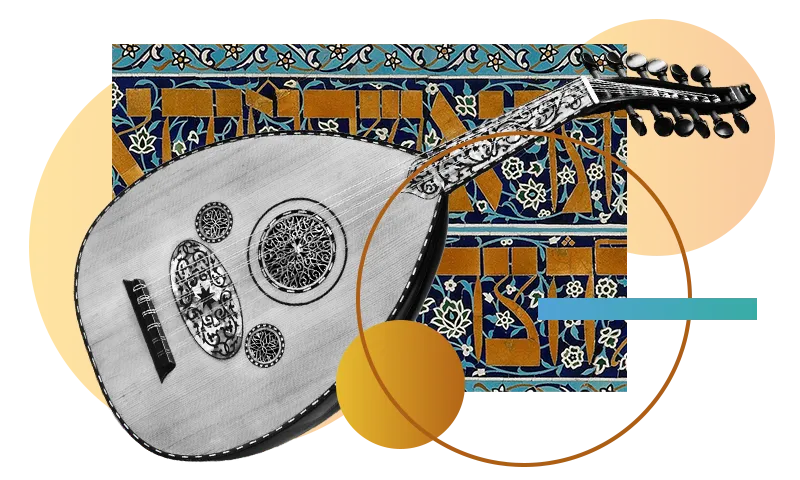
Algerian Jews carried their culture to France, Israel, and the Americas: the Andalusian music of Cheikh Raymond, Lili Boniche, Reinette l'Oranaise, and Enrico Macias; dishes like couscous and the Shabbat stew called t'fina; and synagogue melodies and customs passed down for centuries.
Explore further
Keep exploring
Timeline of Jewish Presence → Key dates in the history of the Jews of Algeria, at a glance. |
Policies, laws, and decrees → The laws that shaped the rights and lives of Jews in Algeria. |
Oral histories from Algeria → Watch Algerian Jews tell their own stories. |
Algerian Jewish culture → Languages, music, food, and traditions. |
Algerian Jewish recipes → Dishes for Shabbat, holidays, and every day, and the stories behind them. |
Books on the Jews of Algeria → Histories, memoirs, novels, and children's books in JIMENA's library. |
For the classroom
Questions to discuss
- In 1870 Algerian Jews became French citizens, and in 1940 that citizenship was taken away. How might it feel to have your rights given and taken away by a distant government?
- Why do you think the murder of Cheikh Raymond Leyris in 1961 convinced so many families that they had to leave?
- Which traditions did Algerian Jews carry to France and Israel? How do communities keep their culture alive after leaving home?
Sources: Jews in Islamic Countries: Algeria (Jewish Virtual Library); Jews of the Maghreb on the eve of World War II (US Holocaust Memorial Museum); The Crémieux Decree (Jewish Virtual Library); Cheikh Raymond (European Institute of Jewish Music).