Personal Stories
Discover the personal stories, memories, and lived experiences of Jews from North Africa and the Middle East, offering intimate perspectives on community life, cultural traditions, migration, and identity across generations.
Written Narratives
Liliane Bakech:
Liliane Bakech recalls her childhood in Algeria, cherished Jewish family traditions, marriage and motherhood, and the profound personal losses and upheaval that shaped her family's eventual departure for France.
Jacques Guy Benhamou
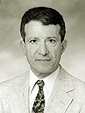
Jacques Guy Benhamou: Memories of Jewish Life in AlgeriaMy name is Jacques Guy Benhamou. I do not know the exact origins of my surname. My ancestors were also called Benhamou, and they lived in Debdou, Morocco. We have tried to discover the origins of the name, but we have never found a definitive answer.My Hebrew name is Yaakov, after my grandfather. In our family, it was customary for the eldest son to receive the name of his paternal grandfather.Family Origins and Early ChildhoodMy grandfather was born in 1874 in a small village near the Moroccan border. He lived in Maghnia, a small town in western Algeria, where he married my grandmother, Abuda Benhayun. She was born in Nedroma, into a family originally from Nemours.All these places were near the Moroccan border because our ancestors came from Debdou. Many Jewish families lived there, and some supplied food and other necessities to the caravans traveling toward the small coastal port of Honaine.My grandparents married in Maghnia, and their first child was my father, Abraham Albert Benhamou. In Algeria, we had Hebrew names that were often adapted into French. My father's Hebrew name, Abraham, became Albert, while my own name, Yaakov, became Jacques.My father was born in Maghnia in 1898. He attended a French school and was apparently an excellent student, but at the age of 12, he left school to earn a living. His first job was as a waiter in a café.At 18, in 1916, he was enlisted in the French Army and sent to the front during World War I. He was wounded toward the end of the war and was subsequently offered a position with the railway administration.He was assigned to Relizane, a town not far from Arzew and Mostaganem.In 1924, my father married, and he and his wife had a son named René. Tragically, his wife died a year after their child's birth. Three years later, my father met my mother, and they married in 1928.I was born in 1929 in Tlemcen, although my parents were living in Algiers, where my father worked. My mother wanted to be near her family in Tlemcen, so in 1931 we moved to Sidi Bel Abbès, about 50 miles away.My second brother was born there in 1932. Later, my father was transferred to Aïn Fezza, a small village approximately nine miles from Tlemcen, where he became stationmaster.We lived in Aïn Fezza until my father's death in 1938, when he was only 40 years old.His death was a terrible shock. I was nine, and my younger brothers were six and three. I remember that after the funeral, my youngest brother, George, asked me, "Father isn't going to come back?"He was too young to understand that our father was gone forever.We immediately moved to Tlemcen and stayed with my grandparents. After several months, we found an apartment directly across the street from their home.We lived there from 1939 until our departure from Algeria. I remained there until 1954, when I married.Growing Up in TlemcenWhen I think about that period, I remember a profound sadness surrounding our family. My grandmother was nearly blind and rarely left the house. She lived with three of my aunts.Moving from Aïn Fezza to Tlemcen was an enormous adjustment for me.In Aïn Fezza, I attended a small village school with perhaps 15 or 20 pupils in a single classroom. I had two or three close friends, including an Arab boy named Menura and another boy named François, whose family came from Corsica.We got along very well.When I arrived in Tlemcen in December 1938, everything was different. I attended the Jules Ferry School, where there were 30 or 35 pupils in each classroom.I remember that boys wore berets in those days. Our school was situated on a slope, and nearby was another school attended by Arab pupils.Both schools dismissed students at the same time. As we walked home, some of the Arab boys would rush past us and snatch our berets.I was astonished. Why would they do such a thing?Fortunately, a Jewish friend who also had the surname Benhamou suggested that we take a different route home, even if it was longer, to avoid these encounters.That was one of my earliest experiences of hostility.But I had encountered antisemitism even earlier, when I was only seven years old.In Aïn Fezza, one of my friends' parents owned a café where we often played. During the elections of 1935 or 1936, people gathered there to discuss politics.One day, a man began singing an offensive antisemitic song.My friend's mother immediately told him to stop, explaining that a Jewish child was present.I never forgot that moment.Jewish Family Life and Religious TraditionsIn Aïn Fezza, we were the only Jewish family.My father insisted on keeping kosher, so we had to order meat from Tlemcen and have it delivered to us.When my brother Paul was born in 1935, relatives came from Maghnia to celebrate his brit milah, or circumcision ceremony. A rabbi traveled from Tlemcen to conduct the religious preparations.I remember my father wearing his stationmaster's uniform.There were smugglers who transported goods between Morocco and Algeria. Sometimes they would get off the train at Aïn Fezza to avoid police inspections in Tlemcen.Once, my father discovered a group of smugglers and pursued them. I remember being frightened as I watched him leave with a gun.I also remember his kindness toward animals.I loved walking in the countryside, gathering flowers and discovering birds' nests. Once, I brought home a nest containing baby birds.My father became angry."Why did you do that?" he asked. "Don't you see that they have the right to live? You must take them back where you found them."That lesson remained with me.He also had beautiful handwriting. I kept a copy of his signature. Because of his excellent penmanship, the mayor of our village asked him to help register births and deaths.Although we lived in Aïn Fezza, my mother was always homesick for Tlemcen. Whenever possible, she took the train to visit her family, and we frequently celebrated Jewish holidays there.I also remember visiting Maghnia, my father's birthplace, where many families shared our surname.There were so many Benhamous that it seemed as though every other house belonged to one.Our family traced its origins to Debdou, Morocco, where several prominent Jewish families had lived for generations, including the Cohen, Benzuzan, and Benhamou families.Some families maintained their own synagogues.Following the French conquest of Algeria in 1830, many Jews from Debdou crossed the border in search of better economic opportunities, settling first in Maghnia and later in larger towns such as Tlemcen.The Jewish Community of TlemcenTlemcen had a substantial and well-established Jewish community.Our street was essentially an extension of the Jewish quarter. My grandmother's building housed five Jewish families, while ours contained eleven.Most of the surrounding homes and businesses belonged to Jews.According to a census conducted during the Vichy period, there were 5,202 Jews living in Tlemcen in 1941, out of a total population of approximately 60,000.Jewish children attended French public schools rather than separate Jewish schools.We also had religious education through the Talmud Torah.My mother sent me there once, but I found the classroom disorderly and refused to return.Later, when I needed to learn Hebrew for my bar mitzvah, I studied privately with a rabbi who lived nearby.Many of Tlemcen's rabbis were highly knowledgeable in Jewish law and Talmud, although they primarily spoke Arabic or Judeo-Arabic rather than French.In the 1930s, Rabbi Israel Haddas Lebel, who came from Central Europe, helped reorganize Jewish religious education in the city.During my years in Tlemcen, the Jewish community constructed a large synagogue and renovated the synagogue of the Haverim, which was inaugurated in 1955, only a few years before Algerian independence.There were also numerous Jewish charitable and cultural associations.One of the most important religious figures associated with Tlemcen was Rabbi Ephraim Enkaoua, who fled persecution in Spain at the end of the fourteenth century.According to tradition, he first traveled to Morocco and then settled in Tlemcen.He was credited with healing the daughter of the local ruler and, in return, securing protection for the Jewish community.His tomb became an important pilgrimage destination. Jews traveled from throughout North Africa to pray there and seek blessings.There was also a pilgrimage site at Sidi Yacoub that attracted both Jewish and Muslim visitors.Tlemcen's Jewish community maintained a lively intellectual life as well. A literary association founded by young Jewish students in the early twentieth century brought together readers and scholars, including some non-Jewish members.World War II and the Vichy YearsAfter my father's death, our family lived in poverty.My mother received a small pension from the railway company, but it was barely enough to support four people.When the Vichy government came to power in 1940, life became even more difficult.The authorities introduced laws restricting Jews from certain professions and limiting Jewish enrollment in schools.I was expelled from school because I was Jewish.The discrimination was humiliating and deeply unsettling.Young Jewish men were also sent to labor camps, where conditions were terrible.In one camp near Sidi Bel Abbès, men were housed in crowded tents and forced to move stones or load railway wagons.Sanitation was poor, and prisoners endured insults and abuse from soldiers.The arrival of American forces in November 1942 changed our lives.When American military police arrived in Tlemcen, I approached them and offered to show them around the city.They needed someone to wash their laundry, so I suggested my mother.The Americans paid her for the work and also gave us food.That is how we survived during the war.Eventually, Jews regained their French citizenship, and students who had been expelled were permitted to return to school.But the atmosphere remained difficult. Some non-Jewish students resented our return.When the time came to choose a university, many of us avoided Algiers because of the antisemitism we expected to encounter there.In 1947, I went to Toulouse to continue my studies. Other Jewish students chose Paris or Montpellier.Marriage, Career, and the Algerian WarI married in July 1954.Only four days after our wedding, I had to travel to Paris to take an examination that would qualify me to teach.My wife and I subsequently moved to Algiers, where I needed to complete a year of professional training.Gradually, the political situation in Algeria deteriorated.Bombings became increasingly frequent, including attacks on cafés and public spaces.As part of my military obligations, I was required to serve periodically in territorial defense.For the first time in my life, I wore a uniform and carried a gun.I was assigned to inspect buses, passengers, and gasoline stations.Sometimes I even had to search the bags of my own students as they traveled to school.On one occasion, I spent a week guarding a facility where suspected terrorists were being held.I heard people in the corridors blaming Jews for everything that was happening.It was a frightening atmosphere.When Charles de Gaulle visited Algeria, we hoped that the situation might improve.We were optimistic enough to purchase an apartment in Algiers.But the violence continued.After surviving two bomb attacks, I requested a transfer to a school in France because I believed my family was in danger.We packed our belongings and left Algeria.Starting Over in FranceOur arrival in France was not easy.When I searched for an apartment, some landlords refused to rent to me after hearing my surname, Benhamou.Eventually, someone agreed to rent us a place, but the arrangement was unstable.After a year, we were asked to leave during the winter.I did not know that French law offered certain protections against winter evictions, so we moved out and found ourselves in very difficult circumstances.That was our welcome to France.For me, leaving Algeria was ultimately a relief because I no longer felt safe there.Other Jewish colleagues also left for France.I considered various possibilities for our future, including the United States, where my brother Paul had settled.At the time, I did not seriously consider moving to Israel because I feared the political and military difficulties the country might face.Reflections on Jewish Identity and the FutureToday, I feel disappointed by certain aspects of French society.Throughout my career, I maintained good relationships with non-Jewish colleagues, but I have been saddened by their silence in the face of growing antisemitism.I would have appreciated even a simple expression of sympathy.At one point, I was offered a senior position in the French Ministry, but I declined.I feared that if anything went wrong, my Jewish identity would be used against me.I preferred to avoid that possibility.I believe Israel needs a strong Jewish diaspora.Older Jews like me have a responsibility to maintain Jewish communal life in countries such as France, while younger generations may choose to build their futures in Israel.A strong diaspora can help confront antisemitism and anti-Zionism.Everything I have done to document my family's history and the history of Algerian Jewry has been for my grandchildren.I want them to remember where we came from, what we endured, and how we persevered.I hope that knowing this history will give them the courage to continue forward.
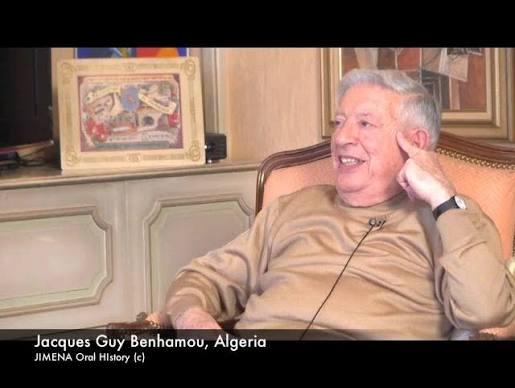
Claude Rouas
Claude Rouas recounts his childhood in Algeria, his family's Jewish traditions, experiences of antisemitism and migration, and his remarkable journey from poverty in Oran to becoming a celebrated restaurateur in California.
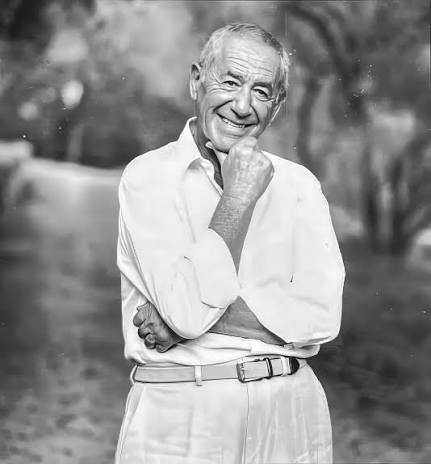
Didier Nebot
Didier Nebot reflects on his childhood in Algeria, Jewish life and traditions, the upheaval of the Algerian War, his family's departure for France, and the importance of preserving Algerian Jewish memory.
Algerian Oral History Collection
Paul Benhamou - پول بنحمو
Paul Benhamou feels uprooted. When Algerian independence came in 1962 he was forced to leave his home of Tlemcen.