Personal Stories
Discover the personal stories, memories, and lived experiences of Jews from North Africa and the Middle East, offering intimate perspectives on community life, cultural traditions, migration, and identity across generations.
Written Narratives
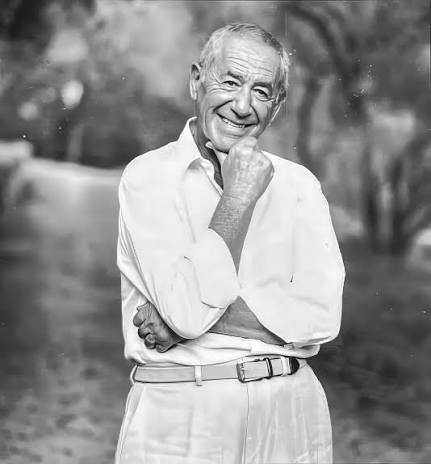
Claude Rouas
Claude Rouas (Z"L): From Algeria to the American Dream
Claude Rouas was born in Oran, Algeria, in 1933. Orphaned at a young age after both of his parents died of cancer, Claude was raised by extended family members, including his uncle, affectionately known as “Papa Isaac,” and his eldest brother, one of five siblings. Growing up in poverty without his parents, Claude learned the value of hard work early in life. His childhood jobs included selling movie tickets, peddling goods on the street, tailoring, and working as a pastry chef.
Claude grew up on an entirely Jewish street in Oran, bordering an Arab Muslim neighborhood. Although he recalls occasional conflicts between the communities, he generally remembers Jewish-Muslim relations during this period as peaceful.
In 1937, Claude's family migrated from Algeria to France in search of better opportunities and a more secure life. Their first home in Paris was a rented storefront, where they slept in the storage room and used the front of the shop as a makeshift dining room. The family returned to Algeria in 1941, where Claude remained until his eventual move to the United States in 1963.
Although Claude did not grow up in a particularly observant household, he was raised with a deep appreciation for Jewish traditions. He fondly recalls studying for his bar mitzvah, attending synagogue during Passover, and gathering with his family every Friday evening for a Shabbat meal of couscous and d'fina, a traditional slow-cooked stew. Jewish customs also played an integral role in mourning rituals and other lifecycle events throughout his childhood.
Yom Kippur holds particularly vivid memories for Claude. He recalls the hunger-induced intensity and somber moods of congregants at La Grande Synagogue d'Oran, some of whom even fainted during services. Yet Claude eagerly anticipated the holiday each year for a different reason. Because it was customary to wear new clothing for Yom Kippur, the holiday was an especially busy season for the nine-year-old tailor. Working longer hours than usual, Claude would stay at his employer's home for extended periods, where he was guaranteed a cup of hot coffee and a slice of bread and butter each morning—a luxury that, to him, felt like “a dream life.”
Today, Claude feels even more connected to his Jewish faith, expressing his commitment through practices such as lighting Shabbat candles each week and wearing a tallit.
Music is among the most powerful connections to Claude's memories of Algeria. The French-influenced music of Algerian Jewry, particularly the songs of Enrico Macias, evokes deep feelings of nostalgia and longing. Macias's lyrics, which recount stories of Jewish displacement and migration to France, stir such strong emotions that Claude sometimes avoids listening to them altogether.
At the age of 14, Claude took a significant step toward building a better future when he left his family to attend a hotel and restaurant school. As the only Jewish student, he encountered some of his most painful experiences of antisemitism at the hands of his instructor, Monsieur Soleil, who headed the dining room department. While Soleil maintained cordial relationships with the other students, approximately 90 percent of whom were Arab Muslim, he subjected Claude to physical and verbal abuse, insisting that Claude did not belong at the school because he would “never survive in this industry.”
Despite these hardships, Claude excelled, graduating second in his class and embarking on what would become a remarkable career in hospitality. He served for two years in the French Army as a butler to a general in Paris before going on to work at some of the most renowned restaurants and hotels in Paris and London, including Maxim's and Hotel Mirabelle.
While in Paris, Claude met the owner of San Francisco's acclaimed Ernie's restaurant, who invited him to work there. By the age of 32, Claude had been promoted to general manager, overseeing the establishment as it became one of San Francisco's most successful restaurants of its era.
In 1981, Claude opened a restaurant in Napa Valley that would eventually evolve into a world-class luxury resort, Auberge du Soleil. The name was an especially fitting tribute to his success—and an ironic response to Monsieur Soleil, the instructor who had once insisted that Claude would never succeed in the hospitality industry.
Claude last visited his birthplace in 1985, when he returned to Algeria with his two daughters to visit his mother's grave. He found the Algeria of his childhood almost unrecognizable. Street names had changed, familiar landmarks had been destroyed, and a road had been built directly through the Jewish cemetery, which had fallen into a state of neglect and overgrowth. At first, finding his mother's burial plot seemed impossible.
Then, remarkably, one of his daughters discovered the very patch of land where his mother's tombstone still stood. For Claude, that single moment made the entire journey worthwhile.
Although Claude had chosen to leave North Africa, the broader Algerian Jewish community experienced a mass exodus amid the violence, political upheaval, and uncertainty surrounding Algeria's independence in 1962. Antisemitism, the erosion of security, and fears about the community's future contributed to the departure of nearly all Algerian Jews, bringing centuries of Jewish communal life in the country to an end.
Claude reflects with sorrow on the disappearance of the Jewish community from the Algeria he once knew. Yet he continues to cherish his memories, describing them as “the one thing that nobody can take away from you.”
His story is one of loss, resilience, determination, and extraordinary achievement. From an impoverished childhood in Oran to becoming a celebrated figure in American hospitality, Claude's life embodies both the enduring legacy of Algerian Jewish heritage and the possibilities of building a new life far from home.
Timeline of Jewish Presence