Personal Stories
Discover the personal stories, memories, and lived experiences of Jews from North Africa and the Middle East, offering intimate perspectives on community life, cultural traditions, migration, and identity across generations.
Written Narratives

Liliane Bakech:
Liliane Bakech: Memories of Jewish Life in Algeria
I was born in Algeria on July 22, 1939.
My first significant memory dates back to when I was five years old. At the end of the school year, I wore a beautiful dress made by my mother, who was an excellent seamstress. My notebooks were neatly kept, and I had earned good grades. My teacher invited me onto the platform in front of the classroom and told the other students, "Take this little girl as your example!"
Family Life and Childhood
My mother, born in 1914, did not work outside the home, but she worked tirelessly for our family. She made all our clothing, knitted, embroidered, and took care of everything.
My maternal grandmother lived with us and participated in every aspect of our daily lives. She came from Tébessa, where she had worked as a laundress for the director of a mine. She was widowed with seven children.
Although she wore a veil, she was an extremely active woman, always ready to help and advise us.
She often told us long stories during winter evenings as we gathered around the kanoun, a brazier filled with glowing embers. She would leave us in suspense, promising to continue the story the following evening.
Her stories seemed endless.
Like my other grandmother, she was one of those strong, capable women who knew how to do everything. They were always where they were needed, whether to help, console, or scold.
Everything revolved around them. They had no formal education, but they carried themselves with great dignity and presence.
Jewish Traditions and Community Life
Jewish life was a natural part of our everyday existence.
My father went to synagogue every morning.
We began preparing for Shabbat as early as Wednesday. Everyone participated in making pasta and preparing different kinds of tsinas, dishes made with vegetables that are often forgotten today, such as turnips, cardoons, and Jerusalem artichokes. We also prepared chard with pieces of meat.
All of this made delicious dishes that we still remember fondly.
On Friday evenings, we ate couscous with meatballs, which simmered throughout the night.
We all attended synagogue together on Shabbat.
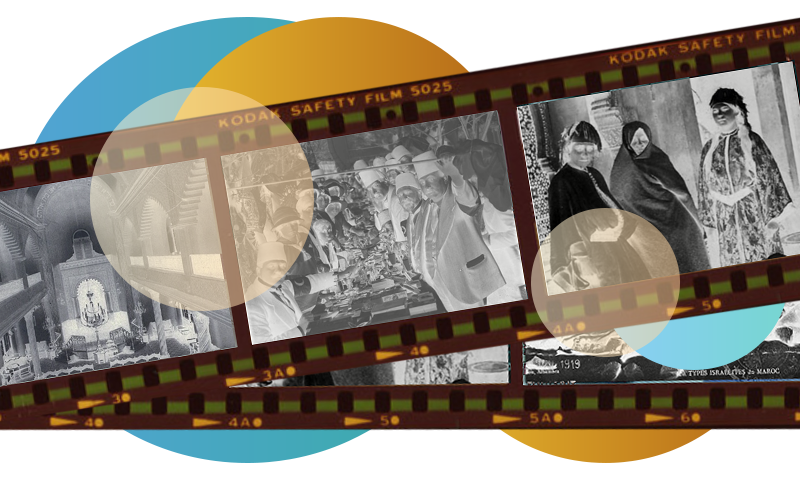
It was a beautiful building that housed a Torah scroll rescued from the beach at Bône after a shipwreck. The scroll was later taken to France in 1962 and then to Israel.
The synagogue had a traditional upper gallery where women and their daughters sat.
There was also a particular custom: when a woman made a vow, she would come to wash the synagogue on Friday mornings, whether she was Jewish, Muslim, or Christian.
We did not really sing in the synagogue, but there was Arabic music in our home during celebrations.
The mikveh, which we visited at the end of each week, was actually a Moorish bath. Boys were also permitted to go there until the age of six.
Holidays, Food, and Shared Traditions
For the Jewish holidays, especially Purim, several families would gather to prepare cakes and pastries of every kind.
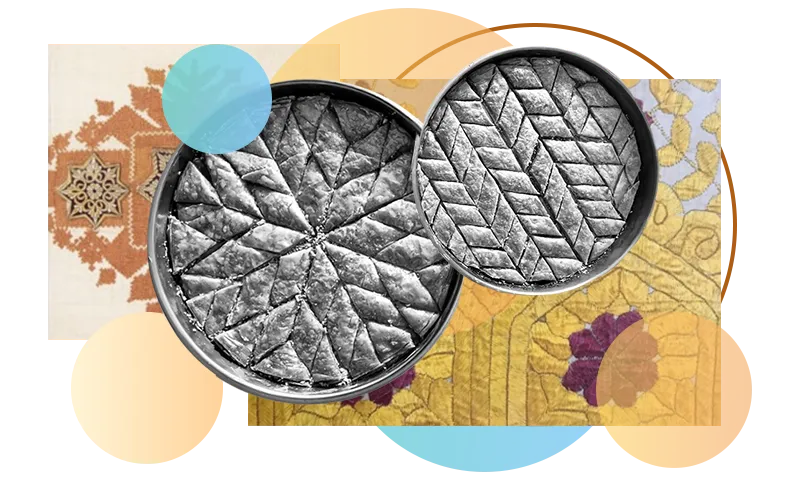
One afternoon, we would meet at one family's home to make couronnes, or wreath-shaped pastries. Another day, we would gather elsewhere to prepare croquettes, macroudes, petits paniers (little baskets), or nougat noir.
The nougat was prepared in large basins and required two people to stir it.
Dates and almonds were boiled and had to be handled while still very hot, then rolled on a worktable with dried fruit and sesame seeds. This was one of my mother's specialties.
We also made sausage-shaped sweets wrapped in wax paper that could be kept for several months.
Everything was prepared together and then shared among the families.
We lived very peacefully and simply, without ostentation or rigid social hierarchies.
Toward the end of the week, my mother would give me a small coin to bring to a family that was very poor. The father worked as a shoemaker.
We would visit one another, sometimes standing in doorways or gathering in homes to talk freely.
We also had relationships with our Arab neighbors.
Among ourselves, we spoke French, although we sometimes spoke Arabic with Arabs.
My father was a Cohen and served as a representative of the congregation, leading prayers in the synagogue.
On Shabbat, he would often invite around twenty people to our home for an aperitif.
Education and Growing Up
Our upbringing was rather strict.
We had responsibilities to fulfill. Our beds had to be made before leaving for school, and our shirts had to be ironed.
The secondary school was quite far away, and we had just enough time to return home afterward.
But we were also allowed to take piano and sewing lessons.
When I was sixteen and a half, my parents asked whether I felt ready for marriage.
They were somewhat embarrassed to raise the subject because I was still young, but they had already received two marriage proposals.
One was from a cousin to whom, according to the customs of the time, I had been promised since childhood.
The other was from the brother of my friend Mireille, whom I barely knew.
This was an overwhelming question for me.
Was I ready to marry?
The strictness of life at home had begun to weigh on me, and on impulse, I made my decision almost as a way of escaping.
Would marriage be a good thing or a bad thing?
It seemed like a very good thing to me.
But I certainly did not want to marry my cousin. I preferred to get to know the other candidate better.
I asked my parents to arrange a meeting.
Marriage and Starting a Family
They organized an introduction at a hotel in Bône.
I can still hear my mother telling me, "Above all, you must behave properly. Lift your little finger when holding your teacup, and put down your spoon correctly."
From that day onward, we both said yes.
We went on to celebrate 57 years of marriage.
My first kiss was with him, and I have never known another man.
I remember our first glass of champagne together. It was a marvelous moment, barely planned, because everything happened so quickly.
For almost a year, our families gathered every Shabbat evening.
Each week, my fiancé brought me a bouquet of red flowers and a gold louis coin as a gift.
But after about a year, seeing that things were not moving forward, he gave me an ultimatum: "Either I marry your daughter, or I stop coming in the evenings."
And so the decision was made.
All the wedding preparations began.
There was the ritual of the bride's bath, the white bridal gown, the selection of the dress with my aunts, the rental of a beautiful reception hall, and the careful attention paid to my appearance.
I had my hair styled, curled, and arranged.
According to the custom of the time, my parents provided a dowry of money and furniture, which my husband later managed very well.
The wedding festivities began on Shabbat, after synagogue, with an aperitif at our home.
Following the tradition established by my father as a Cohen, my mother prepared an extraordinary buffet for about thirty people.
The marriage ceremony itself took place in a single day.
I wore a necklace of gold louis coins given to me by my fiancé.
The wedding was held in the morning at the town hall and in the afternoon at the synagogue.
The synagogue was beautifully decorated with paper flowers, which were so admired that they were kept and reused for seven subsequent weddings!
Then came the celebrations, which continued until the following morning, when coffee and croissants were served.
Three hundred guests attended.
This was already during a period of attacks and unrest, so considerable efforts had to be made to ensure that enough food and supplies were available for everyone.
As was customary, we danced enthusiastically to the music of an Arab orchestra.
I remained seated in an armchair, with eyes only for my husband.
It was a wonderful dream, and I was almost unaware of everything happening around me. Much of it had to be described to me afterward.
The following Shabbat, I was welcomed into my new mother-in-law's home.
She tested my cooking abilities.
Since I was not particularly well prepared, she affectionately reassured me: "You have plenty of time to learn."
Our relationship remained excellent, and she always called me "my little Tata."
Nine months later, our first child was born, followed by a second child in due course.
Eventually, our home became too small, and we decided to look for another place to live.
When we found a suitable property, we learned that it also included a shop.
My husband said we were not interested because he already owned a business.
But I replied that I would like to see what it was.
In truth, I had already been thinking about working outside the home. I was determined to achieve my goals.
We eventually purchased the shop rather than moving into a new home.
I remembered how much I had loved playing shopkeeper in my aunts' boutiques when I was a child.
I felt perfectly comfortable with the idea of running a business, even though I was only nineteen years old.
The Algerian War and the Beginning of Our Departure
In 1960, following de Gaulle's famous declaration, "Je vous ai compris" ("I have understood you"), Algeria entered a new period of turmoil and uncertainty.
Gradually, people began organizing their departure for France.
My parents, fearing that my brothers, who were sixteen and seventeen, might become involved in the conflict against the FLN, left for Marseille.
We entrusted our two eldest children, aged three and five, to them.
Our third child remained with us.
We stayed behind to manage our shops, as well as businesses belonging to other family members who had already left.
We flew to Marseille to spend Rosh Hashanah and Yom Kippur with our children, then returned to Algeria to organize our own departure.
Our youngest child was still with us.
Then one day, I could not find him.
I searched everywhere.
He might have been in one of the family shops, somewhere nearby, or with his father.
But he was nowhere to be found.
I became increasingly distressed.
We alerted the police.
For eight days, we searched without success.
The telephone rang constantly with supposed news, but nothing came of it.
We even tried a pendulum and other forms of divination.
Still, nothing.
After more than a week, someone came to one of my aunts' shops and said in Arabic that someone who had lost a child might find him at Algérian Automobile.
This was the departure point for buses traveling to Tunisia and other destinations.
The account of what happened next was interrupted, and I cannot fully explain what followed.
Family Hardships and Leaving Algeria
At another point, one of my aunts came to help take care of our home and my husband.
When our son was seven months old, he experienced a rejection reaction caused by an allergy to silicone.
He needed another operation, this time to replace the device with a rubber pump.
But the pump failed while he was on the operating table.
At that moment, we had no money available to pay for the funeral expenses.
Then something extraordinary happened.
A close friend had recently given our son a teddy bear.
Someone noticed a number written on the stuffed animal and suggested that we play it in the tiercé, a popular form of horse-race betting at the time.
We did.
The number won, bringing us approximately 1,500 euros in the equivalent value, enough to pay the anticipated expenses.
We continued living in Algeria for some time, but life was no longer the same.
Increasingly, there was a sense of emptiness.
Around us, only about fifty familiar people remained.
Finally, we left, carrying almost nothing.
We were no longer permitted to take our possessions with us.
So we boarded an airplane as though we were going on vacation, without the feeling of a definitive departure or the sense of beginning a long journey into exile.
Rebuilding Our Lives in France
Life in France was very different for us.
Among my children and grandchildren, I became known as the "Shabbat grandmother," a role that brought me great respect.
I believe I was able to pass on values of dignity and respect.
My children are rather reserved, like their father. That is simply how they believe things should be.
As for Jewish religion, it still exists in our lives, but it is expressed through symbols and meaningful celebrations.
I believe religion should be personal and sincere, not something displayed for others.
Today, I sometimes see additions to religious practice that make me uncomfortable.
Looking back, we lived through a difficult life, marked by two exoduses, but also by many wonderful moments.
Our greatest strength was, and remains, our unbreakable love for one another, beyond all the tragedies we experienced.
Timeline of Jewish Presence