Personal Stories
Discover the personal stories, memories, and lived experiences of Jews from North Africa and the Middle East, offering intimate perspectives on community life, cultural traditions, migration, and identity across generations.
Written Narratives
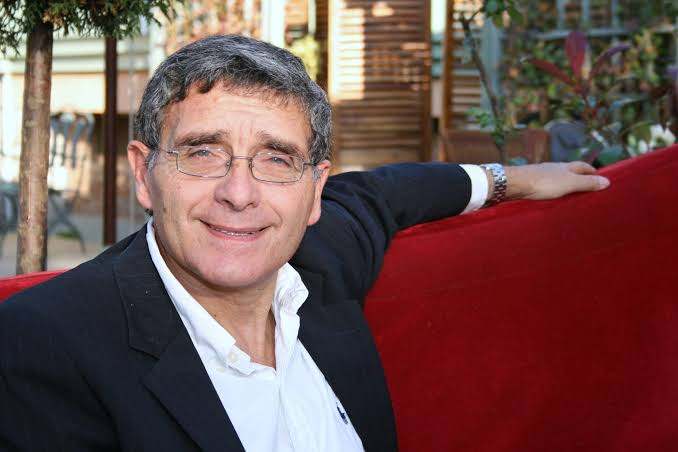
Didier Nebot
Didier Nebot: Memories of Jewish Life in Algeria
Interview with Didier Nebot
My name is Didier Nebot. I was born in Algeria, in Castiglione, 35 kilometers from Algiers, in 1943, and I lived there until 1962, until the age of 19.
The history of the Jews of Algeria is rich, complex, and little known. Our history begins at the start of the Christian era: following the destruction of the Temple in Jerusalem, Jews from Judea emigrated in every direction—to Europe, Asia, and Africa, as far as the Maghreb.
The region was then called Numidia or Mauretania and was under Roman administration. The indigenous populations were primarily Berbers and Phoenicians (ancient “cousins”) who spoke the Punic language, closely related to Hebrew. Over the centuries, the Byzantines replaced the Romans. In the seventh century, the Arabs arrived and confronted first the Berbers, then the Christians in the coastal areas, and finally the Byzantines around ancient Carthage, who were often of Greek origin.
Jewish tribes remained well established in the Aurès Mountains. They are known as the Kahinas, the same name used for the Jewish tribes of Arabia. In an initial battle, the Jews were victorious. They had a queen who also bore the name Kahina, but they were ultimately defeated.
Islamization took hold by force, but according to Arab authors, the process extended over more than a century. Over time, and through a progression whose course is difficult to evaluate among the various indigenous populations, the entire population converted to the “new ideology.”
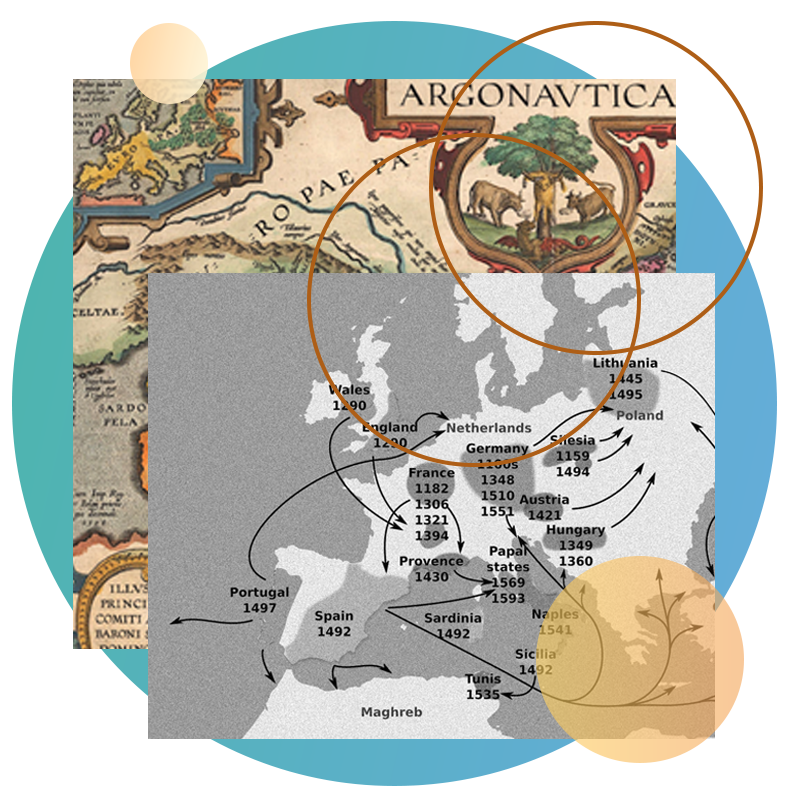
One date worth remembering is 1391, when a major massacre of Jews took place in Seville, leading large numbers to seek refuge in the Maghreb—a full century before the expulsion from Spain under Isabella the Catholic.
From the fifteenth to the eighteenth centuries, the laws of dhimmi status and Arab supremacy without limits were formidable. To cite one example: during an invasion of locusts, the Pasha required Jews to lie on the ground, day and night, to drive away the insects!
In 1830, the arrival of the French marked a new era: the liberation of Jews from the Ottoman yoke. But France was slow to establish itself. Resistance organized around Abd el-Kader, ruler of Mascara, who initially negotiated with the French. Following a dispute, however, he set an ambush against them in 1835, but was unsuccessful. He then withdrew to Mascara, where a massacre of several hundred Jews took place.
When French troops arrived in the city, approximately one thousand survivors begged them for protection, hoping to escape through a terrible march to Oran. This was on December 8, 1835.
Thus, during this first period, the Jewish population was caught between a rock and a hard place, following the balance of power between Arabs and French forces. (I should add that the situation stabilized after the profound conquest led by Marshal Bugeaud between 1840 and 1848.)
The desire of Jewish families to integrate is evident in their adoption of the French language. My grandparents, born between 1870 and 1878, still used Arabic only when arguing!
Official integration came in 1870, thanks to the Crémieux Decree, named after the citizen born in Nîmes, a Jewish Frenchman and eminent deputy. This undoubtedly created a rather delicate situation for their fellow Jews across the Mediterranean.
This proclaimed equality coincided with the era of dhimmi status, which was difficult for Arabs to accept.
The new generation first appeared in the large cities, where the professions of medicine and law flourished, among others. People no longer spoke of “synagogues” but of “temples,” no longer of “bar mitzvah” but of “communion,” so great was the desire to assimilate!
Antisemitism and the Second World War
But antisemitism was never very far away. It was felt particularly among the working-class pieds-noirs, who used insulting expressions such as “Jewish traitors,” among others, in connection with the Dreyfus Affair.
This developed into something like a small pogrom, with disturbing demonstrations. My grandmother, I was told, once filled a large basin with boiling water to pour over possible attackers who wanted to come up from the street into her home.
Speaking of hostility, should I tell you about an old incident, hidden by discretion, but which my mother, now 94 years old, would not want me to recount?
My grandfather and his twin brother, both now deceased, were one day pursued by an Arab man brandishing a large knife. They reached a dead end bordered by a deep precipice. What could they do? They gripped their attacker and threw him over the edge, to his certain death.
Following this, they had to flee immediately, under cover of darkness, to the small village of Castiglione, where my mother was born some time later, and where I myself first saw the light of day.
It must be acknowledged that at the end of the nineteenth and beginning of the twentieth centuries, we Jews of Algeria experienced privileged generations, with emancipation and a development that had previously been unknown. We even had the honor of sending soldiers to the war of 1914, and then again in 1939.
But already in 1941, Marshal Pétain had effectively abolished the Crémieux Decree—that is, he returned us to the status of “indigenous Jews.” Among other consequences, one of my older cousins was expelled from her school. My father had to go into business with a Christian family friend.
In November 1942, the American landing took place in Algiers, Operation Torch. Almost no one knew that a Resistance cell led by Aboulker, consisting of 377 members, 344 of whom were Jewish, had during the preceding night taken control of all the strategic points in the city, taking Admiral Darlan and General Juin prisoner and thereby paralyzing all opposition to the formidable operation.
One might have expected the Crémieux Decree to be quickly restored. But General Giraud, favored by the Americans and appointed the first governor of Algeria, was antisemitic and showed no concern for this issue.
It was only a year later that de Gaulle, questioned about the matter, replied: “Having recognized none of the decisions taken by Vichy, I have no need today to approve or repeal anything whatsoever arising from that period.”
A good dozen years of magnificent development followed. Children undertook studies. I myself was a medical student, quite at ease. We were more French than the French themselves.
The Algerian War and Departure
In 1954, the first nationalist attacks began. Completely unexpected events occurred.
One day, my father was summoned to the police station. His car had been parked between the hands of his business partner, who had lent it to him, and explosives had been found inside it. He vouched for the complete good faith of his associate, and the matter was closed.
In 1956, the FLN sent a letter to the Grand Rabbi of Algiers and also, I believe, to the president of the Alliance Israélite, urging Jews to join the FLN. The latter did not respond.
It must be said that by that time some Jews had indeed joined, either on one side or the other—the FLN or the OAS (the secret army organization).
On that occasion, Jews were very perplexed, torn between past and future. They remembered the period of dhimmi status. On the other hand, more than 90 percent of them were for “French Algeria,” but it was unthinkable for them to join the OAS, whose ranks included many former antisemitic Pétain supporters.
It was the return of a period of dilemma, of being caught between a rock and a hard place.
Still, as anti-Jewish attacks multiplied, and judging that France was being “betrayed,” the Jews of Algeria devastated the Great Synagogue of Algiers in 1961.
I myself was once stopped by the French Army during an identity check of all men between the ages of 18 and 50.
Most of those released were quickly set free. Only young men between 18 and 22 remained. We were sent to Beni Nessou in Upper Kabylia, to a place called a “marshalling camp.”
There were 80 of us, including only two Jews. The local priest obtained the list of those detained. We were not on it. We do not know why—the two Jews.
The list was communicated to the interested parents, but the parents of the two left out received no information.
After ten days, the entire group was released. That very day, by I do not know what intuition, my parents came looking for us. They found us and brought us home.
Immediately, I was hidden away, and after urgent arrangements, I flew to France two days later. My parents followed shortly afterward, with only their suitcases in hand, and the entire family likewise, in record time, during that year of 1962.
Religious Life and Family Traditions
To speak of religious life there, one must go back to the grandparents.
On my father’s side, my grandfather, born in 1878, lived with his traditions firmly rooted in the Arab world. He undertook to take me to my bar mitzvah. He was called Shlomo, which was also the name of my father’s brother.
I first had to learn Hebrew, although I spoke only French and knew Latin well, having been first in my class!
I went to the Stora Synagogue to familiarize myself with the Torah. However, my father worked on Saturdays.
On my mother’s side, in Castiglione, a small fishing port by the sea, life was well integrated and without problems. Yet one day my mother heard a neighbor speaking ill of Jews. She protested: “You must know that I am Jewish!”
“But you are not like the others,” the neighbor replied—the classic response used to smooth over the situation. I experienced that myself, too.
Traditional holidays were celebrated both in Algiers and in Castiglione, where the family was generally larger.
At Purim, I remember white cakes with a soft white topping. There was also the “roti à la juive,” which required hours of cooking and was very pleasant. Then came the candied orange peels, bitter and sweet, from our own orange trees.
For Passover, we had the right to couscous with sugar. The following morning, we could see at the foot of Jewish homes the remains of bitter herbs used the previous evening for the ritual.
For Yom Kippur in Algiers, my father, who was tolerant and discreet in his religious convictions, wanted us to walk to the Great Stora Synagogue in Saint-Eugène, which was quite some distance away.
I had bought a small packet of chocolate sweets from the Sévigné brand on the way, to have something for after the ceremony.
But following the great impression made on me by the grandeur of the place, or perhaps the density of the congregation, or the fatigue of the long walk on foot while fasting, I fainted in the middle of the holiday!
In fact, when we were young, we were not very religious. Our Jewish identity was, for us, something self-evident that did not need to be affirmed publicly.
Life in France and the Importance of Memory
Upon our arrival in France, we were all pieds-noirs, without distinction. But fairly quickly, we felt “diluted” into this society of 60 million inhabitants.
Today, the term pied-noir seems pejorative to me, with its colonial undertone. I feel that I am “originally Jewish from Algeria.” This is part of a 2,000-year diaspora, older even than that of the Arabs, who made us suffer under dhimmi status for centuries.
This is why we were pleased to become French nationals, citizens of the country of liberty and human rights, even if it meant experiencing Muslim domination later.
Today, it is the victimization of the strong that is the problem.
I have dedicated myself to recovering significant facts from our past. Alongside a very fulfilling professional career, I have written books recounting periods such as the life of Judeo-Berber communities, the Arab conquest, and the discriminatory policies of Isabella the Catholic of Spain, which led to a new immigration to the Maghreb.
All of this is for historical memory, just as religious memory has been passed down to us by our rabbis.
I founded “MORIAL” (Memory and Traditions of Jews Originating from Algeria) for this purpose, and I like to add this phrase: “He who knows the present but ignores the past is blind... he cannot move toward the future.”
I also passed on to my children the values of family, France, and Israel—although I do not want my children and grandchildren to settle there.
I have a daughter of 37 and a son of 40. My son, Michael, observes religious practice more than I do, but discreetly. At a reception, when offered a ham sandwich, he simply replies: “I keep my customs.”
If someone asks me, in the event of a disagreement between France and Israel, which side I would choose, between my father and my mother, it would be a major dilemma.
I would then think: “I am Jewish and nothing else!”
Conclusion
In conclusion, I must say that I am delighted by this interview that you, JIMENA, proposed to me.
In the association I lead, we have, like you, an objective of living memory.
We have around us hundreds of Jews in retirement homes whom we would like to interview. I know what considerable logistics that would involve.
A large number of testimonies could enrich the MORIAL website, which has received 150,000 visitors in one year.
A permanent exhibition of 2,000 years of Jewish life in Algeria is very close to my heart. It could form part of a broader history of the Jewish people as a whole.
I therefore hope, with conviction, that we will be able to work together.
Timeline of Jewish Presence