Personal Stories
Uncover the hidden narratives and vibrant legacy of the Jewish community. Explore the personal journeys shared below.
Written Narratives
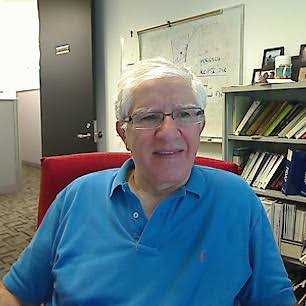
Isaac Hasbani
Isaac Hasbani: Growing Up in Lebanon and Israel, Born to Syrian Jewish Refugees
Originally published May 14, 2013
Isaac Hasbani, a Chicago-based engineer, was born in Beirut, Lebanon, in November 1947 to a Syrian Jewish family. Both of his parents were originally from Damascus and had fled antisemitic persecution before his birth.
His mother was vacationing in Lebanon when her father called and warned her, “Don't come back.” He had decided to abandon his medical practice in Damascus and join her in Lebanon, which was considered considerably safer for Jews at the time.
In 1948, the Syrian government imprisoned numerous Jews on accusations of Zionist activity. This persecution occurred despite the longstanding participation of Jewish families in Syrian civic and political life. Isaac's father had previously run as a candidate for the Jewish seat in the Syrian Parliament, while his grandfather had served in the Syrian Army.
Isaac grew up in Wadi Abu Jamil, Beirut's historic Jewish neighborhood. He remembers a predominantly Jewish community with relatively few Muslim and Christian residents, although the neighborhood was not a segregated ghetto. There were no walls separating it from the rest of the city.
Most of the neighborhood's synagogues were small, often consisting of private homes converted into places of worship. The notable exception was the Maghen Abraham Synagogue, the community's principal house of worship.
Education in Lebanon was strongly influenced by French language and culture, reflecting the country's history under the French Mandate, which ended with Lebanese independence in 1943. Isaac attended jardin d'enfants, or kindergarten, followed by an Alliance Israélite Universelle elementary school.
Isaac remembers that his family home lacked electricity during his school years. At night, he studied by the light of a kerosene lamp, but kerosene was expensive. On evenings when the moon was particularly bright, he sometimes went outside to study by moonlight.
Although many Jewish residents of Wadi Abu Jamil had limited interaction with people outside their community, Isaac's father, a physician, maintained relationships with Muslims and Christians throughout Beirut. His medical practice took him into different neighborhoods, where he treated patients from a variety of religious and cultural backgrounds.
Life for Lebanon's Jewish community became increasingly uncertain following the 1956 Suez Crisis, known in Israel as the Sinai Campaign.
In 1958, Isaac's family traveled to Cyprus to reunite with his grandparents, who were living in Israel. His parents had not seen them since 1946, before Isaac was born.
Although people in Lebanon were aware of Israel's existence, Jews generally avoided discussing the country openly. Isaac recalls that when a Jewish resident left Lebanon and was never heard from again, others often assumed that the person had immigrated to Israel.
In 1961, Isaac's parents decided that he should move to Israel and live with his grandparents. He was just 14 years old.
His parents remained in Lebanon until 1968, when the aftermath of the 1967 Six-Day War made life increasingly difficult for the country's Jewish population.
Jewish communal life continued in Lebanon for several more years, but the outbreak of the Lebanese Civil War in 1975 accelerated the departure of many of the country's remaining Jews.
For Isaac, arriving in Israel as a teenager was a profound culture shock. Life in Israel differed dramatically from the Beirut he had known, and he encountered many aspects of Israeli society that he had not anticipated.
He attended school in Ramat Aviv, where his classmates came from countries around the world, reflecting the diversity of Israel's immigrant population.
Because Isaac lived with his grandparents, he did not have to navigate the difficulties of the Misrad HaAliyah, Israel's immigration bureaucracy, which he recalls as having a reputation for being challenging to deal with.
The separation from his parents was one of the most difficult aspects of his transition. Having left Lebanon as a high school student, Isaac did not see his parents again until he was nearing the completion of his university studies.
At university, Isaac studied mathematics and applied mathematics. He subsequently built a professional career in Israel, where he remained until 1984.
During a period of economic instability in Israel, Isaac secured a job in Chicago. He initially expected the move to be temporary, but the position became permanent. He eventually purchased a home and settled in the city.
Reflecting on his family's history, Isaac explains that although his father was Syrian and later became Lebanese, he himself never felt a strong sense of Lebanese national identity.
For Isaac, moving to Israel marked the first time he truly felt that he was living in his own country.
His two children were born in Israel and are sabras, the Hebrew term for native-born Israelis.
Although he has made his home in Chicago, Isaac continues to maintain connections to his Sephardic Jewish heritage. He occasionally attends a local Sephardic synagogue, where the familiar melodies of the prayers reconnect him with the traditions and sounds of his childhood.
Isaac's story reflects the experiences of a generation of Middle Eastern Jews whose families crossed borders in search of safety, stability, and belonging. From his parents' flight from Syria to his childhood in Lebanon, adolescence in Israel, and eventual settlement in the United States, his life illustrates the enduring connections between displacement, Jewish identity, and the search for a place to call home.
Timeline of Jewish Presence