We Were All Italian! Jews from Libya and a Sense of Italianness
Why did so many Jews from Libya describe themselves as Italian, even when they did not hold Italian citizenship? In this article, the anthropologist Piera Rossetto draws on interviews with about seventy Libyan born Jews now living in Israel and Italy to trace how a “sense of Italianness” took shape from the 1920s to the 1960s.
Background
Jews and Italian Libya
Italy occupied Libya in 1911, but Jewish families in Tripoli had embraced Italian culture even earlier: in 1876 an Italian Jewish teacher, Giannetto Paggi, opened the country's first non Catholic Italian school, and Jewish leaders founded Tripoli's first Italian language newspaper in 1909. Under Fascism, Libyan Jews also suffered discrimination, the racial laws of 1938, labor and concentration camps, and deportation.
The older generation
Italian at school, Judeo Arabic at home
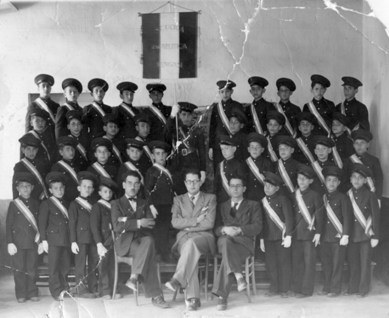
Jews born in the 1920s and 1930s remembered Italians as builders of modern Tripoli, as employers and neighbors, and also as Fascists and antisemites. For them, Italian was above all the language of school: they studied in Italian, sang Italian songs, and wore Italian school aprons, while speaking Judeo Arabic at home. Many still use Italian words decades later.
The younger generation
A deeper Italian life
After nearly 90 percent of Libya's Jews left for Israel between 1949 and 1952, about 6,000 remained. Their children, born in the 1940s and 1950s, attended Italian schools with Italian classmates, spoke Italian as their first language, and shared Italian music, fashion, and pastimes. Rossetto argues that this sense of Italianness actually grew stronger after Italian colonial rule ended, and was less a reason for staying in Libya than a result of it. When the remaining Jews were forced out in 1967, many found refuge in Italy.
Read the full article at History and Anthropology →
This summary was written by JIMENA and is based on “‘We Were all Italian!’: The construction of a ‘sense of Italianness’ among Jews from Libya (1920s to 1960s)” by Piera Rossetto, published in History and Anthropology (published online 2020). The original article belongs to its author and publishers.