Personal Stories
Uncover the hidden narratives and vibrant legacy of the Jewish community. Explore the personal journeys shared below.
Written Narratives
Albert Amar
Family Origins and Jewish Life in Mogador
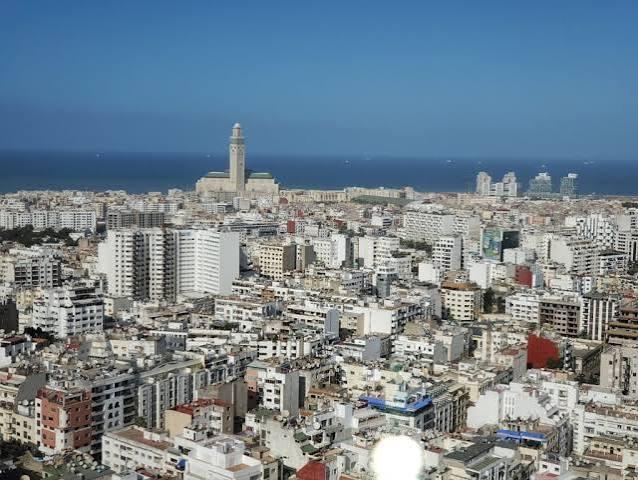
My name is Albert Amar. I was born in Casablanca, Morocco, in 1921. My father's name was Iacov, and my mother's name was Zari. Her family name was Elbaz. Both of my parents came from Mogador.
Mogador was a somewhat English-speaking city, with a considerable number of Jewish merchants. When Marshal Lyautey arrived in Morocco, he did everything possible to diminish Mogador's importance. He established a port farther south, in Agadir, as a colonial strategy to counter the British.
I can tell you that there was a man from the city, I believe his name was Hor Benicha, who managed to become a minister to Queen Victoria!
My grandfather lived in Mogador, as did my great-grandfather. I therefore have very distant roots in that city.
But Mogador experienced a serious decline and was gradually abandoned by younger generations. That is how my father and mother eventually came to Casablanca.
My parents met and married in Casablanca around 1910.
There were four children in our family: two boys and two girls. I also had aunts and other relatives living nearby.
We had a family friend who was extremely wealthy. There was an Arabic proverb applied to him: "He will lose his fortune when salt begins to rot!" Since salt never rots, he had nothing to fear.
My father was a grain merchant. Farmers from the surrounding region brought him wheat and rye, which he purchased and then sold to the government.
My father had a brother who looked very much like him. He left for Brazil around 1914. We received letters from him occasionally, and we had cousins there named Albert and Henri whom my mother and sister eventually met.
My maternal grandfather was a sheikh, a kind of governor or communal leader.
During the Protectorate, the authorities attempted to transfer responsibility for religious and other Jewish legal matters to Jewish community leaders. My grandfather therefore dealt with local disputes and disagreements among Jews, trying to resolve conflicts and maintain peace.
He had two policemen under his authority and could issue certain regulations. For example, he could prohibit people from placing bread in the oven if it would not finish baking before Shabbat. Those who violated the regulation could be punished.
Outside these internal Jewish matters, however, the community leader had to be conciliatory. In the face of Muslim political superiority at that time, Jews often had to yield in order to preserve peaceful relations.
Marriage disputes were handled by a Jewish judge, a dayan.
During the Protectorate, when a Moroccan Jew had a dispute with a French citizen, the case was heard in a French court. This carried considerable prestige, and some Jews involved in disputes with other Moroccans tried to bring a French person into the matter so the case would be judged by the French authorities.
Commercial disputes were handled by the Pasha.
My Parents' Marriage and Our Family
Shortly after the French landing in 1912, Arabs sometimes tried to intimidate Jews by throwing stones, for example. They even attacked young girls.
I was told that my mother, to avoid attracting attention, would go out with a burlap sack over one eye.
My mother's family came from southern Morocco. The sheikh I mentioned earlier agreed to give his daughter's hand in marriage to my father, who accepted. Yet my father did not see my mother for the first time until their wedding day!
Fortunately, everything went very well afterward.
My mother had three or four brothers and sisters. One of her brothers, Uncle Eliahou, became very successful in real estate. He was highly respected and became an important figure in the family.
I had two sisters and one brother, Henri.
Henri was brilliant. He became a physicist and researcher and was the first in our family to leave Morocco for the United States, in 1946.
He studied and became a professor in Philadelphia. He was a researcher in physics and even had contact with Albert Einstein.
Like my brother and my two sisters, I studied at the Alliance Israélite Universelle.
It was truly a remarkable educational and philanthropic organization that did so much to bring enlightenment and opportunity to Jewish communities.
The Alliance educated many young people who later became distinguished intellectuals, writers, and professors.
A friend of my brother's, who came from a small village in the south, eventually became the Alliance's representative to the French Ministry of Education. He had direct relationships with the minister of the time.
Growing Up Between Jewish and French Cultures
We were very open to French culture, but we also admired the Americans who came to France during the First World War, particularly at the time of the famous cry, "La Fayette, nous voici!"—"Lafayette, we are here!"
The Americans had contributed greatly to the victory of 1918.
American films fascinated us. We loved pretending to be cowboys in the streets of Casablanca!
We lived between the Jewish quarter and the European city. Directly opposite our home was a mosque.
Relations between neighbors were generally correct.
Mothers advised their children to be accommodating and conciliatory, fearing that disputes might lead to violence.
One day, a young Arab boy stole my beret. In a chivalrous spirit, my brother ran after him, caught him, and returned without the beret!
At home, we spoke French. My father knew a little English, but we spoke Arabic with our mother because she did not speak French.
At the synagogue, where my father had founded a choir, I sang psalms in Hebrew.
My father had a business associate in the grain trade with whom he enjoyed excellent relations. This associate gave him a gift that helped finance the construction of a synagogue called Ohel Yaakov.
My father was religious but also quite liberal in his outlook.
On Shabbat, we attended synagogue. He would remind us, "Remember that you are Jews."
We stayed at synagogue until about three in the afternoon, but afterward we went swimming until evening.
Our cousins, however, had to remain in synagogue until the prayers were finished.
We moved comfortably between Jewish and French cultures.
We loved authors such as Victor Hugo, and we performed plays by Marivaux and Courteline. I still have photographs of those performances.
At the cinema, Charlie Chaplin was our favorite. We especially loved The Tailor and The Gold Rush.
Sometimes we went to the Medina Cinema, in the Arab part of Casablanca, four or five times a week!
We could afford these outings because our grandfather from Mogador brought us pocket money whenever he visited for the major holidays.
Jewish Holidays and Childhood Memories
Jewish holidays were celebrated with great joy in our family: Passover, Yom Kippur, and Sukkot.
My father built a sukkah every year.
I remember one incident when we were playing near a neighbor's sukkah. A car was parked on the sloping street beside it, and several of us children climbed into the car.
Unfortunately, I accidentally released the brake!
The car rolled forward and demolished half the sukkah.
Fortunately, our neighbors were kind and did not scold us.
I have other amusing memories of the holidays.
At the end of prayers in synagogue, my father would sometimes remain behind chatting with acquaintances.
I stood behind him, holding his hand.
I had a very kind and well-behaved friend. Sometimes, while my father was distracted by conversation, I would take my friend's hand and place it in my father's.
Then I would run off into the synagogue.
When my father finally turned around, he would be astonished.
"Oh! But that's not my son!"
Education and the Outbreak of War
Let us turn to 1939.
After completing my secondary studies, I wanted to become a teacher, like the teachers who had educated me at the Alliance.
I received my teaching diploma in 1938 or 1939.
I was then preparing to travel to Paris to study at the École Normale so that I could advance in the teaching profession.
My bags were packed.
But it was September 1939, and war was declared.
My journey had to be postponed.
It was postponed for a very long time.
The war completely disrupted our plans.
In the meantime, I worked as a substitute teacher while waiting for a permanent appointment.
The American Landings and the Vichy Period
On November 8, 1942, the Americans landed in North Africa.
I can still hear the voice of Roosevelt, with his distinctive accent, declaring, "We come to you as friends."
The Vichy Resident-General Noguès believed it was his duty to resist the American forces.
He ordered troops to fire on the Americans, and between five hundred and one thousand soldiers were killed for nothing.
It was terrible.
The fighting lasted three days.
Later, during a parade with American flags and music, I applauded so enthusiastically that my hands hurt.
A prominent Jewish man I knew warned me to be careful.
"The French are still here," he said.
I replied, "If I do not applaud today, when will I ever applaud?"
We were so happy to see the Americans.
But the Vichy French authorities resented our enthusiasm.
They seemed to want to punish us for our closeness to the American soldiers.
We even received blows that left our shoulders hurting.
One day, my brother, who was a true patriot opposed to Vichy, was attacked by a gang.
He was saved at the last moment by a non-Jewish man who pulled him off the street and into the café he owned, where my brother was a regular customer.
Relations Between Jews and Muslims
We sometimes witnessed fights between members of different communities, including Jews from Algeria and Arabs.
In some cases, if a dispute was brought before an Arab Pasha's court, the European or Algerian party could be condemned almost automatically, unless a sufficiently generous payment could arrange matters differently.
There was corruption.
I remember Oran as a particularly notorious example.
But we also had good relations.
My father had Arab friends whom he welcomed into our home during Mimouna.
They would arrive carrying trays filled with pastries.
And the Jews, in turn, offered gifts during Ramadan.
That was the custom.
In general, commercial relations between Jews and Arabs were good.
Morocco's Changing Political Climate
The arrival of the Americans reassured the Jews, because at that moment we feared being forced into a ghetto.
There had been talk that such measures might be introduced in November.
Meanwhile, many Arabs were already thinking about independence.
The meeting between Roosevelt and the Sultan in Tangier was viewed very negatively by the French authorities, who soon afterward deposed the Sultan and sent him to Madagascar.
That was a very serious mistake.
The Sultan suddenly became enormously popular.
The Arabs imagined that they saw him at night, riding a white horse across the moon.
They dreamed of him.
And that was how the movement toward independence truly began to gather strength.
The Jews began to worry about what might happen if the political situation changed.
For my part, like a minority among us, I knew Arabs well enough to believe that they would eventually become independent.
After all, justice belonged to all peoples.
My ideal of identity was France—but the France of Victor Hugo, the France of the Enlightenment.
Unfortunately, France had damaged that image through the actions of the Vichy government, the Vel d'Hiv roundup, and the many French people who watched these events without intervening.
Experiences of Discrimination
To illustrate the atmosphere of that period, I will give you a personal example.
I once responded to a job advertisement.
I went to an interview, answered all kinds of questions, and finally heard the employer say that I was exactly the person he needed for the position.
We arranged for me to begin work the following week.
When I arrived, however, I was asked to complete certain formalities.
On the form, under "Nationality," I wrote "Moroccan."
The employer said, "Ah, I am really sorry. I cannot take you into the service."
That was a moment when I felt genuine discrimination.
Another incident concerned a stationery business I tried to establish.
Through contacts I had made in the educational world, I wanted to open a stationery shop on the other side of the street, where the European quarter began.
But I was told that it was impossible.
It was as though the street were a great river without a bridge connecting its two banks!
I refused to accept this.
I added a printing business and considered expanding into bookselling.
But I was told that I could not continue expanding my enterprise.
I then informed the president of the Chamber of Commerce, who was an influential Muslim.
He said to me, "My son, you may establish yourself wherever you wish. If anyone says anything to you, I am here."
In this way, opposition to French colonial authority was beginning to emerge.
This Arab representative found opportunities to challenge the French administration.
Jewish Uncertainty and the Creation of Israel
The situation of the Jews was complicated.
Many Arabs were almost allies of the Jews in their opposition to France, but the Jews remained worried despite this apparent friendship.
They were distrustful.
It was a delicate position.
King Sidi Mohammed was extremely popular.
He prohibited antisemitic laws, declaring, "The Jews are under my authority."
He was later deposed, although by then it was already rather late.
Pierre Mendès France, who was a minister at the time, wanted to reach an agreement with Morocco despite opposition from the political right.
The establishment of Israel immediately created hostility in parts of the Arab world.
Jews were increasingly regarded as friends of Israel, even though direct contact with the country was prohibited.
France served as an intermediary for mail, passports, and departures through Marseille.
There were also clandestine departures by sea.
People did not speak openly about them, but everyone knew.
American money was used, as I understood it, to persuade coast guards to look the other way.
The king himself was sometimes accused of having been "sold to the Jews."
To give you an idea of the atmosphere at the time, a tax was imposed on every cinema ticket to provide aid to the Palestinians.
Friends Who Chose Israel
I would like to tell you about Elbaz, a former classmate.
He became a teacher and was deeply devoted to Israel.
He was an exceptional activist.
He settled there and encouraged many young people to follow him.
Several members of my family knew him well.
He spoke Hebrew as fluently as French.
He eventually became an assistant to the mayor of Jerusalem, and we often saw him on French television commenting on events in Israel.
Unfortunately, I missed seeing him during one of my visits, and he died five or six years ago.
As for me, I was very attracted to France.
I loved Israel, but at my age I was not prepared to settle there.
For health reasons, I feared the heat.
And I must admit that I loved French culture very much.
I had already made several trips to Paris while still unmarried.
I attended a training program in Châtelguyon in 1948 and 1949.
In 1950, I thought seriously about remaining in France.
I had worked as a teacher in Rueil-Malmaison, a town known for its association with Napoleon and his family.
I was employed by OPEJF, the organization for the protection of Jewish children in France.
In the evenings, I would ride my motorcycle into Paris, visiting the Saint-Michel and Saint-Germain neighborhoods.
I frequented the Comédie-Française, where I saw plays by Corneille and Racine.
I was deeply impressed by all those experiences.
Marriage and the Decision to Leave Morocco
I returned to Casablanca and married in 1952.
News from Israel filled us with emotion.
We discussed it among ourselves after prayers, but we were careful not to speak too openly in public.
We did not want the word "Israel" to be overheard by hostile ears.
During the period leading up to Moroccan independence in 1956, the French authorities generally allowed events to unfold.
But when demonstrations occurred, they sometimes fired into crowds where women and children were present.
They would cynically move forward and then become the "victims" of incidents intended to influence public opinion.
Acts of hostility against Jews also continued from time to time.
A religious man going to pray at a synagogue at seven in the morning was attacked, killed, and even burned alive.
Children injured young Jewish boys by throwing stones.
These events contributed to our fears about the future.
Our Journey to France in 1956
I finally left Morocco in 1956 with my wife and our three-year-old daughter.
We traveled in our Dauphine automobile, which was a popular car at the time.
We drove toward Tangier and then along the Spanish coast, passing through Seville, Córdoba, and Zaragoza.
When we arrived in Narbonne, we saw the Israeli flag displayed in a public place for the first time.
What joy!
There was a water polo demonstration featuring very talented Israeli athletes.
They made impressive dives, which my little daughter tried to imitate—rather dangerously—while standing on her hotel bed!
From there, we went to Saint-Raphaël.
We were offered the possibility of going to Israel, where there was a very good Anglo-Saxon kibbutz.
But this was just at the time of the Suez operations.
We did not want to arrive in a country in the middle of a war.
We were also considering the United States.
But at the same time, Hungary was in revolt, and the United States was then reserving immigration opportunities primarily for Hungarians.
Canada was another possibility because we had family there.
I applied for a position with the Americans who were stationed in France.
I had certificates documenting three years of work experience with them in Morocco.
I was hired immediately for a position that was not particularly interesting.
Then a woman asked me, "Could you wait a few days?"
Of course I could!
I returned the following week and obtained a good position in Fontainebleau.
The woman who helped me was named Cohen, and she was from North Africa.
There were two or three of us managing a large, well-organized warehouse.
We took a detailed inventory every week.
Everything went well.
Rebuilding Our Family's Life
My brother Henri was already well established in America and urged us to join him.
My wife, Jeanne, was willing to go.
But I was happy in France.
My sister Sol had arrived in Paris and found a teaching position in the center of the city.
Her husband worked as a chartered accountant.
Unfortunately, he was ill and did not live very long.
Sol continued teaching until her retirement. At the time of this interview, she was ninety-six years old.
Other members of my family settled in Israel.
Their circumstances were not wonderful at first.
Israel was helping many large families, and the country was not yet well organized.
Housing was too small, and there were insufficient water supplies.
Nevertheless, my relatives gradually adapted.
The country was governed and administered by approximately 95 percent Ashkenazi Jews at the time, as I understood it.
The advantages were naturally granted to them first.
For example, a young Sephardic rabbi who had recently arrived might be offered a job as a laborer.
Despite these difficulties, my relatives made lives for themselves there.
We also traveled to Israel.
It was fascinating to see an independent country with its own banks, ministers, and flag flying everywhere.
We were deeply impressed.
We traveled throughout the country, even as far as the Lebanese border.
On a later journey, we also visited Egypt and Jordan, including Amman.
Maintaining Jewish Traditions in France
In Paris, we were reunited with many relatives.
We saw one another at weddings and on the major Jewish holidays.
We attended synagogue, and everyone maintained their own customs and traditions.
Sometimes eighteen or twenty of us gathered to celebrate Passover with the entire ritual.
Moroccan Jews in Paris had not lost their roots.
Looking back, my overall assessment of our time in France is positive.
We cannot complain about the French Republic of that period.
The France of today, in 2014, with figures such as Dieudonné, gives us reason to reflect.
But let us remain hopeful.
Preserving Our Origins and Working Toward Peace
I am happy to have spoken about my origins.
JIMENA was something that was missing.
It is necessary to remember the forgotten countries of the Middle East and North Africa and to restore justice to the history of their Jewish communities.
It is important for Jewish pride and for the recognition of our heritage.
This is a worthwhile and charitable undertaking.
I belong to a pluralistic group made up of Jews, Christians, and Muslims.
I have been invited to speak on the radio about our different perspectives.
I noticed that whenever I spoke about the meaning of Jewish holidays, the Christians responsible for the broadcast were so intrigued that they would come close to my microphone, afraid of missing anything I said.
That showed how eager they were to learn about our traditions.
The Muslim participant spoke about the Quran and its supposed message of brotherhood, although I felt that certain passages unfavorable to Jews were being left aside.
My final message is that each of us should continue to honor our origins.
Let us hope that one day we will be able to reach an agreement and achieve peace.
How much we would gain from that!
Jews could contribute their technical knowledge, while Arabs could contribute their experience and knowledge of the land.
We all have so many friends who ask only to help us.
It would be magnificent if peace could finally prevail between us Jews and you Muslims!
Timeline of Jewish Presence