Seha: A Wise Fool in Moroccan Jewish Folklore
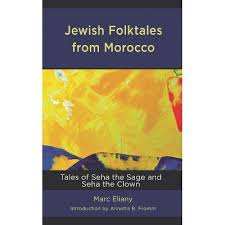
Every culture has its wise fool. In Morocco, Jews, Muslims, and Christians all told stories about Seha, a clown who turns out to be wiser than everyone around him. In this 2022 essay, Marc Eliany, founder of the Jewish Moroccan Museum and Archive and collector of Moroccan Jewish folktales, explains what Seha meant to Moroccan Jews.
Who is Seha?
A fool of many faces
Storytellers reshaped Seha to fit their own world. In Jewish tales he might be the prophet Elijah in disguise, a Babylonian rabbi, a spice seller, a yeshiva student, a wandering merchant, or a jeweler. In others he is a village sage, a folk healer, or a beggar who works miracles. Laughed at as a clown, he always keeps his pride and his wisdom.
Family storytellers
Three versions of one hero
Eliany grew up hearing Seha stories from three storytellers, each with a different Seha. His grandfather, a rabbi, saw Seha as a learned man much like himself. One grandmother made him a hero who stood up to the powerful, and the other told funny, self mocking tales.
Why the stories mattered
Laughter and dignity
For centuries, Jews in Morocco lived as dhimmis, a protected but subordinate minority that paid special taxes and faced restrictions. Eliany argues that Seha's humor helped them cope, narrowing the distance between Jews and their Muslim neighbors and lifting their sense of their own worth. Later, after many Moroccan Jews moved to Israel and the West, Seha tales became a gentle way to talk about new struggles, including feeling looked down on by Israel's European born leadership.
Read the full essay at the Jewish Book Council →
This summary was written by JIMENA and is based on “Seha: A Wise Fool in Moroccan Jewish Folklore” by Marc Eliany, published by the Jewish Book Council's PB Daily (November 7, 2022). The original essay belongs to its author and the Jewish Book Council.