U.S. Department of State
2201 C Street NW
Washington, DC 20520
JIMENA Comments to the Cultural Advisory Committee Regarding Yemeni MOU Request
To: Jeremy Sabloff, Chair The Cultural Advisory Committee of the Bureau of Educational and Cultural Affairs
To Mr. Jeremy Sabloff and the Cultural Property Advisory Committee at the U.S. Department of State:
We submit these comments to you on behalf of JIMENA: Jews Indigenous to the Middle East and North Africa. JIMENA is one of the few organizations in North America representing the interests of Mizrahi and Sephardic Jewish refugees from North Africa and the Middle East. For context, Mizrahi Jews are an indigenous Middle Eastern population, whose ancestors lived continuously in the region for over 2,500 years. In the mid 20th century until today, state-sanctioned antisemitism led to the ethnic cleansing and displacement of close to one million Mizrahi and Sephardic Jews from countries throughout the region – including Yemen. 650,000 of these Jews fled to Israel as stateless refugees and the remainder scattered to countries around the world, including the USA. Today, Mizrahi and Sephardic Jews comprise over half of Israel’s Jewish population.
This past December, a coalition of 18 leading Jewish organizations including: Anti-Defamation League, Conference of Presidents of Major Jewish Organizations, B’nai Brith International, World Jewish Congress, and Simon Wiesenthal Center publicly called on Secretary of State Mike Pompeo to encourage the Bureau of Educational and Cultural Affairs to explicitly recognize the rights of Jewish and minority heritage when negotiating cultural property agreements with countries in North Africa and the Middle East. In our letter to Secretary Pompeo, we specifically requested that Memoranda of Understanding (MOUs) originating in North Africa and the Middle East include provisions that list and name specific Jewish and Christian items to be excluded from the restricted list of items to be brought in the United States. We also requested that the State Department’s Bureau of Education and Cultural Heritage adheres to the limitations set by Congress under the Cultural Property Implementation Act by denying broad, excessive import restrictions to nations that have neither valued nor cherished the ancient heritage of Jewish, Christian, and other minority peoples. The letter to Secretary Pompeo is below and our requests, within the context of MOUs originating in the Middle East and North Africa, remain consistent.
On July 31st, 2018, during a public hearing for the Request of the Government of the People’s Republic of Algeria for U.S. import restrictions on virtually the entire cultural heritage of Algeria, representatives of exiled Middle Eastern Jews urged the Cultural Property Advisory Committee to withhold these import restrictions – but it seems these requests were ignored. Algeria failed to meet the criteria set for restrictions under the Cultural Property Implementation Act and we were surprised that the United States gave the Algerian government authority and control over the property of its oppressed and exiled Jewish and Christian citizens. We hope our requests today will be considered and we are prepared to take more significant steps to protect our cultural heritage and bring awareness to how through the MOU process, the human rights of religious minorities from the Middle East and North Africa is being violated.
An MOU with Yemen is based on a flawed premise – that Jewish cultural property constitutes the national heritage of the Yemeni government. In fact, under the color of law, Jewish cultural property in Yemen was expropriated from private homes, schools, and synagogues. For decades, Jews in Yemen faced terrible state-sanctioned antisemitic persecution including forced conversions to Islam, violent pogroms, and restrictions to freedom of movement. Within the last ten years, the Jewish community of Yemen has faced deadly antisemitic persecution leading to the exodus of Yemen’s remaining Jewish families.
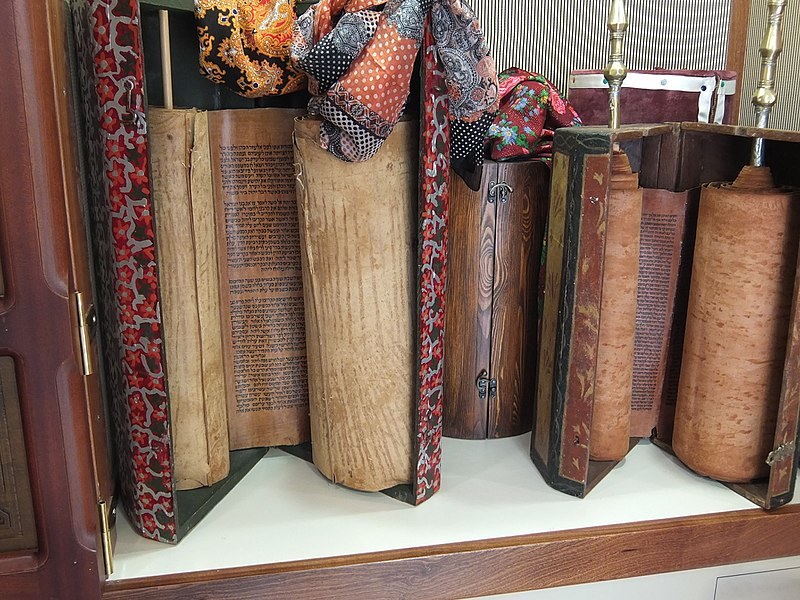
The International Council of Museum’s Red List for Yemen specifically included Torah scrolls as part of the cultural heritage Yemen seeks to take ownership of, which is deeply problematic. Unlike other endangered archeological items that CPAC is trying to protect, Torah scrolls are not a national cultural relic of any government – but are an integral, living element of Jewish heritage, and belong in the custody of Jewish communities. If this committee truly cared about protecting cultural property it would advocate a position of returning Yemeni Torah scrolls to Yemenite Jewish communities who are certainly the best caretakers of their living cultural property.
We ask you, how can a country that severely violated the human rights of its Jewish people, and is currently embroiled in famine and war, be entrusted to serve as responsible owners and custodians of Jewish cultural property? We find it abhorrent that a country whose antisemitic policies, and inability to protect its Jewish people, would now like to claim legal ownership over confiscated Jewish communal property. By signing an MOU with Yemen that does not include provisions that list Torah scrolls, and other Jewish items, to be excluded from import restriction lists, this committee is complicit in Yemen’s antisemitic crimes.
MOUs demand that the governments themselves show they are taking measures to preserve and protect the heritage in their own countries and Yemen should be asked to present an inventory of remaining Jewish moveable and non-movable patrimony and an account of what they are actively doing with respect to the care of synagogues, cemeteries and other sites and items of Jewish and Christian heritage. Sadly, we know the Yemeni government is complicit in the bombing and shelling of cultural sites, including museums, and has done nothing to preserve the remnants or memory of Jewish history from Yemen.
These MOUs claim to be about looting, but their broad scope and limited evidence of success suggests their impact is providing a legal vehicle to legitimize foreign confiscations and wrongful ownership claims. Proponents of import restrictions point to looting of museums, but such material is already subject to detention and seizure under the National Stolen Property Act. Furthermore, U.S. imports from Yemen indicate that the U.S. is not a destination for looted or stolen material. Legitimate efforts to curb looting in Yemen and other countries in the Middle East and North Africa are essential, but must be targeted to preserve archaeological resources, and not to disguise the brazen property confiscations of antisemitic governments.
We close by voicing our frustration that the Cultural Property Advisory Committee accelerated the timeline for action on Yemen’s MOU request, thus minimizing the opportunity for the Jewish community and others to oppose it. The call for public comment was made during the Jewish High Holidays, exhibiting insensitivity towards Jewish people and institutions who care deeply about this issue. We hope that your committee will take the concerns and requests of the Jewish community seriously.
Thank you,
Sarah Levin, Executive Director, JIMENA
Gina Bublil-Waldman, President, JIMENA
C.C.
Honorable Secretary of State, Mike Pompeo
Bureau of Education and Cultural Affairs Assistant Secretary, Marie Royce
House Foreign Affairs Committee Chairman, Eliot Engel
Senate Committee on Foreign Relations Chairman, Jim Risch
Commission for the Preservation of American Heritage Abroad Chairman, Paul Packer
Special Envoy to Monitor and Combat Anti-Semitism, Elan Carr
Tags
- Memorandums of Understanding (MOU)
- Cultural Heritage
- Yemen
- JIMENA's Initiatives
- Cultural Property
- Government
More Statements
Pattern of Abuse: Iraqi Jewish Archive & MOUs
Cultural Property Rights The Iraqi Jewish Archive and Jewish Cultural Property Rights Protecting Jewish heritage must include the rights of the communities that created and preserved it. Last reviewed October 2026 For many Jews who fled or were expelled from countries across the Middle East and North Africa, displacement meant losing not only homes and livelihoods, but also sacred objects, communal records, and the material evidence of generations of Jewish life. These losses continue to raise questions of ownership, access, and restitution for Jewish communities and their descendants. JIMENA advocates for the rights of Jews from the Middle East and North Africa to their confiscated cultural property. Our work addresses the Iraqi Jewish Archive, U.S. cultural property agreements, and the broader responsibility to protect Jewish heritage without legitimizing the dispossession of the people to whom it belongs. “Forced displacement should not sever a community’s rights to its heritage.” Our guiding principle The Iraqi Jewish Archive A community’s history recovered On May 6, 2003, American soldiers discovered thousands of Jewish books and documents submerged in the flooded basement of Saddam Hussein’s intelligence headquarters in Baghdad. The collection, which became known as the Iraqi Jewish Archive, included more than 2,700 books and tens of thousands of documents. The surviving materials offer an extraordinary record of Iraqi Jewish life. Religious books, school records, correspondence, and communal documents reveal the institutions, relationships, and everyday experiences of a community whose history in the region stretches back more than 2,500 years. The collection also contains records relating to the citizenship laws and restrictions that shaped the lives of Iraqi Jews during the twentieth century. With the agreement of Iraqi representatives, the water damaged materials were brought to the United States for preservation. The National Archives and Records Administration and its partners undertook extensive conservation, cataloging, and digitization, making this history accessible to people around the world. The preservation project contemplated returning the physical materials to Iraq. For JIMENA, the central question is not only where the collection can be preserved, but whose rights must guide decisions about its future. Returning confiscated Jewish materials to a government is not the same as restoring them to the Jewish families, schools, synagogues, and communal institutions from which they were taken. Preservation and online access, however valuable, do not resolve the questions of ownership and restitution. JIMENA’s position Any resolution concerning the Iraqi Jewish Archive must recognize the rights of the Iraqi Jewish community and its descendants. Their relationship to these materials should be central, not incidental, to decisions about custody, access, and long term stewardship. U.S. cultural property agreements Why these agreements matter The Iraqi Jewish Archive’s preservation and custody arrangements are distinct from the U.S. agreements that govern imports of cultural property. Both, however, raise an important question: how should governments protect cultural heritage when the communities that created it have experienced persecution, confiscation, and displacement? Under the Convention on Cultural Property Implementation Act, the United States can enter into agreements with other countries to restrict imports of designated archaeological and ethnological materials threatened by pillage. These agreements, often called Memoranda of Understanding (MOUs), are intended to combat illicit trafficking and protect cultural heritage. They operate through specified categories of objects and defined date ranges, not a blanket prohibition on everything associated with a country. For covered materials, U.S. law requires export documentation or other legally accepted evidence that permits their importation. Objects lacking that documentation can be detained and become subject to seizure and forfeiture. Designated materials forfeited for violating these import restrictions are first offered for return to the relevant foreign state. An MOU does not, by itself, transfer ownership of every covered object to a foreign government. But its implementing restrictions can have serious consequences for where an object may go and whether it can reach a displaced community. This is why JIMENA has called for explicit protections for Jewish and other minority cultural property in U.S. agreements with countries across the region. JIMENA supports protecting cultural heritage from theft, destruction, and trafficking. That protection should also account for histories of state confiscation and persecution. Governments should not be treated as the only legitimate representatives of heritage created by communities whose rights they have violated. “Jewish heritage can be part of a country’s history without Jewish owned property automatically becoming the property of its government.” Where things stand Important protections and continuing gaps Some U.S. cultural property rules now explicitly exclude certain Jewish materials. These provisions show that agreements can include specific protections for Jewish heritage. Other restrictions continue to raise concerns. Libya Protection The 2023 renewal excludes Jewish ceremonial and ritual objects from its ethnological restrictions. Yemen Protection The 2024 rules exclude Jewish ceremonial or ritual objects and manuscripts from their ethnological categories. Morocco Protection The rules, renewed in 2026, expressly exclude Jewish ceremonial or ritual objects from ethnological coverage. Türkiye Gap The designated list expressly includes Kiddush cups, Torah pointers, and Torah finials. In May 2026, the United States extended the restrictions through March 24, 2031, keeping the existing list. The scope of these protections matters. Exclusions for particular ethnological categories should not be mistaken for blanket exemptions for all Jewish cultural property, nor do they resolve ownership or restitution claims. JIMENA calls for clear, consistent protections rather than leaving the treatment of Jewish cultural property to varying language from one agreement to another. The experiences and rights of displaced communities must inform both the negotiation of agreements and their enforcement. Our advocacy What JIMENA advocates 1. Recognition of ownership and meaningful restitution Confiscation and forced displacement should not extinguish the rights of Jewish individuals, families, and communal institutions. Decisions about Jewish cultural property should examine how objects changed hands, recognize legitimate ownership claims, and support restitution rather than defaulting to government possession. 2. A meaningful role for affected communities Jewish communities and their descendants should participate in decisions about their heritage. Their knowledge of an object’s history, religious significance, ownership, and use is essential to responsible policy and stewardship. 3. Explicit safeguards in cultural property agreements U.S. agreements and their implementing restrictions should include clearly defined protections for the cultural property of Jewish and other persecuted minority communities. JIMENA has called for specific exclusions for Jewish and Christian materials rather than relying on assumptions that their interests will be protected by broader national heritage claims. 4. Preservation, transparency, and access Governments seeking recognition and protection of cultural heritage should document what remains, explain how it is being conserved, and provide meaningful access to affected communities. Preservation commitments should address both movable objects and the synagogues, cemeteries, and other sites that hold communal memory. Conservation does not replace restitution. Digital access does not resolve ownership. Protecting an object should not mean disregarding the people whose history, faith, and family life give it meaning. Voices from the Archive Opening the Iraqi Jewish Archive to new generations JIMENA serves as the fiscal sponsor of Voices from the Archive, a project created by David Breslauer that makes the digitized Iraqi Jewish Archive easier to search, read, and explore. The project uses AI assisted transcription and draft translation to help families, researchers, and community members discover material within the collection. The National Library of Israel partners with the project in stewarding the digitized archive and supporting public access. Visitors can explore historical documents and photographs, search for family names and institutions, and compare transcriptions and translations with the original archival images. Because AI generated text can contain errors, important names, dates, and interpretations should be checked against those images. For families separated from this history by displacement, distance, or language, these tools offer new opportunities to reconnect. Explore Voices from the Archive → Learn more The National Archives Preservation Project → Discover how the Iraqi Jewish Archive was recovered, conserved, cataloged, and digitized, and explore the materials featured in the National Archives’ exhibition. JIMENA Statements and Policy Submissions → Read JIMENA’s testimony, correspondence, and policy positions concerning Jewish cultural property and the rights of displaced communities. Contact JIMENA → For policy inquiries, research partnerships, or information about our cultural property advocacy, contact JIMENA. Press and policy inquiries: Sarah Levin, Executive Director, JIMENA · sarahlevin@jimena.org
JIMENA Responds to New York Magazine's "Habibi City"
100% Joint Communal Letter · August, 2026 Leading Sephardic & Mizrahi Organizations Challenge New York Magazine’s “Habibi City” Over Erasure of Middle Eastern Jews 14 Jewish communal organizations call on New York Magazine to acknowledge the exclusion and meet with community representatives. On August 10, 2026, New York Magazine published “Habibi City,” a multi-article feature on New York’s “SWANA” (Southwest Asian and North African) cultural scene. On August 25, a coalition of fourteen organizations representing Sephardic and Mizrahi Jewish communities convened by JIMENA delivered the following letter to the magazine’s editors. The letter documents, in the feature’s own words, how belonging to the “SWANA community” was defined in ideological terms that exclude the region’s Jews and render its other non-Muslim indigenous peoples nearly invisible — and it asks the magazine’s editors to acknowledge that framing, include Sephardic and Mizrahi voices as we actually are in future coverage, and meet with the signatory organizations. “SWANA is geography. Your feature defines it as ideology.” From the joint letter To the Editors of New York Magazine: We write as organizations representing the indigenous Jewish communities of the Middle East and North Africa, Sephardic and Mizrahi Jews, whose presence in Iraq, Iran, Egypt, Yemen, Syria, Lebanon, Libya, Tunisia, Turkey, Morocco, and across the region predates the Arab conquests by more than a millennium. We write in response to your August 10 “Habibi City” feature on New York’s SWANA cultural scene, and we write not only for ourselves but alongside the many other indigenous and minority peoples of the region including Coptic Christians, Assyrians and Chaldeans, Armenians, Kurds, Yazidis, Druze, Amazigh, Baha’is, Zoroastrians, whose absence from your pages we will return to below. Your editors have said they welcome good-faith criticism of the feature. This is ours. SWANA is geography. Your feature defines it as ideology. SWANA is offered to readers as a progressive designation: Southwest Asia and North Africa, a corrective to the colonial coinage “Middle East.” But your feature does not use it that way. In its own words, to be “in SWANA community” means embracing a “set of shared beliefs,” among them the assertion that Israel’s conduct in Gaza constitutes genocide. SWANA, readers are told, is a “decolonial framework” and “a way of moving through the world.” Zionism is listed alongside xenophobia and Islamophobia as one of the forces SWANA New Yorkers must “face.” A mayor born in Uganda to Indian parents is welcomed as “SWANA adjacent” on the strength of his politics and religion, while the question of whether Israelis can claim connection to their own region becomes “complicated,” and grows “more so depending on a person’s ethnic background.” Where Israelis do appear, readers are reassured: “Of course, they’re not Zionists.” Follow the logic of your own reporting and the definition becomes unmistakable. Geography is not the membership criterion; politics, ideology, and religion are. A South Asian Muslim belongs by faith and conviction. A Mizrahi Jew whose grandparents were born in the region, expelled from their country of origin, and who carries the region in her language, liturgy, and kitchen belongs only upon disavowal of the movement through which her family survived. In your telling, anti-Zionism is the central organizing principle of the contemporary “SWANA community” and the price of admission to it effectively marginalizing the diverse indigenous peoples of the Middle East who have lived in the region for thousands of years but who do not identify with the anti-Zionist hate movement. In doing so, the feature replicates in New York the very pattern of ideological erasure and cultural cleansing that has fueled the ongoing oppression of, and extreme violence against, ethnic and religious minorities in the region itself. The erasure of the region’s non-Muslim peoples Your feature states that SWANA, “unlike Muslim,” is “not defined by religion.” Yet its communal calendar runs on Eid banquets, iftars, and Ramadan; its flagship magazine describes itself as a home for “the Muslim left”; its milestones are measured in “Muslim clout,” Muslim creatives, and Muslim restaurants; and its geography stretches to include Indian and Pakistani New Yorkers on the basis of shared Muslim identity. We write this not to begrudge Muslim New Yorkers but to highlight coverage that folds Iranians, Arabs, and South Asians into one community on an implicitly Muslim frame quietly equating the region with its majority faith. Iranian equals Arab equals SWANA equals Muslim. That equation erases everyone the region’s own history has already tried to erase. The Middle East and North Africa has never been, religiously, ethnically, or ideologically uniform. The peoples listed at the top of this letter are not guests in the region; they are its oldest inhabitants. Most have endured conquest, dhimmitude, massacre, or expulsion at the hands of the region’s dominant powers, experiences entirely missing from a feature that presents that dominant culture, transplanted to New York, as the marginalized party. Here is the first moral inversion: a “decolonial framework” that treats the heirs of one of history’s great imperial expansions as the colonized, and the region’s actual indigenous minorities as invisible, or, in our case, as presumptive colonizers of our own homeland. What Zionism actually is to us Our communities lived continuously in the Middle East and North Africa for over 2,500 years, before the emergence of Islam. In the twentieth century, close to one million Jews were driven from the Arab and Muslim world, frequently under laws that criminalized Zionism itself. In countries throughout the Arab world Zionism was made a capital offense, over 3,000 Jews were imprisoned, and Jews were stripped of citizenship and property as “Zionists”; across the region, families were dispossessed, imprisoned, or forced to flee under duress. In the political Zionism of the 20th century, we asserted our own indigeneity after living for millennia as second-class and, finally, exiled citizens of the lands of our birth. The movement your feature files alongside xenophobia and Islamophobia is the reason hundreds of thousands of those refugees had somewhere to go, and the reason their descendants, today the majority of Israel’s Jewish population, exist as communities at all. To renounce Zionism as the condition of belonging to a SWANA community is to demand that Jews disavow our own survival. Being Jewish or Zionist is not in opposition to being from a geographic region. For most of us, the two are how we are still here. The cuisine your feature celebrates makes the point vividly. Food is one of the truest records a people keeps of where it has been. The dishes in your pages were also carried out of Baghdad, Sana’a, Cairo, and Casablanca by refugees who left with little else and they survive as living traditions rather than museum pieces because those refugees had a country to carry them to. Your food coverage goes further still: it prints, without comment, a featured restaurant’s menu map on which Israel does not appear at all, retitled “Discover Palestine,” and it refers in the magazine’s own editorial voice to “the land mass currently called Israel.” It reports, with evident satisfaction from one interviewee, that Israeli-owned restaurants are now retreating behind the euphemism “Mediterranean” some, by your own account, after vandalism. A feature devoted to the pride of naming oneself openly treats the return of Jews to concealment as a development to be savored. That is the second moral inversion. The label “Arab Jew” Your feature applies the label “Arab Jew” without qualification. Most Mizrahi Jews reject it and in current usage it functions largely to sever Jewish identity from Israel. The Tunisian-born sociologist and philosopher Albert Memmi answered the label half a century ago, responding to Muammar Gaddafi’s offer to welcome Jews back as “Arabs like us” after they had been brutally ethnically cleansed. He acknowledged the nostalgia the phrase evokes, then wrote: “We would have liked to be Arab Jews. If we abandon the idea, it is because over the centuries the Moslem Arabs systematically prevented its realization by their contempt and cruelty.” The identity was refused to us when we lived in Arab lands. It is now conferred on us in New York, without our consent, because it is politically convenient: an “Arab Jew” is a Jew whose story can be told without Israel. The great majority of Mizrahi and Sephardic Jews were never asked whether we accept the label. Instead, your writers located the small minority who embrace it, presented them as representative, and left the rest of us to discover that our identity had been defined by others on our behalf. That is not inclusion. It is a curated exception, deployed to suggest the community has been consulted when it has not – erasure presenting itself as representation. October 7 as a date without victims In your feature, October 7th appears repeatedly and always as a calendar marker for what came after it, never as an event with victims of its own. It was carried out by Hamas, an organization whose founding charter is openly genocidal, calling for the destruction of Israel and invoking Islamic scripture commanding the killing of Jews, and whose record of violence runs in every direction: against Israelis in massacre and hostage-taking, and against Palestinians themselves, from the executions of political rivals in its 2007 seizure of Gaza to its ongoing torture and killing of dissidents. On October 7th, 2023 some 1,200 Israelis were murdered and 251 taken hostage, communities were burned, and sexual violence was documented – none of it acknowledged, even in passing, in thousands of words that date an entire cultural renaissance to that morning. Your readers might never learn that among the towns invaded that day including Ofakim, Sderot, Netivot are some of the most heavily Mizrahi communities in Israel: descendants of the very refugees from Morocco, Iraq, and Yemen whose food and music fill your pages. The people of the region were both among the murdered and among the murdered’s mourners, and your feature could not spare them a single sentence. A “SWANA community” whose “shared beliefs” in anti-Zionism require total silence about Jewish suffering and about the genocidal intent and movement that inflicted the tragedy of October 7th is not practicing solidarity with Palestinians. It is practicing antisemitism. That is the third moral inversion. “We are not asking to be tolerated as exceptions to an ideological rule. We are asking to be recognized as what we are: peoples of the region.” From the joint letter What we ask We are not asking to be tolerated as exceptions to an ideological rule. We are asking to be recognized as what we are: peoples of the region. We ask that New York Magazine acknowledge that its framing excludes the Jews of the Middle East and North Africa except on ideological terms, and renders the region’s other non-Muslim peoples nearly invisible; that future coverage of SWANA communities include Mizrahi and Sephardic voices as we actually are, which for the great majority of us means Zionist, alongside the other erased non-Muslim indigenous voices of the region; and that your editors meet with representatives of the undersigned organizations to discuss how that happens. “The region and its peoples do not belong to one faith, one politics, or one story. Neither should its name.” Original Signatories American Sephardi Federation HARIF – UK Association of MENA Jews Institute for Jewish Ideas and Ideals Iranian American Jewish Federation of New York (IAJF NY) JCRC-NY JIMENA: Jews Indigenous to the Middle East and North Africa Justice for Jews from Arab Countries International Kahal Joseph Congregation Kanisse SAMi – Sephardic American Mizrahi Initiative Sephardic Community Alliance Sephardic Community Federation Sephardic Educational Center (SEC) Zamir Equities Additional Signatories The following organizations have joined since the letter’s delivery on August 25, 2026. Organizations wishing to add their names may do so using the button below. Sephardic Heritage Project The Sephardic Jewish Brotherhood of America Stand With Us UJA Federation of New York SHAI - Sephardic Heritage Alliance Add your organization as a signatory Download the letter as delivered Press inquiries: Sarah Levin, Executive Director, JIMENA — sarahlevin@jimena.org Convened by JIMENA: Jews Indigenous to the Middle East and North Africa · www.jimena.org
JIMENA and Education Policy Project Call for Federal Investigation of Federally Funded California K–12 Programs
JIMENA & The Education Policy Project · April 2026 Our children’s classrooms are being used to rewrite our history. Federally funded university programs are transmitting politically motivated, one-sided narratives about Jews, Israel, and the Middle East directly into California’s K–12 classrooms. We are calling on Congress and the federal government to investigate — and to stop it. Read the full letter and appendices → Why JIMENA is speaking This is personal. It is also a matter of historical record. JIMENA represents the nearly one million Sephardic and Mizrahi Jews — Jews indigenous to the Middle East and North Africa — who were dispossessed and expelled from their homes across the Arab world throughout the 20th century. Iraq. Egypt. Morocco. Yemen. Libya. Communities that had existed continuously for over 2,500 years, dismantled within a generation. We know what it looks like when hostility toward Jews is normalized through educational systems. We lived through it. In country after country, it began in classrooms — with lessons that singled out Jewish children, framed Jews as foreign or threatening, and planted seeds of suspicion that grew into state-sanctioned persecution and mass expulsion. For too long, our histories have been misrepresented, erased, or conscripted to serve ideologies that have nothing to do with truth. The experiences of Mizrahi and Sephardic Jews — our forced displacement, our losses, our identities — have been ignored in academic scholarship and distorted in educational materials. We will not allow that erasure to continue. And we will not allow our histories to be weaponized in K–12 classrooms to advance the political agendas of anti-Israel activists operating within publicly funded universities. 83% of American Jews identify Israel as essential or important to their identity. The vast majority of Mizrahi and Sephardic Jews are Zionist — not as a political ideology imported from Europe, but as an expression of a 2,000-year diasporic longing to return to our ancestral homeland. When K–12 students are taught that Zionism is European colonialism, our identity is being falsified. The pipeline problem How university bias reaches six million students Most people assume that K–12 classrooms are separate from the political debates taking place on university campuses. They are not. Through a federally funded program called the California Subject Matter Project (CSMP), university faculty develop instructional materials and train teachers — and those materials flow directly into public school classrooms across the state. ~6M Students reached Across approximately 1,000 public school districts in California 40K Educators in network Teachers trained through CSMP as of 2022, now focused almost exclusively on Ethnic Studies $135M Federal funds since 2019 CSMP and its delivery partner received over $135M in ESEA Title II federal grants 90+ Regional sites Operating across the University of California system, covering the full state CSMP is not a neutral conduit. University faculty whose materials and trainings have been shown to present contested political positions as historical fact, omit the continuous presence of Jews in the Middle East, characterize Zionism exclusively as European colonialism, and exclude Jewish perspectives from the very history in which Jews are central — are the same faculty developing K–12 curriculum. The U.S. House Committee on Education and Workforce documented these patterns in higher education in its March 2026 report on radical antisemitism on college campuses. What we are showing is that the pipeline runs downstream — into the classrooms of children as young as fourteen. What the materials actually say Selective history is not neutral history CSMP’s K–12 instructional materials present as established fact that Jewish immigration to Palestine began in the 1880s — erasing over two millennia of continuous Jewish presence in the region. They describe the movement of nearly one million Jewish refugees from Arab countries as voluntary “emigration,” omitting the documented expulsions, property confiscations, arbitrary imprisonments, and ethnic cleansing that drove those departures. Teachers are directed to frame Jewish nationalism as a “European political movement” — denying the indigenous, Middle Eastern roots of Jewish identity. Inquiry sets present the founding of Israel without essential historical context. Professional development programs instruct teachers to teach “the occupation of Palestine and genocide of Palestinians” as fact — without competing interpretations, legal definitions, or countervailing scholarship. California’s own academic content standards require that students “identify bias and prejudice in historical interpretations,” “recognize the complexity of historical causes and effects,” and “evaluate major debates among historians.” These materials do none of that. They fail the legal requirements of the very federal grants that fund them. Our call to action What we are asking the federal government to do JIMENA and The Education Policy Project have written jointly to the U.S. House Committee on Education and Workforce, the Department of Justice Civil Rights Division, the Department of Education, and the Department of Labor. Our ask is grounded in federal law — not political preference. Our formal request 1. Conduct a comprehensive federal review of CSMP’s instructional materials and K–12 professional development programs for compliance with ESEA nondiscrimination requirements and content standards. 2. Suspend CSMP’s federal ESEA Title II funding until identified violations are corrected and materials are brought into compliance. 3. Ensure that California’s oversight mechanisms fulfill their legal obligation to monitor federal grant compliance — and that publicly funded teacher training programs serve students, not political movements. This is not a call to censor debate or restrict academic freedom. Universities should be places of open inquiry. But that principle does not give federally funded programs license to present contested political claims as fact to minors, erase the histories of Jewish communities, or train teachers in ideological frameworks that fail California’s own educational standards. The children in these classrooms deserve better. So do we. Read the full letter and appendices → Includes detailed analysis of specific CSMP instructional materials and their departures from California’s own academic standards. Sarah Levin, Executive Director, JIMENA · SarahLevin@JIMENA.org Lauren Janov, Founder, The Education Policy Project · LJanov@EdPolicyProject.org