Fils de Crémieux (Albert Bensoussan, in French)
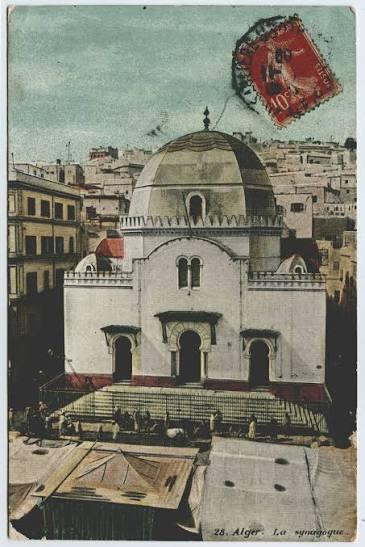
From Morial (Mémoire et Traditions des Juifs d'Algérie) · By Albert Bensoussan · In French
In 1870, the Crémieux Decree made the Jews of Algeria French citizens. In this personal essay, the Algerian Jewish writer Albert Bensoussan traces what that decree meant for three generations of his own family, and how quickly the citizenship it granted could be taken away.
A family story
Three generations of French citizenship
Bensoussan's mother's father, Messaoud Benayoun, became French in 1870 under the decree and was soon sent off to war. His father's family had come to Algeria from Morocco, so his father, born in Nemours in 1890, became French only at 18. He served in the French army, was badly wounded in the First World War, and was decorated for his service, while his younger brother died in that war and is buried in France. That is why Bensoussan calls himself a son of Crémieux.
Under Vichy
Thirteen days without a country
When the Vichy regime abolished the Crémieux Decree in 1940, his father, a wounded and decorated veteran, was summoned by the police to declare himself an "indigenous Jew of Algeria." Bensoussan still keeps both police notices: the first, signed in a shaky hand, and a second, two weeks later, restoring the family's citizenship because of his father's war record. At school, where he was the only Jewish child in his class, he was called a "dirty Jew" for the first time.
Antisemitism in colonial Algeria
A long campaign against the decree
Bensoussan places his family's story within the antisemitism of colonial Algeria: the anti Jewish riots of the 1890s led by Max Régis, editor of a newspaper that demanded the decree be repealed, and a local press that kept attacking Jews for decades, even mocking the Jewish prime minister Pierre Mendès France. He also recalls that Adolphe Crémieux led the Alliance Israélite Universelle, whose schools taught generations of Jews across North Africa and the Middle East.
Why read it
For teachers and students
The essay shows, through one family, how citizenship shaped the lives of Algerian Jews, and how fragile it proved. It pairs well with the Policies and Timeline pages for Algeria and with JIMENA's oral histories from Algeria. The original is in French; your browser can translate it.
Read the full essay on Morial (in French) →
Laws that shaped Jewish life in Algeria →
This English summary was written by JIMENA. The essay belongs to its author and Morial, an association that preserves the memory and traditions of the Jews of Algeria.