The Nomad: A Conversation with Bernard-Henri Lévy (Tablet)
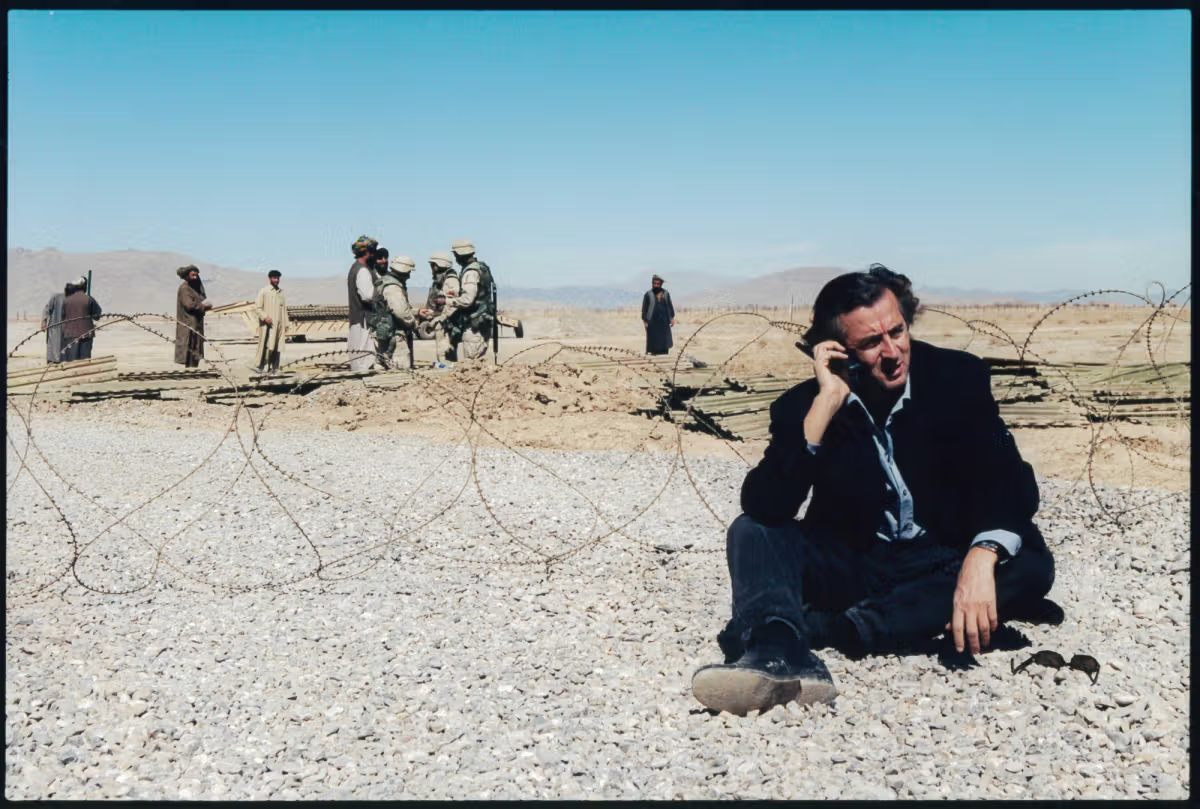
From Tablet Magazine · Interview by David Samuels · January 14, 2022
The French philosopher and writer Bernard-Henri Lévy is one of the best known public intellectuals in the world. Less well known is that his family came from Algeria. In this long conversation with Tablet's David Samuels, recorded over two evenings in Morocco, Lévy reflects on his Algerian Jewish roots, on the silence his parents kept about them, and on why he believes the very idea of a shared humanity began with the Jews.
Algerian roots
A shepherd grandfather and a family that chose to forget
Lévy's father came from Mascara, in western Algeria. His mother's father was a shepherd who spent his life driving his flocks between Algeria and northern Morocco, and who died alone in the desert, probably in the 1930s. Lévy never met him and knows him from just two photographs.
His parents made what he calls a near total break with the past. They spoke French without a North African accent, rarely mentioned their childhoods, kept no family objects, and never talked about Algeria. Yet they also refused, as many French Jews did after the war, to change their name. When Lévy later searched for his ancestors, he found nothing beyond his parents. "The obscure men are my family," he tells Samuels.
Derrida, Fanon, and Algeria
Other Algerians in the room
At the École normale supérieure in Paris, Lévy was supervised by the philosopher Jacques Derrida, who was also born to a Jewish family in Algeria and who, like Lévy's parents, rarely spoke of his origins until late in life. Lévy describes their first, awkward meeting, when the nervous student mentioned that he knew Derrida's cousin, and how he learned only years later that Frantz Fanon, whose writing deeply shaped him, had worked as a psychiatrist in Blida, which Lévy describes as close to his father's hometown.
Becoming a Jewish thinker
From silence to the Six Day War
Lévy says his sense of being Jewish came suddenly, during the Six Day War in 1967. His book The Testament of God surprised his secular parents by turning to the Bible and the Talmud. In the interview he argues that the idea of a common humanity is a Jewish idea, and that being a nomad, someone at home nowhere, is a gift rather than a loss.
Why read it
For teachers and students
The interview is a window into a common Algerian Jewish story: families who rebuilt their lives in France after 1962 and chose not to pass on the memories of what they had left behind. It pairs well with JIMENA's oral histories from Algeria, in which Algerian Jews describe the same journey in their own words.
Read the full interview in Tablet Magazine →
Watch JIMENA's oral histories from Algeria →
This summary was written by JIMENA. The interview and its photographs belong to Tablet Magazine.