Personal Stories
Uncover the hidden narratives and vibrant legacy of the Jewish community. Explore the personal journeys shared below.
Written Narratives
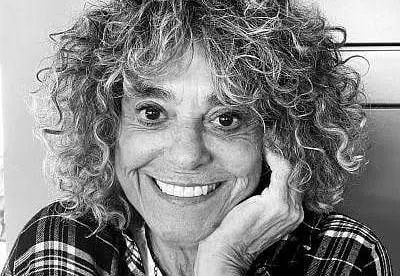
Rachel Wahba
Rachel Wahba: An Iraqi-Egyptian Jewish Family's Journey Through India and Japan
Rachel Wahba was born in India to a Jewish family with roots in Iraq and Egypt. Her family's history spans several countries and generations, reflecting the experiences of Middle Eastern Jews who faced antisemitism, political upheaval, and displacement. From her mother's childhood in Baghdad during the 1941 Farhud to her father's departure from Egypt, Rachel recounts the circumstances that brought her parents to India and eventually led her family to Japan as stateless refugees.
Her Maternal Family: From Singapore to Baghdad
Rachel begins her testimony by describing her maternal grandmother, who was born and raised in Singapore.
An English-speaking, independent, and outspoken woman, her grandmother had grown up in a relatively modern environment. When she moved to Baghdad with her husband, she encountered a society very different from the one she had known.
Rachel recalls that her grandmother struggled to gain acceptance within her husband's family. Her appearance, upbringing, and independent personality distinguished her from the women around her, and some relatives reportedly attempted to break up the marriage.
Despite these difficulties, she and her husband had three children, the eldest of whom was Rachel's mother.
Rachel describes her mother as quiet, reserved, and obedient, in marked contrast to her outspoken grandmother.
While Rachel's mother was considered a “good girl” who avoided confrontation, her grandmother refused to remain silent when subjected to harassment. Rachel remembers stories of her grandmother confronting people publicly and defending herself when mistreated.
The family's circumstances became increasingly precarious as antisemitism and political tensions intensified in Iraq.
Rachel recalls her grandmother's alarm at the antisemitic rhetoric associated with the Grand Mufti of Jerusalem and the violence of the 1941 Farhud, the anti-Jewish pogrom in Baghdad.
The Farhud profoundly affected Rachel's mother, who witnessed the violence as a child.
Her grandmother concluded that there was “no future” for her family in Baghdad.
The family subsequently relocated to India, where Rachel's maternal grandfather was involved in international trade.
Although Rachel was born after these events, she emphasizes that her mother's traumatic memories of the Farhud profoundly influenced her own upbringing and understanding of Jewish identity.
Her Paternal Family: Jewish Life in Egypt
Rachel's father came from a Jewish family in Mansoura, Egypt, whose ancestry, according to family tradition, could be traced to the expulsion of Jews from Spain.
His childhood was also marked by insecurity.
Rachel recounts that Jewish children faced the threat of kidnapping and that her father himself was abducted when he was six years old.
Fortunately, a family friend discovered him and helped return him safely to his family.
Rachel's father attended a French-language Catholic school before beginning work as a clerk in a Jewish-owned store.
She remembers him as a spiritual, intellectually curious, and well-informed man who followed political developments closely.
While working in the store, he became disturbed by the circulation of antisemitic literature, particularly an Arabic translation of Adolf Hitler's Mein Kampf, which he recalled seeing among popular publications.
The experience contributed to his growing concern about the future of Jews in Egypt.
Seeking new opportunities, he joined his adventurous brother in Japan.
He later moved to India, where he met Rachel's mother.
The two married and began building a family together, bringing their distinct Iraqi and Egyptian Jewish backgrounds into a shared household.
A Jewish Childhood in India
Rachel remembers her family's early life in India as comfortable and deeply connected to a close-knit Jewish community.
They lived near the Taj Mahal Palace Hotel in Bombay, surrounded by other Iraqi Jewish families.
The community provided a familiar cultural environment, allowing the family to maintain its religious practices, social relationships, and Middle Eastern Jewish traditions.
Despite having roots in different countries, Rachel's parents shared a strong sense of Jewish identity and an awareness of the growing dangers facing Jewish communities in the Middle East.
Her father maintained a relationship with officials at the Egyptian consulate in Bombay. Over time, however, those relationships deteriorated.
Rachel recalls that Egyptian officials objected to her father's efforts to assist Jewish refugees who had survived the Holocaust, as well as to his Zionist sympathies.
Her father viewed helping fellow Jews as a moral responsibility.
“They are my brothers!” he insisted.
According to Rachel, these tensions contributed to the family's decision to leave India.
The departure involved a prolonged period of uncertainty, complicated immigration procedures, and bureaucratic difficulties.
Eventually, the family relocated to Japan, where Rachel's father had previously lived.
During this period, the family also pursued immigration to the United States.
Rachel recalls that her mother strongly opposed moving to Israel, despite the fact that many Iraqi Jews had settled there.
Having witnessed the Farhud as a child, her mother fea
Timeline of Jewish Presence