Personal Stories
Uncover the hidden narratives and vibrant legacy of the Jewish community. Explore the personal journeys shared below.
Written Narratives
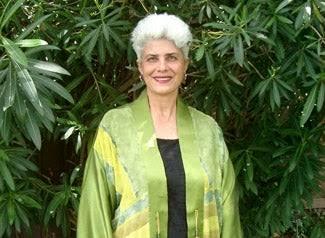
Remy Pessah
Remy Pessah: Persecution, Imprisonment, and Marriage in Egypt
Remy Pessah was born in Cairo, Egypt, into a Jewish family with three sisters and a brother. Her mother, Sarah Menasheh, was a homemaker and a “true nutritionist,” while her father, Yaakov El Gazzar, was a jeweler. The family lived on Sharyah Besseyah, a street in a neighborhood near their synagogue. Remy grew up speaking Arabic and French at home, attended French and American schools, and later studied at the American University in Cairo.
Remy has beautiful memories of her childhood in Egypt. She recalls spending summers on the beaches of Alexandria, where she could decide each day whether to go for a swim.
She also remembers her family's Shabbat traditions with great affection. Fridays were devoted to preparing for Shabbat: bathing, cleaning the home, changing the sheets, and dressing in fresh clothing. At sunset, the family attended synagogue before returning home for a warm meal of chicken soup, stuffed chicken, and reshta, a homemade pasta served in chicken soup.
Early Saturday mornings brought another visit to the synagogue. By 9:30 a.m., services had ended, and the family returned home to enjoy a traditional breakfast of fava beans, tahini, pita bread, and feta cheese.
Other childhood memories are less vivid. Remy was only five years old when the Free Officers' movement overthrew Egypt's monarchy in 1952, paving the way for Gamal Abdel Nasser's rise to power. She has little personal recollection of Black Saturday, the violent Cairo riots of January 1952, which reflected growing political unrest in Egypt.
As she grew older, however, Remy became increasingly aware of the restrictions facing Egyptian Jews. Under Nasser's government, Jewish communal activities were subject to growing scrutiny. Her family kept its connections to Israel private, and Remy recalls studying Hebrew discreetly at the synagogue.
Remy's memories of the 1956 Suez Crisis, also known as the Sinai War, are particularly vivid and painful. The conflict broke out just before her ninth birthday, forcing her family to postpone a planned celebration. In the middle of the night, they packed their belongings and hurried to her grandmother's house, leaving their home in darkness.
Decades later, Remy still remembers the sounds of bombs exploding and the frantic effort to cover windows with dark blue sheets. Whenever an explosion sounded, the family rushed to seek shelter underground or beneath their beds. For years afterward, Remy would awaken in the middle of the night screaming, haunted by memories of the bombardment.
Following the 1956 war, life for Egypt's Jewish community changed dramatically. Employment opportunities became increasingly limited, and many young Jews left the country after completing their education. Jews holding French or Italian citizenship were among those expelled, including Remy's grandmother and cousins, who moved first to France and later to Israel.
Their relocation to Israel made communication difficult. Remy's family feared that Egyptian authorities would intercept correspondence, so they relied on friends to exchange messages.
Remy desperately wanted to join her relatives and friends abroad, but leaving Egypt was particularly difficult for her immediate family because they held Egyptian citizenship. Although many Egyptian-born Jews faced obstacles to obtaining citizenship, Remy's father believed that securing Egyptian nationality would protect his family.
Even at Remy's high school, the designation “Israeli” had replaced “Jewish” as an option under the category of religion. Many Jews struggled through costly bureaucratic and legal processes to secure Egyptian citizenship and equal treatment under the law.
Remy's father believed that citizenship would provide security. He was mistaken.
Looking back, Remy believes her father was deeply reluctant to acknowledge the deteriorating future of Jewish life in Egypt. He encouraged his family to remain, convinced that conditions would eventually improve and life would return to what it had been before Nasser's rise to power.
Like many established Egyptian Jews, Remy's father had built a successful livelihood and feared the uncertainty of starting over in a foreign country. Egypt was the only home their families had known for generations.
Between the 1956 Suez Crisis and the 1967 Six-Day War, nearly all of Remy's friends left Egypt for the United States or Israel. After her sister Vicky married and departed, Remy felt increasingly isolated. Forming lasting friendships became nearly impossible as the community around her continued to disappear.
By 1967, Remy sensed that another war was approaching. The walls of Cairo were covered with antisemitic graffiti, including images of soldiers' boots crushing the Star of David. Crowds marched through the streets chanting threats against Israel and the Jewish people.
When the Six-Day War broke out, Egyptian media initially broadcast false reports of military victories. The atmosphere of hostility intensified, fueling further antisemitic demonstrations and violence.
For Egypt's remaining Jews, the consequences were devastating. Remy's non-Jewish friends abandoned her simply because she was Jewish. Jews were increasingly treated as suspected traitors, and hundreds of Jewish men were arrested and detained by Egyptian authorities.
Many were summoned to police headquarters under the pretense of brief questioning, only to be imprisoned for months or years without trial.
Among those arrested was Joe Pessah, Remy's fiancé. The couple had planned to marry, but Joe's imprisonment shattered their hopes of beginning a life together.
For six months, Remy received no information about Joe's whereabouts or condition. He was among approximately 500 Jewish men, many between the ages of 18 and 55, who had been detained.
Finally, a postcard arrived with a simple request: “Please send us some underwear.” For Remy, it was the first sign that Joe was still alive.
For three years, their relationship continued through brief prison visits. Remy traveled two and a half hours each way to see Joe, only to be allowed a few minutes with him behind bars.
The mass imprisonment of Jewish men placed an enormous burden on their families. Many women were left without financial support, and their savings quickly disappeared. Synagogues attempted to provide assistance, but the needs were overwhelming.
Joe's mother eventually fled Egypt with her youngest children. Remy still possesses a photograph of Joe's mother and five of his siblings saying goodbye to Joe, his father, and his brother.
Despite the uncertainty, Remy refused to abandon hope.
Eventually, her father learned that Joe and other Jewish prisoners might soon be released. Remy understood, however, that their release would likely be accompanied by expulsion from Egypt.
By 1968, Egyptian authorities had further restricted Jewish emigration. Because Remy and Joe were not yet married, she feared she would be unable to accompany him when he was released and forced to leave the country.
By 1970, Remy realized that marriage might be their only opportunity to remain together.
Determined to secure their future, she arrived at the prison one day accompanied by a rabbi and carrying a pair of wedding rings. She surprised Joe with an extraordinary proposal: they would marry immediately, despite the prison walls separating them.
The ceremony took place with Joe behind bars. Afterward, he returned to his cell, and Remy went home.
On June 24, 1970, Joe was finally released. Just days later, Remy was able to leave Egypt and join him.
She departed with only two suitcases and the equivalent of five U.S. dollars. Yet she remembers that day as the happiest of her life.
“I felt free for the first time in my life. I truly felt freedom,” she recalls.
Remy and Joe reunited in Paris, where they began rebuilding their lives with assistance from HIAS, the Hebrew Immigrant Aid Society. Despite the hardship of exile, Remy remembers their time in France with affection.
Six months later, the couple immigrated to the United States to join Joe's family. After completing the required period of residency, Remy applied for American citizenship.
In California, Remy maintained her Egyptian Jewish heritage through her involvement with Congregation B'nai Israel in Daly City, a synagogue serving the Karaite Jewish community.
Although she cherishes memories of her childhood, family traditions, and Jewish communal life in Egypt, the trauma of persecution and forced departure has deeply affected her relationship with the country of her birth. The Egyptian government confiscated her family's assets when they emigrated, leaving them with little more than their memories.
Today, Remy says she no longer feels a strong connection to Egypt. Instead, she has chosen to embrace the freedom and opportunities of the life she built after exile.
“You cannot break the past, but you can move forward. And that is what I am doing.”
Timeline of Jewish Presence