Under the Egyptian Sky: Jewish Poets in Interwar Cairo (swap for the peace treaty)
From haSepharadi
Between the two world wars, Cairo was home to a lively Jewish middle class that wrote, published, and argued in French. In this essay, the historian Dario Miccoli of Ca' Foscari University in Venice introduces three Jewish poets of the time and shows how each one tried to write Jews into the story of modern Egypt.
The setting
Why Cairo's Jews wrote in French
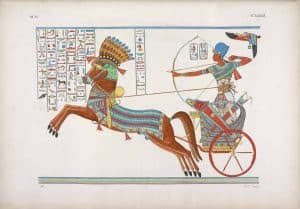
Many Jewish families in Cairo had arrived around 1900 from places like Greece, Anatolia, and Italy, where Arabic was not their language. French was the language of their schools and of the Egyptian middle class, which looked to Paris as a cultural model. At the same time, Egyptian nationalism in the 1920s celebrated the country's Pharaonic past as the root of an Egyptian identity shared by Muslims, Christians, and Jews.
Georges Cattaui (1896 to 1974)
A poem for a new Egypt
Born in Paris to a leading Cairo Jewish family, Cattaui served as secretary to King Fuad and as an Egyptian diplomat before turning fully to writing. In his 1921 poem Lève-toi, Pentaour!, he borrows the voice of an ancient Egyptian poet to celebrate Egypt's independence and to imagine Muslims, Jews, and Copts living side by side in peace.
Emile Mosseri (born 1911)
Searching for the past in Luxor
A young Cairo lawyer, playwright, and magazine writer, Mosseri published the poetry collection La ballade de la rue in the early 1930s. In a poem about a visit to Luxor, he looks to ancient Egypt for a lost past and identity, linking the country's monuments to Egyptian independence and to the Jewish story of the Exodus.
Lucien Sciuto (1868 to 1947)
A refuge in the Islamic world
A journalist born in Thessaloniki, Sciuto settled in Cairo in 1924. His 1938 collection Le peuple du messie, dedicated to King Farouk, includes a poem called “Islam” that contrasts the growing hostility toward Jews in Europe with the refuge the Islamic world had offered them, and that imagines Jews and Muslims, as fellow Semitic peoples, working together in the future.
What it tells us
A world that disappeared
Miccoli cautions against reading these poems as proof that life was free of conflict. Instead, they show a moment, before the upheavals that followed 1948, when Egyptian Jews could imagine belonging to Egypt, to Judaism, and to French culture all at once.
Read the full essay at haSepharadi →
This summary was written by JIMENA and is based on “Under the Egyptian Sky: Jewish Poets in Interwar Cairo” by Dario Miccoli, published by haSepharadi (March 17, 2019) and adapted from his article in Jewish Social Studies (2016). The original essay belongs to its author and publishers.