The Iranian Revolution Still Haunts Its Jewish Survivors, Elham Gheytanchi
From the Forward
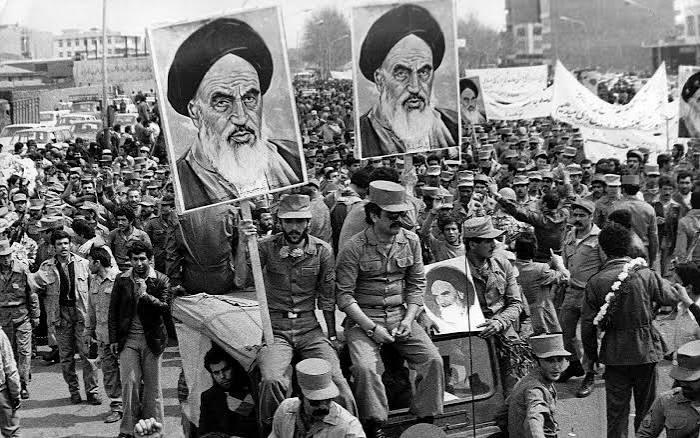
The writer E. Gheytanchi, who teaches sociology at Santa Monica College, grew up in Tehran in the years around the 1979 revolution. Her mother was the principal of Ettefagh, a respected Jewish school in the city. In this personal essay, she recalls how the revolution changed her school and her childhood.
A hero lost
Iran's first woman minister
Her mother admired Dr. Farrokhroo Parsa, a physician who became Iran's first woman minister of education and championed schooling for girls. After the revolution, Parsa was arrested and executed. In 1980, afraid of what it might reveal about her beliefs, the author's mother destroyed a treasured letter Parsa had once written to her.
A school transformed
Fear in the classroom
Revolutionary officials took charge at Ettefagh. When the author's mother overheard them discussing a 16 year old student who had handed out political leaflets, she secretly warned the girl's father. The student was arrested anyway, and the author remembers the fear that swept through the school. Her mother was later replaced as principal by a woman approved by the new government.
Why she writes
Telling stories to survive
The author compares herself to Scheherazade of One Thousand and One Nights, who told stories to stay alive. Writing, she explains, is how she makes sense of what her generation lived through, and why the revolution still shapes the lives of those who survived it.
Read the full essay at the Forward →
This summary was written by JIMENA and is based on “The Iranian Revolution Still Haunts Its Jewish Survivors” by E. Gheytanchi, published by the Forward. The original essay belongs to the Forward.