Iraq: Timeline
View chronological details of Jewish life and presence in Iraq.
- 721 BCE
Following the Assyrian conquest of the Kingdom of Israel and the fall of Samaria in 722–721 BCE, thousands of Israelites from the ten northern tribes were forcibly uprooted from their ancestral homeland and deported to distant regions of the Assyrian Empire, devastating their communities and marking the beginning of their dispersal.
- 597 BCE
In 597 BCE, Babylonian King Nebuchadnezzar II conquered Jerusalem, deposed King Jehoiachin, and forcibly deported the king and thousands of Judeans, including members of the royal court, military leaders, and skilled craftsmen, from their ancestral homeland to Babylonia, marking the first major wave of the Babylonian Exile.
- 586 BCE
In 597 BCE, Babylonian King Nebuchadnezzar II conquered Jerusalem, deposed King Jehoiachin, and forcibly deported the king and thousands of Judeans, including members of the royal court, military leaders, and skilled craftsmen, from their ancestral homeland to Babylonia, marking the first major wave of the Babylonian Exile. “By the rivers of Babylon, there we sat and wept, as we remembered Zion.” — Psalm 137:1
- 331 BCE
Alexander the Great conquers Babylonia from the Persian Empire, bringing its longstanding Jewish communities under Greek-Macedonian rule and ushering in the Hellenistic era, a period of significant political and cultural transformation for Jews throughout the region.
- 220
Babylonia (modern-day Iraq) emerges as a leading center of Jewish religious and intellectual life, with renowned academies in Sura, Pumbedita, and Nehardea fostering generations of rabbinic scholars whose teachings and debates would form the Babylonian Talmud, one of the most influential texts in Jewish history.
- 638
Arab-Muslim armies conquer Mesopotamia (modern-day Iraq), ending centuries of Persian rule and bringing its ancient Jewish communities under Islamic governance, where Jews retain their religious traditions but face unequal legal status as non-Muslims and gradually adopt Arabic as a language of daily life, scholarship, and cultural expression.
- 720
Under Umayyad Muslim rule, Jewish communities in Babylonia (modern-day Iraq) face increasing religious restrictions, including prohibitions on constructing new synagogues, while persecution and political instability disrupt Jewish religious institutions and reportedly force rabbinic scholars to flee Sura, one of the region’s leading centers of Jewish learning.
- 945
The Shiite Muslim Buyid dynasty captures Baghdad, bringing the Abbasid Caliphate under its political control and ushering in a new era for the city's longstanding Jewish community, which continues to maintain its religious institutions, scholarly academies, and communal leadership amid shifting political and religious power.
- 1058 – 1900
Over centuries of successive conquests and shifting rule by Seljuk Turks, Mongols, Persians, and Ottoman Turks, Iraq's ancient Jewish communities endure periods of warfare, persecution, and political instability while maintaining their religious traditions, communal institutions, and cultural life, with Jewish populations fluctuating significantly across the centuries.
- 1918
Following the collapse of Ottoman rule, Iraq comes under British administration, ushering in a period of political and economic transformation in which Iraqi Jews play a prominent role in commerce, banking, education, and public administration, helping shape the institutions of the emerging modern Iraqi state.
- 1921
Sassoon Eskell, a prominent Iraqi Jewish statesman and one of the founders of modern Iraq, becomes the country's first Minister of Finance, playing a pivotal role in establishing its financial institutions and economic policies while exemplifying the significant contributions of Iraqi Jews to the nation's political and economic development.
- 1932
Iraq gains independence from British rule as Nazi Germany begins expanding its influence in the region, with antisemitic propaganda and growing nationalist extremism fueling hostility toward Iraq's ancient Jewish community and laying the groundwork for the persecution and violence that would culminate in the Farhud pogrom of 1941.
- 1941
On June 1–2, 1941, violent mobs unleash a devastating pogrom against Baghdad’s Jewish community, murdering at least 180 Jews, injuring hundreds, and looting and destroying Jewish homes, businesses, and synagogues, marking a turning point in the history of Iraq’s ancient Jewish community and shattering its sense of security in its ancestral homeland.
- 1941- 1951
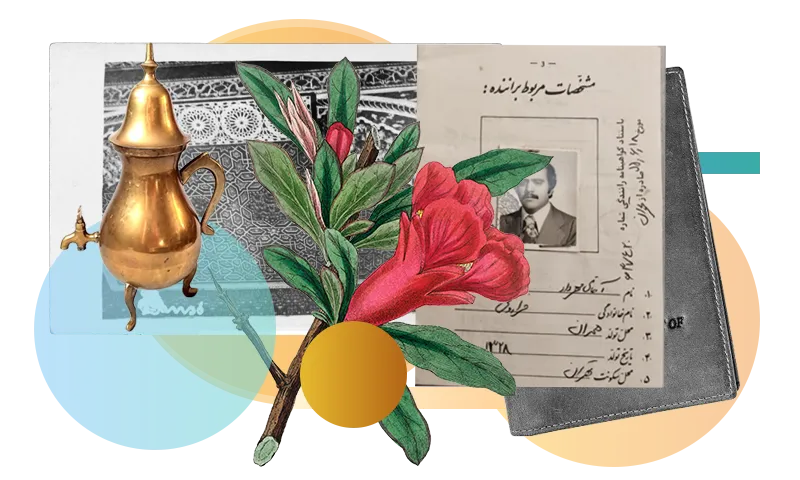
In the aftermath of the Farhud pogrom, Iraqi Jews face escalating antisemitism, outbreaks of anti-Jewish violence, discriminatory government policies, and growing insecurity, forcing thousands to flee their ancestral homeland, including more than 15,000 who escape through neighboring Iran, as centuries of Jewish life in Iraq face an increasingly uncertain future.
- 1948
Following Israel’s establishment and Iraq’s participation in the Arab-Israeli War, the Iraqi government criminalizes Zionist activity, making it punishable by death, while thousands of Jews face arrests, imprisonment, torture, confiscation of property, economic boycotts, and escalating antisemitic incitement, threatening the safety and future of Iraq’s approximately 130,000 Jews.
- 1949-1951
Facing escalating persecution, discriminatory laws, and growing threats to their safety, approximately 120,000 Iraqi Jews flee or are airlifted to Israel through Operation Ezra and Nehemiah and other escape routes, including Iran, after the Iraqi government permits Jewish emigration on the condition that Jews renounce their citizenship, bringing more than 2,500 years of continuous Jewish life in Iraq to the brink of extinction.
- 1952
Following the mass exodus of Iraqi Jews, approximately 6,000 Jews remain in Iraq as the government once again prohibits Jewish emigration, leaving the remnants of one of the world’s oldest Jewish communities increasingly isolated and vulnerable to state surveillance, discrimination, and persecution.
- 1969
Under Iraq’s Ba'athist regime, the country's remaining Jewish community faces escalating persecution, arbitrary arrests, torture, and severe economic restrictions, culminating in the public hanging of nine Jews in Baghdad and Basra on accusations of espionage, as the government uses fear and intimidation to further isolate and terrorize Iraq's ancient Jewish community.
- 1970s
Following decades of persecution, imprisonment, and state-sponsored violence, Iraq quietly permits many of its remaining Jews to leave the country, prompting another wave of emigration that further diminishes one of the world’s oldest Jewish communities and brings more than 2,500 years of continuous Jewish life in Iraq close to an end.
- 2003
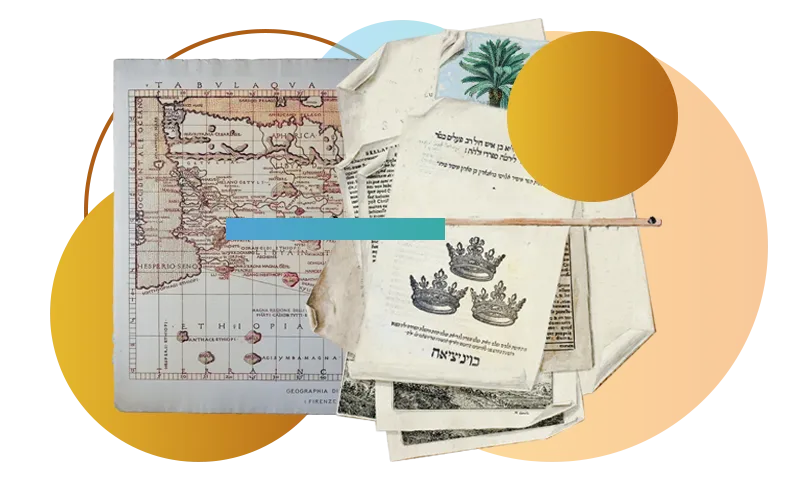
The Iraqi Jewish Archive is found in the flooded basement of Iraq's secret police headquarters.
Policies