Ancient Heritage of Iraq's Last Few Jews at Risk as Synagogues Fall into Ruin
From The Times of Israel
Jews lived in Iraq for about 2,600 years, and in Ottoman times they made up a large share of Baghdad's population. Today only a handful remain, and the synagogues, schools, and shrines they left behind are crumbling. This 2022 report from the news agency AFP looks at what survives.
What remains
Thirty sites out of nearly three hundred
A 2020 survey by the Foundation for Jewish Heritage and the American Society of Overseas Research documented 297 Jewish heritage sites in Iraq, including 118 synagogues and 48 schools. Only 30 are confirmed to still exist, and 21 of those are in poor or very bad condition. Darren Ashby of the University of Pennsylvania, who worked on the study, explained that Iraq's few remaining Jews worked hard to protect their heritage but could not save it all, and much was lost to seizure, sale, and decay.
Baghdad and Mosul
Crumbling synagogues
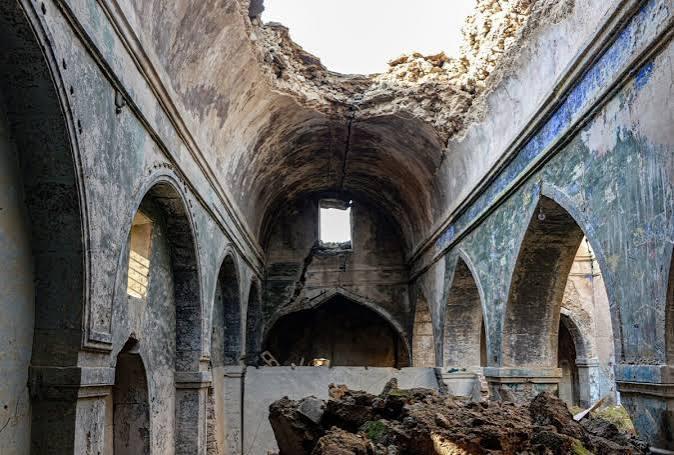
In Baghdad, the Meir Tweig synagogue, built in 1942, stands padlocked, its walls cracking, with Torah scrolls still inside. A member of the community, who asked not to be named, told AFP that the authorities ignore Jewish heritage. In Mosul, the seventeenth century Sasson synagogue has lost its roof and sits among rubble; a local antiquities official has urged the authorities to buy and restore it.
Signs of hope
Restoration in the north
In the Kurdistan region, the synagogue at the tomb of the prophet Nahum in al Qosh has been restored with American, Kurdish, and private support, and in early 2022 the United States announced $500,000 to restore the Ezekiel synagogue near Akre. These projects show what is possible, but across most of Iraq, efforts to protect Jewish heritage remain rare.
Read the full article at The Times of Israel →
This summary was written by JIMENA and is based on reporting by Salam Faraj for AFP, published by The Times of Israel (March 3, 2022). The original article belongs to AFP and The Times of Israel.