Looking for Lilith: Babylonian Magic Bowls
From Lilith Magazine
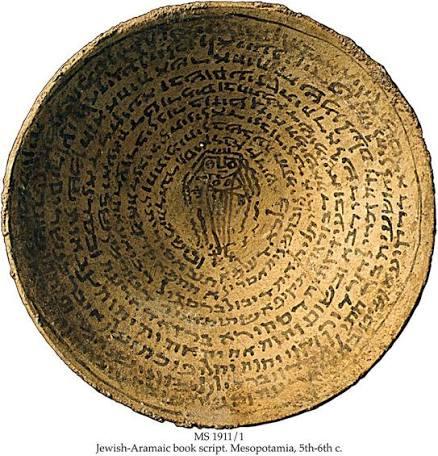
In this excerpt from her 2026 memoir Always Carry Salt, the London writer Samantha Ellis, the daughter of Iraqi Jewish refugees, visits the British Museum to see the Babylonian magic bowls, clay bowls inscribed with spells that were buried under the doorways of homes in ancient Iraq.
The bowls
Protection at the threshold
The bowls were made around the sixth century, often decorated with drawings and with writing that spirals from the rim to the center. Most are written in Jewish Babylonian Aramaic, the language of the Babylonian Talmud and an ancestor of the Judeo Arabic and Aramaic dialects Iraqi Jews spoke for centuries. For a long time, scholars treated them as ordinary pottery.
Who made them
The women behind the spells
Scholars long assumed the bowls were written by men. Ellis describes research by Dorit Kedar suggesting that many were made by Jewish women in Babylonia, some of them trained scribes. The rabbis of the Talmud often spoke against women who practiced magic, yet many people, rabbis included, relied on the bowls for protection.
Lilith
A demon, or a scapegoat?
Many bowls were meant to trap Lilith, a figure from Jewish folklore who was blamed for harming newborns and mothers. Ellis traces how Lilith's legend grew over the centuries, and how feminist writers later reclaimed her. Holding the bowls herself, she imagines the women who made them, trying to protect their families in a dangerous world, and wonders whether blaming Lilith helped spare mothers from being blamed.
Read the full excerpt at Lilith Magazine →
This summary was written by JIMENA and is based on “Looking for Lilith” by Samantha Ellis, published by Lilith Magazine (March 3, 2026) and excerpted from Always Carry Salt: A Memoir of Preserving Language and Culture (Pegasus Books, 2026). The original text belongs to its author and publishers.