Personal Stories
Uncover the hidden narratives and vibrant legacy of the Jewish community. Explore the personal journeys shared below.
Written Narratives
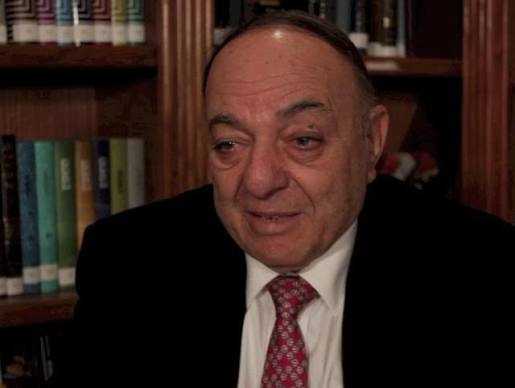
Charles Dabby
Charles Dabby: From Jewish Life in Baghdad to a 22-Year Family Separation
Charles Dabby was born in Baghdad, Iraq, in 1934, and grew up in a diverse neighborhood where Jews, Christians, Chaldeans, Kurds, and other communities lived alongside one another. He remembers a happy childhood, his family's successful business, and the traditions of Iraqi Jewish life, even as antisemitic violence created growing uncertainty. After leaving Iraq as a young man, Charles traveled through Iran and Turkey before reaching Israel in 1949. His journey eventually brought him to the United States, where he became a successful businessman in the tourism industry. Yet his achievements were accompanied by the pain of a 22-year separation from his parents and an extraordinary effort to reunite his family.
Growing Up in Baghdad's Jewish Community
Charles grew up in what he describes as “old Baghdad,” in a neighborhood where people from different religious and ethnic backgrounds lived together.
He remembers Jews, Christians, Chaldeans, Kurds, and other minorities maintaining relationships and looking out for one another.
His father operated a successful spice-exporting business and was well-liked and respected by members of the local Muslim community.
Charles attended the Alliance Israélite Universelle, a Jewish boys' school in Baghdad, where he received a French-language education. Alongside Arabic, French became his second language, and he eventually spoke it fluently.
He recalls a childhood filled with family, friendships, and Jewish religious traditions, particularly the observance of Shabbat.
Despite the political tensions of the period, Charles describes having a “wonderful life in Baghdad.”
His memories of the city are shaped by the warmth of his family and the relationships among the different communities in his neighborhood.
Memories of the Farhud
Charles was seven years old when the Farhud, a violent anti-Jewish pogrom, erupted in Baghdad in June 1941.
He remembers people attempting to escape the violence by moving from rooftop to rooftop.
During the unrest, his father's spice-exporting business was protected by a man named Azawi, who carried a long sword and two handguns.
Charles recalls that he and his siblings were “too young” to fully understand the violence taking place around them.
Although the Farhud and other incidents of antisemitism threatened Baghdad's Jewish population, Charles remembers that his father's standing in the community offered the family a degree of protection.
Looking back, he explains that he did “not really have major issue” with anti-Jewish sentiment during much of his childhood.
His recollections reflect the contrasting realities of Jewish life in Iraq: a strong sense of belonging and positive relationships with neighbors, alongside the danger of sudden violence.
Leaving Baghdad and Traveling Through the Middle East
Charles's departure from Baghdad began after an incident in which two boys attacked him and broke his bicycle.
Concerned for his safety, his father sent him to Basra, where his uncle Satori lived.
Satori operated a successful business dismantling metal and shipping the materials to Europe.
He encouraged Charles to remain in Basra and learn the business.
Charles spent time working with his uncle, gaining practical experience in commerce and international trade.
Eventually, his journey took him across the border into Iran.
He arrived in a place he identifies as Hamra, where Iranian Jews provided temporary refuge.
Through his father's business connections, Charles was subsequently sent to Turkey.
There, he recalls receiving instruction in Hebrew and basic soldering skills from individuals associated with the Stern Group, also known as Lehi, a Jewish underground organization.
These experiences marked an extraordinary transition from his comfortable childhood in Baghdad to a life of travel, uncertainty, and adaptation.
In late 1949, Charles arrived in Israel.
Military Service and Building a Life in Israel
After arriving in Israel, Charles joined the Israel Defense Forces, serving for several years.
His fluency in multiple languages made him particularly valuable.
At one point, Charles recalls that military officers wanted to send him back to Iraq.
Unwilling to return to the country he had left, he devised a way to avoid the assignment.
He remembers pretending to have a mental health problem, which resulted in his being sent to a hospital in Nazareth rather than returning to Iraq.
Following his military service, Charles began working as a taxi driver.
His language skills, business experience, and familiarity with different cultures eventually led him into the tourism industry.
This career would become central to his professional life and ultimately take him to the United States.
Twenty-Two Years Apart from His Family
Although Charles had established a new life outside Iraq, his parents remained behind in Baghdad.
They were unable to leave the country, while Charles was unwilling and unable to return.
The separation lasted 22 years.
During this period, communication with his parents was extremely difficult.
Charles recalls that one of his few connections to them was a Jesuit priest who taught in Baghdad.
The priest eventually helped arrange for Charles's parents and brother to travel to the Netherlands under the pretext of a medical visit.
Charles provided financial assistance and ultimately sent airline tickets to support their journey.
However, the process was complicated by the family's lack of proper travel documentation.
Even after they reached the Netherlands, arranging a permanent reunion remained difficult.
For Charles, the prolonged separation from his parents was one of the most painful consequences of leaving Iraq.
His testimony illustrates the difficulties experienced by Jewish families divided across international borders, particularly when restrictions on travel and documentation prevented relatives from reuniting.
Success in America's Tourism Industry
Charles eventually settled in the United States, where he built a successful career in tourism.
His business expanded significantly, particularly through his work promoting travel to Mexico.
He became known in the industry as the “King of Mexico,” a nickname reflecting his influence in Mexican tourism.
Charles recalls receiving a prestigious award from the president of Mexico in recognition of his contributions to the country's tourism industry.
His professional success also created an unexpected opportunity to seek help with his family's situation.
Through his work, Charles met a United States congressman who learned about his parents' circumstances in the Netherlands.
Moved by the family's prolonged separation, the congressman decided to assist Charles in his efforts to reunite with them.
Charles's parents ultimately joined his sisters in Ramat Gan, Israel, according to the surviving account, bringing an end to years of uncertainty and separation.
Family, Identity, and Resilience
Charles's life took him from Baghdad to Basra, Iran, Turkey, Israel, and eventually the United States.
Along the way, he learned new languages, developed professional skills, served in the Israeli military, and established a successful international business.
Yet his testimony is also a story of family separation and the extraordinary efforts required to reconnect with loved ones left behind in Iraq.
His childhood memories reflect the richness of Jewish life in Baghdad, including religious observance, education, commerce, and relationships among different communities.
His later experiences demonstrate the difficulties of displacement and the lasting consequences of restrictions that separated Jewish families across countries and continents.
Charles Dabby's testimony preserves the experiences of an Iraqi Jew whose determination and entrepreneurial spirit helped him rebuild his life abroad, while his enduring commitment to his family remained central to his journey.
Timeline of Jewish Presence