Personal Stories
Iraqi Jews and their descendants share memories of home, the Farhud, the airlift to Israel, and the new lives they built around the world.
Written Narratives
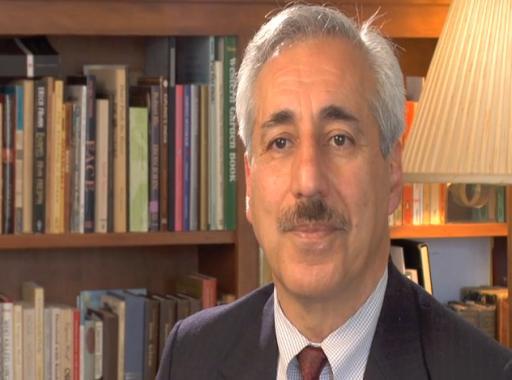
Joe Shamash
Joseph Shamash: Memories of Jewish Life and Exile from Baghdad
Joseph (Yosef) Shamash was born in Baghdad, Iraq, in 1948, the second of seven children. Raised in an affluent Iraqi Jewish family, he remembers a childhood filled with cultural richness, strong communal ties, and educational opportunities, alongside the persistent threat of antisemitism and political instability. His family's eventual departure from Iraq in 1957 marked the beginning of a difficult transition to life in the United States.
“I remember camels coming up to our front door with huge sacks of salt,” Joseph recalls.
His family lived just two blocks from the King's Palace in Baghdad, in a large home surrounded by high walls. Vendors regularly arrived at the family's doorstep to sell household necessities.
“They would bring cows to the front door also,” he remembers. “We would choose the cow and they would milk the cow into a pail. Then we would boil the milk and separate it from the cream.”
Joseph's memories of Baghdad are filled with scenes of everyday life that now seem extraordinary. He recalls floating down the Tigris River on palm fronds, eating freshly prepared fish, and riding in horse-drawn taxis.
He remembers the city as a place where traditional ways of life coexisted with a sophisticated urban culture.
“I suspect our family history goes as far back as when the Jews were brought over to Babylon,” he says, reflecting on the ancient roots of Iraq's Jewish community.
A Prosperous Jewish Family in Baghdad
Joseph's father, Selim Shamash, was a successful merchant who traded textiles and other goods, including products imported from Britain. His international business connections took him throughout the world, including India and China, destinations that Joseph recalls were unusual for Iraqi businessmen of the period.
His mother was a homemaker, and the family enjoyed a comfortable standard of living.
Despite his commercial success, Selim remained deeply committed to Jewish religious life. Joseph recalls that his father used his financial resources to build a synagogue in Baghdad.
Jewish education was an important part of Joseph's upbringing. He attended a Jewish school where he studied Hebrew, Arabic, English, and French.
He remembers the academic standards as particularly demanding, especially in mathematics.
The Jewish community of Baghdad was highly educated and deeply involved in the city's commercial, cultural, and intellectual life. Joseph recalls that Jewish musicians were prominent in Iraqi musical traditions and that Jewish merchants, professionals, and intellectuals contributed significantly to the country's development.
He particularly emphasizes the prosperity and accomplishments of Baghdadi Jews during the 1920s and 1930s, when members of the community participated in many sectors of Iraqi society.
For Joseph, Jewish life in Baghdad was characterized by close family relationships, hospitality, religious traditions, and a strong sense of communal belonging.
Yet beneath these positive memories was an awareness that being Jewish could also be dangerous.
Growing Antisemitism and Insecurity
Joseph grew up hearing stories about the Farhud, the violent anti-Jewish pogrom that took place in Baghdad in June 1941, several years before his birth.
His parents taught him to be cautious about revealing his Jewish identity to strangers.
“You had to be careful,” he recalls.
Although he understood the risks, Joseph remembers that his parents still allowed him considerable independence. He traveled to school by bus and walked alone to the market.
One day, while returning home from the market, another boy confronted him and demanded to know whether he was Jewish.
Joseph immediately felt threatened.
“I felt uncomfortable. He was confrontational and I knew it was very sensitive to get confronted in that way.”
Rather than answer, Joseph turned and began walking home.
The boy threw a stick with a nail attached to it, striking Joseph in the head and causing him to bleed.
When he returned home injured, his mother was horrified.
Joseph also remembers an incident in which a group of Muslims chased a car carrying his family as they left a country club frequented primarily by Jews and some Christians. The attackers threw stones at the vehicle.
These experiences illustrated the precarious position of Iraqi Jews, who could enjoy prosperous and fulf
Timeline of Jewish Presence