Personal Stories
Uncover the hidden narratives and vibrant legacy of the Jewish community. Explore the personal journeys shared below.
Written Narratives
Michael Shamam
Michael Shamam: Memories of Jewish Life and the Farhud in Baghdad
Michael Shamam was born in Baghdad, Iraq, in 1935 to a prosperous Jewish family. He remembers a childhood filled with religious traditions, close family relationships, and the pleasures of life along the Tigris River. Yet these memories are inseparable from the violence of the 1941 Farhud pogrom and the persecution that eventually forced his family to leave Iraq, abandoning their property and citizenship.
Michael describes his family as affluent, recalling that they “had everything.” His extended family owned successful businesses, and he grew up in a comfortable household where Jewish religious observance was central to daily life.
The family attended synagogue every Shabbat and maintained the traditions of Iraqi Jewry. Michael remembers the warmth of family gatherings, the importance of religious customs, and the strong connections among relatives.
His childhood was also shaped by the Tigris River, which ran through Baghdad. Michael fondly recalls spending time swimming and fishing in its waters, enjoying the freedom and excitement of growing up near the river.
Education was another important part of his upbringing. Michael remembers his mother encouraging him to work hard academically and emphasizing the value of learning.
She was also an accomplished cook who prepared traditional Iraqi Jewish dishes. The flavors and recipes of his childhood remained important to Michael throughout his life, and he has made efforts to pass these culinary traditions on to his three sons in the United States.
Despite the comforts of his early childhood, Michael's life changed dramatically during the Farhud of June 1941.
The Farhud and the Loss of Security
Michael was six years old when the Farhud, a violent anti-Jewish pogrom, erupted in Baghdad.
He remembers the terrifying transformation of relationships between Jews and their neighbors. People who had previously lived alongside Jewish families suddenly turned against them.
According to Michael, some formerly friendly neighbors became hostile and appeared determined to “kill anyone.”
The violence shattered the sense of security that his family had previously enjoyed.
Fearing for their safety, Michael's mother hired a local Muslim guard to protect the family.
Michael's recollections of the Farhud remain vivid and deeply disturbing. He remembers seeing piles of bodies, mass burials, and scenes at the cemetery following the attacks.
These memories left a lasting impression on him and shaped his understanding of the vulnerability of Iraq's Jewish population.
During his oral-history interview, Michael also recounts the Farhud in Arabic, the language he spoke growing up in Baghdad.
Although the violence of 1941 marked a turning point, Michael remembers that Jewish families continued to maintain their religious and communal traditions despite increasing insecurity.
They continued attending synagogue, observing Jewish holidays, and sustaining the institutions that had long been central to Jewish life in Iraq.
Michael emphasizes that the community did not simply abandon its identity in the face of persecution.
Nevertheless, conditions continued to deteriorate, and his family eventually faced the prospect of leaving the country.
Forced Departure from Iraq
Michael recalls that government officials informed his family that their Iraqi citizenship had been revoked and that they had just 48 hours to leave the country.
They were not permitted to take their property or financial assets with them.
The family was forced to abandon its possessions, businesses, and the life it had built in Baghdad.
Michael remembers the profound injustice of losing not only the family's material security but also its legal connection to the country where generations of relatives had lived.
The family escaped Iraq through Iran, eventually receiving assistance from Jewish agents who helped arrange their journey to Israel.
Michael dates his family's aliyah, or immigration to Israel, to 1949.
Their departure marked the end of a chapter in the family's history and the beginning of a difficult process of rebuilding their lives.
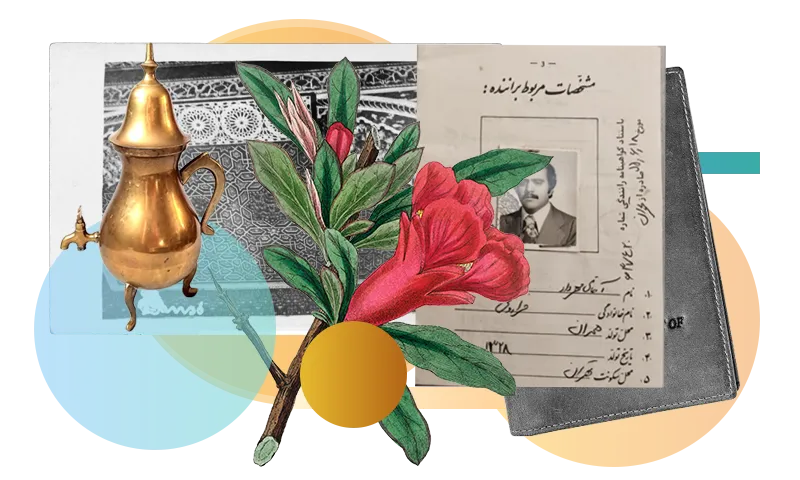
Michael has preserved the exit permits associated with his family's escape. These documents remain tangible reminders of their displacement and the circumstances under which they left Iraq.
He also shares family photographs taken in Baghdad, preserving images of the people and places that shaped his childhood.
Building a New Life in Israel
Upon arriving in Israel, Michael and his family faced considerable hardships.
Like many Jewish immigrants arriving during the early years of the state, they initially lived in a transit camp, where conditions were difficult and resources were limited.
The transition from an affluent household in Baghdad to the uncertainties of immigrant life was particularly challenging.
Eventually, the family settled in Jaffa.
Michael remembers Jaffa as a place where Jews, Muslims, and Christians lived alongside one another, offering a different environment from the increasingly hostile circumstances his family had experienced in Iraq.
Despite the difficulties of resettlement, Michael developed a strong attachment to Israel.
In 1954, he joined the Israel Defense Forces, an experience he remembers with pride and affection.
His military service became an important part of his life in Israel, and he continues to cherish memories of those years.
Preserving Iraqi Jewish Traditions
Although Michael eventually made his home in the United States, he has maintained a deep connection to his Iraqi Jewish heritage.
Arabic remains an important part of his identity. Having grown up speaking the language in Baghdad, Michael continues to speak it fluently.
During his oral-history interview, he moves between English, Arabic, and Hebrew, reflecting the linguistic experiences of Iraqi Jews who rebuilt their lives across several countries.
Food is another important connection to his family's past.
Michael fondly remembers the traditional Iraqi Jewish dishes prepared by his mother and has worked to share those recipes with his three sons.
For him, preserving these foods is one way of maintaining the cultural traditions that connected his family to Jewish life in Baghdad.
His collection of family photographs and original exit permits also reflects his commitment to remembering the experiences of his relatives and the broader Iraqi Jewish community.
These materials document both the prosperous life his family enjoyed before its departure and the circumstances that transformed them into refugees.
Michael's testimony captures the contrasting experiences of Iraqi Jews in the mid-20th century: the richness of communal and religious life, the trauma of the Farhud, the loss of citizenship and property, and the challenges of beginning again in Israel.
Through his memories, photographs, documents, and continued use of Arabic, Michael preserves an important part of Iraqi Jewish history and the cultural heritage his family carried with them after leaving Baghdad.
Timeline of Jewish Presence